
Lessons in happiness: three women explain the formula for the country where you live best
From a wooden cottage on an uninhabited island to a mega library-library, from the red poppies of Marimekko to the fairy-tale people of Mumin. Why live in Finland.
by Lisa Corva
6' min read
6' min read
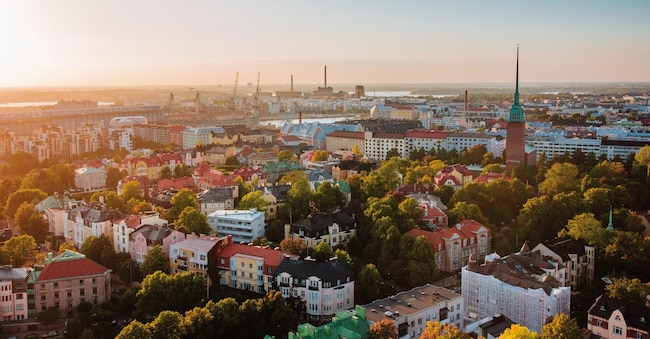
Onnellisuus. In Finnish, happiness. A word that is almost unpronounceable for speakers of a Romance language, but of absolute and everyday familiarity for those who live in Finland: the Scandinavian country has been voted the happiest in the world for the seventh year running. The World Happiness Report 2024, which places other northern nations at the top, is the decree of the day: Denmark takes second place, Iceland third and Sweden fourth. In the ranking that assesses satisfaction and well-being, Italy is only 41st. But what does happiness in Finland consist of, apart from the well-known forests, saunas, crystal-clear icy waters and the dream of the northern lights? Perhaps, speculates the New York Times, the best term for the secret of these places is sisu, or extreme courage in the face of obstacles. Those who live in this country have a long, centuries-old familiarity with cold and darkness: during the winter, especially in December, those living in the northernmost areas can count on less than three hours of daylight a day.
Three Finnish women who hold key positions in the worlds of art, fashion and design try to answer the question. The aim is to gain an understanding of what happiness is made of in Finland. Theirs, first of all. Starting with the word that most represents it, to get closer to one of the world's most mysterious languages.
Loading...
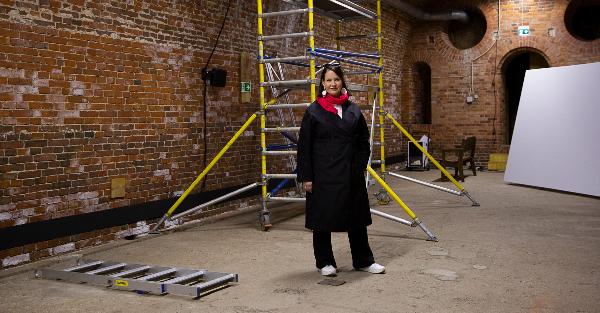
"My favourite term is lumi, it means snow and recalls purity," explains Arja Miller, new director of the HAM Museum of Modern Art in Helsinki. "I choose it because snowy landscapes are enchanting, of course. But also because it is the name I gave to my daughter, who was born during a blizzard one February day 20 years ago". Arja Miller loves water, sailing (she and her husband own a boat), and the Helsinki archipelago, which consists of more than three hundred islands and islets, many of them uninhabited. Exactly the image that one conjures up when thinking about the country's quiet peacefulness. "I am very happy to be in charge of the next edition of the Helsinki Biennial, the third, which will be held in the summer of 2025 on the island of Vallisaari. At my side, two new curators, Kati Kivinen, and the Spanish Blanca de la Torre'. Miller has a passion for islands. Not least because, he confides in me as we walk through the museum, it was on a tiny uninhabited island, Klovharun, that Tove Jansson - a much-loved writer and painter in Finland - spent more than thirty summers, together with his partner, in a wooden cottage with windows open to the four cardinal points. There, Jansson set The Summer Book, among her most beautiful pages. "All the children here grew up with stories about the Mumin, a fairy-tale people she had drawn. She was a maverick, a pioneer in life too: she never hid the fact that she loved a woman, and that was very brave in the 1950s. I am putting together a large exhibition dedicated to her, which will open at the end of October. Already part of our permanent collection are her wall frescoes, which decorated the dining room of Helsinki City Hall: look, do you recognise her?". Jansson has self-portrayed herself sitting at a small table, amidst a group of people dancing. She is alone, smoking, but next to the bouquet of flowers in front of her, half-hidden, is a Mumin. Perhaps this too is happiness: knowing how to invent a magical world that accompanies us, secretly, at every step.
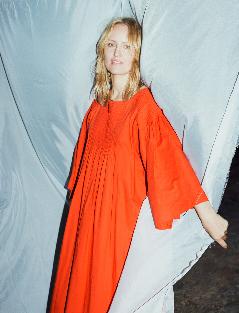
The same happiness seems to take shape in Marimekko's poppies: behind the Unikko pattern, launched in 1964, there is a story to be told. Armi Ratia, founder of the brand in the 1950s, declared that her collections would never include floral patterns. Designer Maija Isola disobeyed her by designing large red and fuchsia poppies, which went on to great success. Now the CEO of Marimekko is Tiina Alahuhta-Kasko and the artistic director is another young woman, Laura Väinölä. It was her idea to organise big parties in the square: in Helsinki, in Milan during the Salone del Mobile and in Tokyo. As we walk together through the streets of Helsinki, I seem to see orange, green and pink flowers everywhere, from shopping bags to shop windows. "Every household has something from Marimekko, even if it's just a tablecloth," explains Väinölä. "My mother also worked at Marimekko and my grandmother knew the founder well: I grew up around those designs and colours, just like my daughter does today."
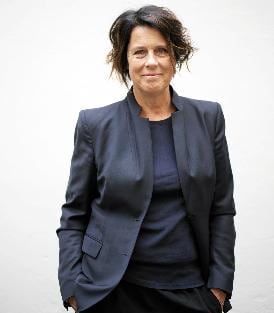
Finland is also design: here a legendary couple in the history of architecture, Alvar Aalto and his wife Aino, founded Artek in 1935 (avant-garde also in the name: a crasis of art and technology). Also in the 1930s, the two architect-designers designed a sanatorium in Paimio, in the South Woods. They designed everything - lights, lamps, a chair-chair still in production - and chose cheerful, happy colours: yellow for the stairs, orange for the dining room. Now Paimio Sanatorium is run by Mirkku Kullberg, a determined woman who was CEO of Artek for years, and has lived and worked in Switzerland (for Vitra), Germany and America. Today her big bet is to rethink what was once a refuge for tuberculosis patients and make it a healing place in the broadest sense of the word. He started last summer with the Summer Residency Programmes, hosting groups of creatives from different disciplines, including lectures and exhibitions, for three-week stays, and an exhibition of contemporary art with works also scattered around the park. "The first time I was in Paimio, I felt like it was embracing me," Kullberg says. "I had a similar feeling when I entered the church in Ronchamp, by Le Corbusier, but here it is different. The building itself, nestled in the pine forests, gives the listener one precious hint: breathe. Don't we all need to learn to breathe again? My project involves transforming Paimio into a special hotel, complete with spa". I meet Mirkku Kullberg - who has already been the curator of the St. George in Helsinki, a design hotel that boasts a dragon by Ai Weiwei to welcome guests in the lobby - in the Ateljé Finne restaurant: among the statues in the atelier of a 1920s sculptor, Gunnar Finne, traditional reinterpreted dishes are offered. "To give Paimio a second life, I also called in consultants from abroad. Like Joseph Grima, the creative director of the Design Academy in Eindhoven and co-founder of Alcova, the format of emerging designers who choose unexpected locations for the Milan Design Week every year'. Mirkku has lived abroad for a long time and can provide another perspective to my question: what makes her happy in Finland? "Nature. The sauna I had built in the garden of my house, an hour away from Helsinki, in dark materials and colours. The sense of privacy and the sea. Every summer, I went fishing with my father. He taught me how to drive a boat, to love and respect the sea, and to understand that if the weather gets worse you have to return to shore, but only after the seventh wave has passed. A lesson I have also applied, unknowingly, in life: change, after the seventh year'.


Loading...
