
Harris and Trump hunting for decisive votes among Latinos and African-Americans

3' min read
3' min read
From our correspondent
A few tens of thousands of votes will decide who will be the next President of the United States. And the votes that will make the difference could be those of Latinos, of voters with Hispanic origins: even in disputed western states like Arizona and Nevada, even in the largest swing state, Pennsylvania. While African-Americans could hand victory to Democrat Kamala Harris or Republican Donald Trump in a state like Wisconsin, also potentially decisive for the White House.
Yesterday Trump was warmly welcomed by Latino business leaders in Doral, near Miami. 'I am the only candidate who can bring prosperity back to America,' the former president repeated with a simple and direct message that found great response from a friendly, rightward-shifted audience. In his long speech, he repeatedly insulted Harris: 'We don't need,' he said, 'another person with such a limited IQ in the White House'. And he relaunched the baseless propaganda against Democrats who 'have filled the country with dangerous immigrants and terrorists'. But Trump also called out, from Florida, to Hispanics across the country, pointing to traditional family values and even more so to economic aspects: 'With me your wages were better, you had a better job and could afford a good home, then,' he said, 'Joe Biden's administration, with high inflation, destroyed it all.
There are more than 36 million potential Latino voters, or 15% of the total eligible voters. And the Republican campaign is trying to win space in this community, which in the United States has traditionally been closer to the Democrats, but is growing rapidly and could change orientation, especially in its younger part.
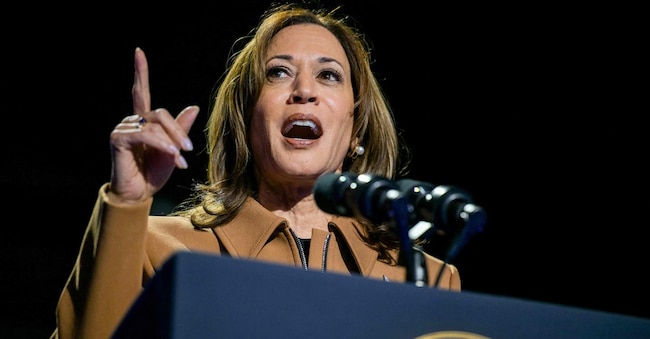
Ethnicity is mixed, of course, with political ideas, social issues, and the economic difficulties of the people. From Washington, in a long interview aired on Telemundo, Vice-President Harris proposed an economic programme focused on the needs of the Latino community. There are three main measures to 'stand by those who want to work and do business,' Harris said: support for regular apprenticeships to double current contracts to 1.2 million in four years; easier access to some public jobs, with the elimination of the graduation requirement; and subsidised loans for small businesses. "We are very confident these policies can have a significant impact, as they did in the focus groups we analysed," explains Matt Barreto, a polling expert for the Harris campaign. "These are measures that speak specifically to Latino men who want to succeed and achieve the American dream."


