Harvest time (and more), Bressanone time
The former seat of the prince-bishops and the Eisack Valley have much to offer wine tourism enthusiasts and those who love the great outdoors and music

Key points
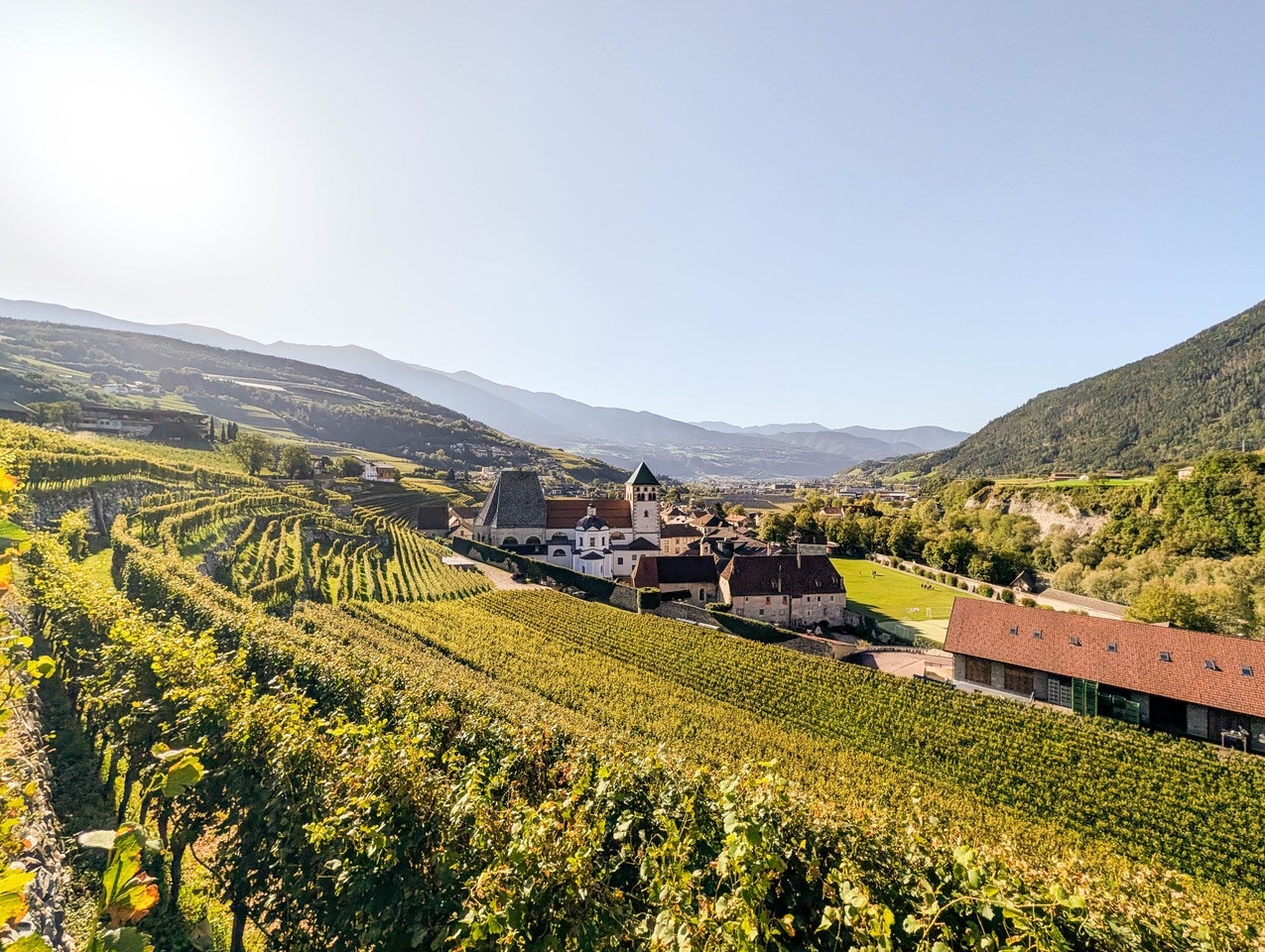
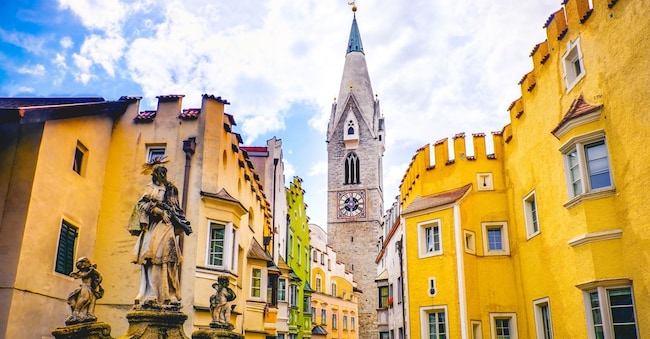
A corner of Italia where every bottle of wine holds flavours and stories. A small patch of land steeped in history, characterised by lush natural beauty and nestled in the shadow of the Plose, the ‘gateway to the Dolomites’, with its spectacular views of the nearby Sass de Putia and the Odle range, a UNESCO World Heritage Site. We are talking about the Isarco Valley and its beautiful town of Bressanone. As the oldest town in Tyrol and the seat of the prince-bishops, it has always held a position of outstanding importance in the Alps. This is evident from its many historic buildings and monasteries, such as the Cathedral complex with its parish church and the adjacent Piazza Duomo, the Hofburg, the Pharmacy Museum and the famous Novacella Abbey – which, not surprisingly, is a prime location for wine production. And whilst winemakers agree that the 2026 vintage looks very promising, September is perhaps one of the best times to visit Bressanone. You can appreciate its winemaking heritage whilst also immersing yourself in its stunning natural surroundings, perfect for hiking or exploring its famous cycle routes, given that it is one of the most popular cycling destinations in the Alps. But that’s not all. Bressanone is also a cultured city; Mozart lived and composed here, and to mark the 270th anniversary of his birth, the city is hosting the fourth edition of the ‘Mozart & Friends’ festival, the only one in South Tyrol dedicated specifically to the music and life of Wolfgang Amadeus Mozart, which will take place from 24 to 27 September.
.jpg)
+Kloster+Neustift_Oskar+Dariz%20(1).jpg)
A passion for two wheels
Meanwhile, the Südtirol Bike Festival, taking place from 17 to 20 September 2026 in the historic centre and surrounding area of Bressanone (Brixen), is dedicated to a passion for cycling and celebrates the many routes that cater to every need. Among the easiest are the Isarco Valley Cycle Route, where you can cycle at a leisurely pace past apple orchards and villages; the Bressanone–Chiusa route, which runs along an easy, gently downhill stretch between Bressanone and the nearby medieval town of Chiusa; and the ‘Magia Alpina’ (Alpe di Rodengo and Luson), a tour of around 5.8 km with a modest climb (224 m) that offers alpine views without excessive effort. For experienced cyclists, however, the routes are concentrated on the Plose massif and amongst the surrounding alpine passes. Such as those designed by Simone Zardini, one of the shapers at the Brixen Bikepark, who spends much of his time on the trails fine-tuning routes and variations. His favourite of all remains the Palm Pro Line: two and a half kilometres built entirely by hand, without the use of mechanical equipment – a technical, natural and challenging route, designed and constructed with the utmost respect for the surrounding environment.
In search of flavours
After a hard day’s work, it’s time to indulge in culinary delights. And in Bressanone, that’s no trouble at all. In this valley, in fact, wine is not merely a product of agricultural excellence; it becomes the common thread running through an offering that brings together winegrowers, restaurateurs, hotels, cheese makers, events and the landscape into a single destination experience. Anyone arriving for hiking, cycling or to visit the historic centre will find a little treasure trove of local produce, craftsmanship and authentic encounters. The wine experience in Bressanone isn’t limited to the wineries; it marks the rhythm of the seasons with events that invite you to discover the area. After the summer, in fact, the story continues in autumn with Törggelen, a tradition in the Isarco Valley that keeps the bond between new wine, chestnuts, cuisine and conviviality alive.
+%C2%A9+Kloster+Neustift.JPG)
Sylvaner tells the story of a region
In the Isarco Valley, the vineyards stretch along steep slopes, where work is still predominantly carried out by hand and the alpine climate lends the wines elegance, freshness and a distinct minerality. Of all the grape varieties, Sylvaner has become the symbol of this region, and to promote it, the project ‘Sylvaner and the Isarco Valley’ was launched – an initiative that brings together winegrowers, restaurateurs and tourism operators with a shared aim: to present wine as an expression of a shared culture, thereby strengthening the identity of an entire destination.
The farm experience
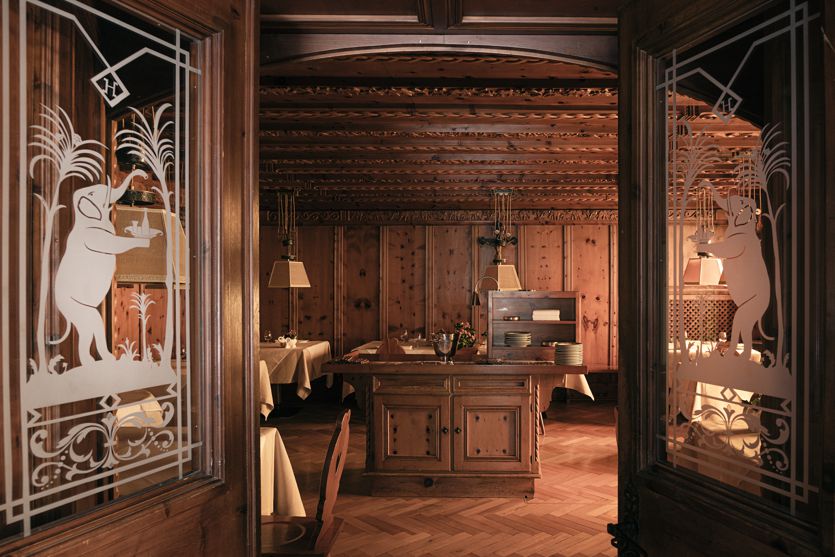
Among the iconic destinations is the Pacherhof, a winery and member of Vinum Hotels South Tyrol, where guests are taken on a tour of the vineyards and historic cellars before the tasting, and can then stay right at the winery itself, experiencing wine exactly where it is made. The Pacherhof is also one of the most charming hotels in the whole of South Tyrol, thanks to its four stube steeped in history, set amongst magnificent vineyards and featuring rooms each furnished in a different style, yet always with the utmost refinement. At the Kuenhof, an organic and biodynamic estate, guided tours explore the deep connection between climate, landscape and farming. And at the Griesserhof, the tour always begins outdoors, amongst the vine rows. Even before the first taste, the focus is on terroir, manual labour and quality. The Taschlerhof also regularly opens its doors to the public for tours and tastings, whilst the Burgerhof Messner combines wine production with rural hospitality: farm tours, a Buschenschank, tastings and holiday apartments allow guests to immerse themselves fully in vineyard life. Then there is the Al Hoandlhof, where winemaker Manni Nössing – one of the best-known names in South Tyrolean viticulture – hosts weekly tastings in his cellar, offering a first-hand insight into a production philosophy that prioritises authenticity, character and a strong sense of place. And what about the Novacella Abbey Winery, custodian of a winemaking history stretching back almost nine centuries? Also well worth trying is the collaboration between the winemakers and Hansi Baumgartner, one of Europe’s most renowned cheese affineurs. In the Degust workshop, Gewürztraminer, Müller Thurgau, Lagrein, Rosenmuskateller, grape marc, vine leaves and wooden barrels become ingredients in the maturing process, transforming the cheese into a true expression of the region.