Climate change

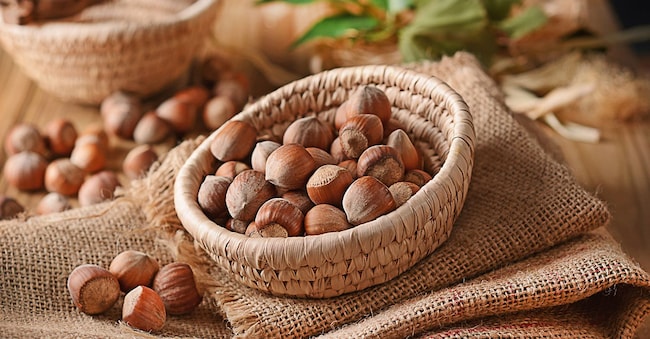
Hazelnut harvest drops by 60%: confectionery industry on alert

Turkish production also down: from ice cream to chocolates, companies look at fruit alternatives

by Micaela Cappellini

(Adobe Stock)

3' min read

3' min read

After three poor years, 2025 is shaping up to be another black year for national hazelnut production. With harvest just beginning, estimates by the Italian Farmers' Association already speak of a 60% drop in yields.

A collapse that also alarms the food processing industry, from ice cream to the production of spreadable creams, so much so that some are already starting to think about other recipes based on almonds, pistachios or exotic fruits.

Loading...

In our country, there are about 95,000 hectares of hazelnut groves, present in Latium and Campania but mainly concentrated in Piedmont.

"In July, we started to see empty hazelnuts fall to the ground," says Daniela Ferrando, a producer from Alessandria, Italy, "and the result is that now, compared to a normal yield of 20 quintals per hectare, I am harvesting 5. The blame? It's climate change: 'The hazelnut is not a rustic plant that adapts to the woods, as people believe,' Ferrando says, 'mild winters do not favour it, it suffers from drought but also from water stagnation. Fifteen years ago, when I started, we thought of the hazelnut tree as the new Eldorado for the Alessandria region. And now we don't really know what to do".

The industry is also worried: 'The low Italian quantity is combined with the fact that, due to the spring frost, production has also dropped in Turkey, where 70 per cent of the world's hazelnuts are grown,' says Pier Giorgio Mollea, owner of Marchisio, which has its processing plant in Cortemilia, in the province of Cuneo. 'This shortage is leading on the one hand to an increase in hazelnut prices, which has almost doubled, and on the other to a shift of interest towards almonds.

At Fugar, where they produce for the ice-cream sector, in an attempt to escape the price increases, in particular those of Turkish hazelnuts, they are looking at new potential supplier countries: 'Chile is sending us some samples to taste right now, which have competitive quotations,' says Davide Gola, managing director of the Rimini-based company. 'Even pistachio, which has been the raw material that has grown most rapidly in the last ten years, is now beginning to be in short supply. So, the ice cream world is starting to look at new raw materials, such as mango and maracuja, for example'.

The hazelnut, however, remains an irreplaceable ingredient of much confectionery, as well as a source of income for many Italian farmers: 'We consider it indispensable to convene a dedicated national supply chain round table,' says Cia president Cristiano Fini. 'We need to organically address the current critical issues and strengthen investments aimed at research and business innovation, important tools for restoring competitiveness and prospects to the sector. The dramatic nature of the current year, with unprecedented serious production losses and severe difficulties for farms, makes this request even more urgent'.

Calling for closer collaboration between all players in the supply chain is also the processing industry itself: 'We do not want to look elsewhere for hazelnuts,' says Giovanni Battista Mantelli, one of the founders of Venchi, 'our choice is to build stable and supply chain relations, but it is clear that tools and support are needed. We need a long-term vision in which producers, companies and consortia work together to strengthen the supply chain'.

Copyright reserved ©
Loading...

Brand connect

Loading...

Newsletter

Notizie e approfondimenti sugli avvenimenti politici, economici e finanziari.

Iscriviti