
Health, assaults on the rise. Professional women in particular suffer them
Assaults in Italy have risen by 38% in five years. In August there was not a single day on which a doctor or nurse (80% female) did not suffer violence

6' min read
Key points
6' min read
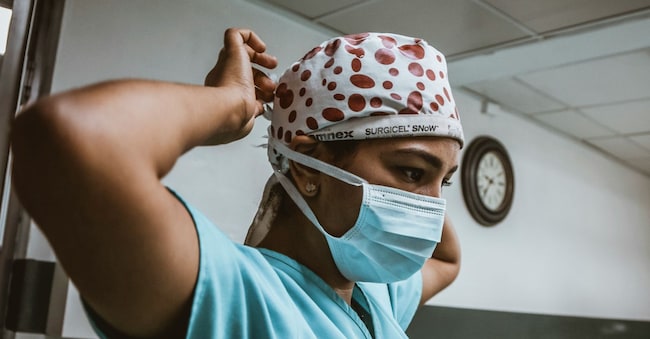
62% of female health workers have experienced violence during their careers. The figure was released by the World Health Organisation (WHO), which highlighted the misogynistic nature behind the attacks. According to the report published by Plos, it is mainly female health professionals compared to their colleagues who have suffered threats, discrimination and sexual harassment. Assaults in Italy have increased by 38% in the last five years. Consider that during the entire month of August, there was not a single day on which a doctor or nurse, in 80% of cases a woman, suffered physical violence at the hands of a patient or relative. The reasons behind this phenomenon reported by the research conducted by Plos focus first and foremost on the characteristics of the hospital environment, which can be particularly stressful for users. In addition, there are staff shortages and disorganisation, long waiting times for access to treatment, and an insufficiently effective policing plan since, especially in hospitals with a larger catchment area, police officers are not available at the most sensitive times, particularly from midnight to seven o'clock the next day.
Violence against female health professionals, a structural problem
Yet to consider these aspects is to focus only partially on the situation, since violence against women health workers is a structural problem. The same gender dynamics that influence the distribution of resources and power play a crucial role in favouring a certain type of violence. Women only hold 25% of leadership roles in health care and are on the contrary over-represented in lower paid roles. And this is evident globally. In India for example, female doctors are often forced to take lower paid jobs than men in emergency settings where violence is more prevalent. Added to this is the effect that economic insecurity and a culture that normalises abuse can have on discouraging women from reporting incidents, who may even choose to leave the profession.
Inail and Amsi data
In this regard, the analysis conducted by Inail and contained in the 'Dossier donna 2024' shows that in the last three years more than 4,000 accidents linked to episodes of violence against them have been reported. The study by the Association of Doctors of Foreign Origin in Italy (Amsi), conducted together with the Euro-Mediterranean Medical Union and the international movement United to Unite, also adds to this balance, describing a 40 per cent increase in episodes of physical and psychological violence against women working in healthcare over the last three years. Furthermore, a 35% increase in discrimination against female health professionals of foreign origin has been recorded, who, also for this reason, after the first few years in Italy prefer to move to Germany, Switzerland, the Netherlands or the United Kingdom. And the alarm does not only come from Italy. At an international level, according to the Amsi survey that cross-references data sent by referents in 120 countries, there are 40% of reported aggressions in Europe up to 95% in developing countries. "Certain events entail often serious consequences for healthcare workers that, if prolonged over time, can lead to repercussions on the psychological sphere with the appearance of anxiety and depression, or low satisfaction and disinvestment in their work," explains Daniela Barberio, head of the oncological psychology service at the Pascale National Institute in Naples and creator of a training course reserved for healthcare staff to understand and recognise acts of aggression and discrimination.
The new safety bill to protect healthcare professionals
In recent weeks, the Italian government has introduced new measures for the safety of hospital staff in the Security Law Decree, tightening the penalties for those who assault. In fact, the measure provides for compulsory arrest in flagrante delicto or within 48 hours of the event for anyone who commits violence against operators or damages medical facilities, with imprisonment from one to five years and fines of up to EUR 10,000. It also introduces deferred arrest within 48 hours based on video or photographic evidence. The bill also provides for guidelines on the use of video surveillance, which is already present in 70 per cent of hospitals, and funds to extend it further. "The decree alone is not enough. It is necessary to reorganise the work in the emergency and first aid departments, for example by incentivising the presence of psychologists to ensure that all health workers receive continuous training on these issues and the guarantee of daily support," concludes Daniela Barberi.
No reference to gender-based violence
.In the text, however, there is no reference to gender-based violence in the sector nor is any specific intervention against the phenomenon indicated. There are many forms of gender-based violence in healthcare: from inappropriate comments to career advancement subordinated to requests for sexual favours. This is what is reported by the Italian female surgeons who are responding to the survey drawn up by their colleagues Isabella Frigerio, Gaya Spolverato and Alessandra Pulvirenti. The study, entitled "Voices behind the mask", aims to explore and document the experiences of gender discrimination faced by women surgeons in their professional careers. The initial data collected shows that 98% of the respondents had experienced this. The majority are specialists in general surgery, followed by urologists, aged between 35 and 44, who mainly denounce the questioning of their skills and receiving inappropriate comments that anticipate actual sexual abuse. Aggression comes with the same percentage from colleagues and patients, leading to feelings of anger (62% of cases) and frustration (59%). Also reported is the alarming fact about the rising suicide rate among trainees (at least 11%) and the reaction to the incident: ignoring it most of the time, to the point of deciding not to report it. "The project was created to reveal the persistence of grave discriminatory behaviour towards female surgeons. We still find ourselves dealing with real harassment, verbal and physical, which occurs in the workplace. In our case in the hospital and in the operating theatre,' says Isabella Frigerio, creator of the survey that is also crossing national borders by collecting stories of European and international female surgeons. 'We want to document the devastating effect of these behaviours on those who suffer them'.

