
10 billion healthcare, Visconti: 'Anti-corruption tools available but not used'
Contracts, consultancies and beneficial owners: the director of Dems and professor of criminal law in Palermo points out the flaws in the controls and calls for an audit of the operators
by Nino Amadore

Key points
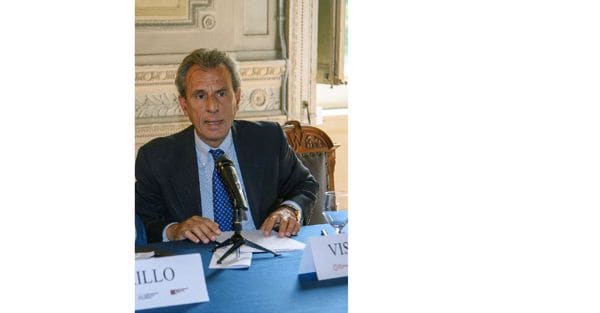
"Let's introduce a rule that requires operators to verify the existence of infiltration attempts not only by the mafia but also by politics to condition company choices in order to obtain public resources, in analogy to what is provided for in the anti-mafia documentation". The speaker is Costantino Visconti, Professor of Criminal Law at the University of Palermo, director of the Dems (Political Science and International Relations) for years engaged in collaboration with Transcrime of the Catholic University in deepening the themes of anti-mafia prevention and in general in studying the phenomenon of criminal (not only mafia) conditioning of the economy: studies that have often culminated in legislative proposals. The focus this time, also for reasons of close reporting, is health care in Sicily "a 10 billion euro affair, which passes through the regional budget, but the differential between how much is spent and the quality of the health service is there for all to see. Any public decision-maker should ask himself questions: what is happening? One answer is structural and national: there is less money for healthcare. There are, however, other reasons that public decision-makers, politicians and bureaucracy, do not want to address,' says Visconti.
Contract choices polluted at root
The piece published yesterday (Sunday, 16 November) in the online edition of Il Sole 24 Ore made him jerk in his chair and he entrusted some proposals to Agi and Il Sole 24 Ore. The picture that emerges is discouraging, and it is starting (also) from that investigation that Visconti relaunches: 'Certain choices on contracts, tenders and consultancies,' he replies, 'are often polluted at the root by private interests, embodied in real 'tribes', hidden behind or within economic operators and installed in the political-bureaucratic world. One has the feeling that many choices on the destination of public resources are conditioned by those very tribes. In other words, there is a mixture between economic operators and politics, and it is therefore necessary to check whether there are pieces of political-bureaucratic power that are directly or indirectly inside the ownership structures of the economic operators that negotiate with the public administration on health matters. For example: I want to increase the public spending budget towards an economic operator? Well, in agreement between the various tribes (which compete but then usually find an understanding with mutual benefits) I will send, for example, a manager to head the provincial health agency who will have the task of implementing the project'.
The quantum leap that took place
There is a qualitative leap that is reminiscent of the one described by Giovanni Falcone regarding the mafia's evolution: the mafioso no longer merely disguises himself as an entrepreneur, he becomes an entrepreneur. "In this case," explains the jurist, "I do not believe that the mafia plays a relevant role, not directly at least, but the process is similar. We must, rather, verify the hypothesis that political-bureaucratic interests are directly inserted, or are the ultimate beneficiaries, in the ownership structures of the economic operators that obtain public resources from the Sicilian Region'. But how to proceed? "The Region, with a simple administrative action," explains Visconti, "could map the ownership structures of the existing operators, starting with the private facilities affiliated with the National Health Service, the RSAs and all the other suppliers of goods and services in the sector. And then, with a very simple administrative reconnaissance, one could take a census of the numerous consultancies to third parties assigned in a haphazard manner, even in the bodies controlled by the Region, since there is an additional criminal risk of 'triangulations' there: favours are exchanged and common interests facilitated between politicians, bureaucrats and entrepreneurs'.
The importance of effective ownership
Is this a kind of blood test applied to regional healthcare spending? "Yes," says Visconti, "because the analysis of the beneficial ownership of economic operators, and of the so-called 'last beneficiary', is a consolidated method in our legal system, promoted by European sources and applied in anti-money laundering practices in the field of suspicious transaction reporting. An approach that, moreover, the Sicilian Region would appear to have already started with the introduction of a special beneficial owner detection form prescribed by a ministerial decree concerning the use of Pnrr funds: before the Public Prosecutor's Office arrives, the administrative bodies could keep a check on conflict of interest phenomena with the effect of preventing risk contexts where corruptive phenomena are generated. Believe me, I am saying things that are quite obvious to insiders and I cannot believe that the Ars and the Palazzo d'Orleans do not know anything about it, and even that they do not know their three-year anti-corruption plan that has just been updated and transfused into the Piao 2025-27'.
The model that exists already applied by the governor
He adds: 'On the other hand, a few months ago President Schifani signed an agreement with Anac under which all expenditure on waste-to-energy plants is subject to collaborative supervision by the anti-corruption authority. If we can't do it on our own, let's get Anac to help us in healthcare as well'. The point is this: today there are tools that were not there and so we are in a position to intervene. 'I want to tell you,' adds Visconti, 'a fragment of the Piersanti Mattarella murder trial. The consultant appointed to verify the presence of anomalies in the famous six contracts for schools in Palermo in the hands of companies controlled by Vito Ciancimino, a few months before the murder, tried to dissuade the president from registering the report he had prepared, to avoid finding himself, one or the other, in a cement mixer'. Mattarella, he recalls, replied 'between the serious and the facetious' with a line that has remained famous: 'Don't worry, we'll ask for a two-seater cement mixer'. That gesture,' Visconti continues, 'marked the decision to challenge the mafia-corruptive power 'with bare hands'. To initiate that inspection of the contracts of the municipality of Palermo, Mattarella resorted to a rule that granted extraordinary powers to the president of the region, an instrument that no one had ever dared to use. "And it ended as we all know. Much has changed since then, at least on paper. "Today, however, we have a thousand instruments at our disposal and we don't know how or don't want to use them".


