
Decline in health claims, but increasing amounts weighing on budgets
The Aon Observatory shows that the cost has risen by 7 per cent in two years. The riskiest specialities are traumatology, first aid and gynaecology. The funds set aside impact hospitals' accounts. Risk management is crucial to save money

4' min read
4' min read
The number of claims in healthcare is falling slightly, but their cost is going up, rising by 7 percentage points in 2022 and 2023, with a significant impact on the Italian healthcare system, both public and private, which is already grappling with increasingly stretched funds and a difficult recovery after Covid. This is a ballast that weighs on the budgets of facilities, especially when they are forced to 'reserve' substantial funds for the outcome of lawsuits that close after a few years. This is why it is becoming increasingly crucial to focus on risk management best practices to save money.
The most up-to-date snapshot of malpractice comes from the latest report of Aon's Risk Observatory in Healthcare, which tells howover the decade 2014-2023 the total cost of claims has exceeded more than 1.5 billion euro, with an increase of 100 million in the last two years, largely determined by inflation. The report analysed 27,533 claims managed directly by Aon, one of the leading companies in insurance brokerage, and the Observatory's figures show that the average cost of a claim has risen from an average of EUR 50,500 to EUR 54,900. "It is time," warns Andrea Parisi, CEO Italy and Eastern Mediterranean of Aon, in a note released yesterday, "for risk management best practices to be pervasively disseminated within the healthcare world. A need sensed and acknowledged also by the implementing decrees of Law 24/2017, which push insurance companies towards a reduction in premiums according to risk management activities and the systemic analysis of incidents by individual structures, in order to foster precisely the spread of best practices."
The support of new technologies
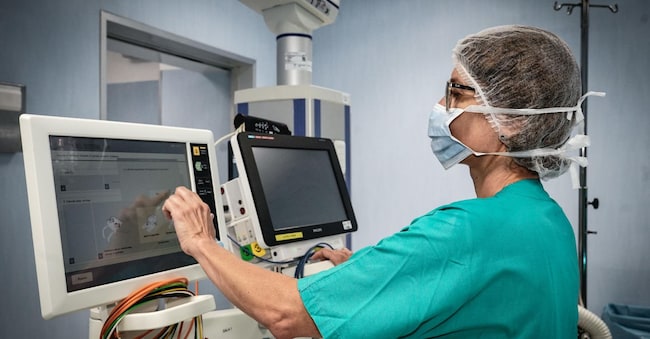
.For example, automated checklists have been appearing in operating theatres for some years now, guiding all stages of surgery, with a camera that tells the surgeon whether the scalpel is in the right place. These technologies greatly reduce human errors especially when combined with clinical risk assessment strategies, which track all sources of risk for the patient during the course of care. Procedures, these, which not only reduce the number of accidents, but also make the doctor safer, who, by following the protocols, is more relaxed from the point of view of responsibility. All this obviously has repercussions on the cost of insurance, which on the one hand provides for the payment of a premium, unlike self-insurances, and on the other hand does not entail too heavy constraints on the funds to be set aside that impact on budgets for years. A detail not to be underestimated, given that, as Parisi recalls, the world of healthcare already 'suffers from a shortage of economic and human resources', with services that 'are increasingly complex also due to the ageing of the population: all elements that lead to an increase in the cost of claims'. For this reason, the observatory can be "a solid element of comparison for individual healthcare facilities that want to compare their safety performance, allowing them to identify - warns Aon's CEO Italy and Eastern Mediterranean - lights and shadows in their work and enabling timely action on the most critical areas".
The most affected departments
.In line with the previous edition of the report, the departments with the most claims are still Orthopaedics and Traumatology (13.3 per cent) and Emergency Room (11.1 per cent), followed by Obstetrics and Gynaecology (6.1 per cent), which gain one position compared to the previous survey and where the top claims are recorded: 2.3 million is the maximum settlement for a surgical error in 2024 and 4 million is the 'reserved' for a diagnostic error. And in terms of the type of claim, we find surgical errors (29.4 per cent), diagnostic errors (16.1 per cent) and falls (8.2 per cent) at the top of the list. The other data that emerges from the Observatory is precisely the decrease in the number of disputes over the decade 2014-2023: from mediations (-21 per cent) to civil proceedings (-21 per cent) to criminal ones (-8 per cent). "This element," explains Enrico Trombetta, Deputy Head of consulting for Italy and South-East Europe at Aon, "indicates a growth in out-of-court settlements between the parties, a sign of the industry's greater maturity and experience in being able to jointly assess the responsibilities at stake and the extent of the damages suffered by the injured party. Although it is beginning to show the first positive signs in terms of increased effectiveness (from 3 to 8 per cent of successful cases), conciliatory mediation in the health sector still represents a weak point in the process of litigation management, since in 92 per cent of cases it does not achieve its main purpose, i.e. finding an agreement between the parties avoiding civil litigation'. Moreover, in about 7 out of 10 cases, 'claims are closed without liability for the facility or the professional'.
The Aon Observatory report also recalls how Covid has led to an increase in the number and cost of infection claims. After peaking at 375 reports (of which 108 were Covid-related claims) in 2021, the pandemic's peak year, these numbers more than halved in 2022 and 2023, returning to pre-pandemic levels in 2019. 'Infections,' Trombetta explains, 'record the highest average amount reserved, reaching a value of over 180,000 euro, an increase of 19% compared to 2023.

