
Heat from purification plants to cities: four proposals for not wasting energy
A dossier by the think tank SHIFT identifies the rules to be changed and the incentives to be built for synergies between water service and district heating

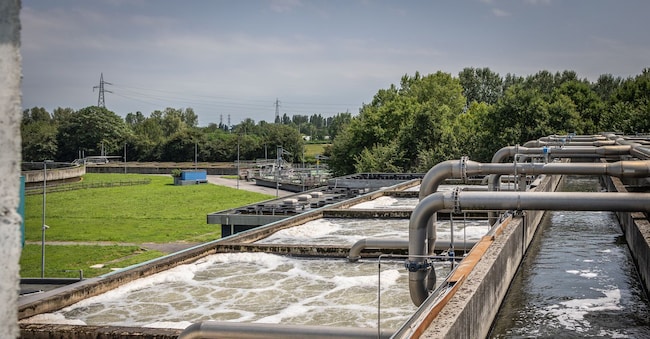
Wastewater holds an almost completely ignored energy asset: heat. The billions of litres of water flowing through sewage networks every day maintain relatively stable temperatures throughout the year, between 10 and 20 degrees Celsius. A characteristic that makes it possible, by means of heat pumps, to raise the temperature of the thermal fluid to the required levels and thus supply district heating networks. Transforming water purification plants into energy hubs capable of supplying heat to cities is the objective at the heart of the first Climate Paper published by SHIFT, a think tank dealing with public policies on the ecological transition promoted by Gruppo CAP that brings together companies, utilities, research centres, universities, associations and stakeholders.
A goal that can be achieved through four concrete measures, addressed to legislators and regulators, defined in the document, to turn a European obligation into an industrial opportunity. The Waste Water Directive (EU) 2024/3019, which came into force on 1 January 2025, requires plants with a treatment capacity of more than 10,000 population equivalents to achieve energy neutrality by 2045. The Energy Efficiency Directive (EU) 2023/1791 also sets binding milestones for efficient district heating networks as early as 2028. The implementing decrees, however, have not yet been transposed into Italian law.
The ignored energy potential
An analysis by the Milan Polytechnic cited in the dossier estimates that two purification plants within ten kilometres of an existing district heating network can provide around 144 GWh of recoverable heat per year, which is about 40% of the heat currently fed into the grid. In Peschiera Borromeo, Gruppo CAP has built Italy's first integrated district heating and cooling plant powered exclusively by biogas obtained from sewage sludge. The sludge, treated in anaerobic digesters, produces biogas which is transformed into electricity and heat. The thermal surplus - in summer converted into cooling energy - serves a shopping centre, a municipal building and an apartment block. Total investment: about EUR 3 million, of which 1.7 million is covered by PNRR funds. Result: 2,800 tonnes of CO₂ avoided each year.
According to the dossier, however, the deployment of these models requires a thorough update of the national regulatory framework. "Sixty-one per cent of perceived obstacles are non-technical, while only 39 per cent can be traced back to technological or infrastructural aspects," the research states. The main critical issues include economic and regulatory barriers, complex authorisation processes and a technical skills deficit in local administrations called upon to plan and approve interventions that integrate energy, water and urban infrastructures. The paper identifies four proposals for action, each addressed to a specific institutional recipient.
First and second proposals: standards and incentives
The first proposal identified in the SHIFT dossier, addressed to legislators, concerns the transposition of European directives. It must be ensured that a thermal kilowatt-hour counts as an electric kilowatt-hour for the purpose of calculating energy neutrality, regardless of whether it is produced with or without a heat pump. This is the so-called '1 for 1' principle, which has already been adopted in Germany and Denmark.

