
Plane crash, heirs of victims cannot sue the insurance company for compensation
The direct exercise of the action must be provided for by the rule, even if it is supranational. The only exception: if the relatives did not die immediately after the impact
by Arturo Maniaci
 Aggiungi Il Sole 24 Ore
ai preferiti su Google
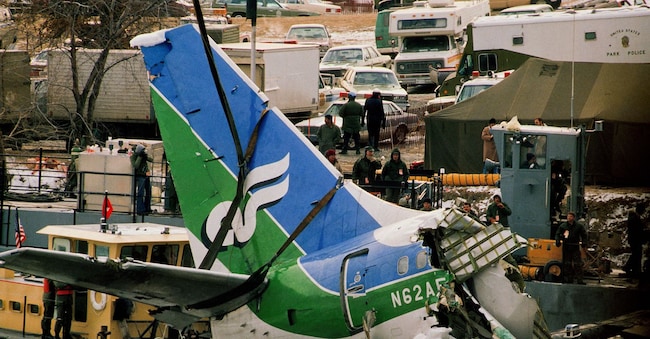
The direct action of injured parties against the insurance company of the civil liability has an exceptional character and is not by default the heirs of the victims of an air accident. The Court of Appeal of Milan confirms the decision of first instance and explains that the direct exercise of the action must be provided for by a legislative source, even a supranational one.
Facts
Following an air accident that occurred in Italy, in which all the passengers died, the next of kin of some of the victims, after having reported the accident to the insurance company that had taken out a policy with the owner of the aircraft and the air carrier, submitting the necessary documentation, filed a lawsuit to obtaininsurance indemnity (within the limits of the policy ceiling).
The claim was rejected at first instance. At the end of the appeal, the Court of Appeal of Milan, with sentence 3259 of 28 November 2025, confirmed the decision of first instance, holding that direct action by injured parties against the insurance company of the civil liable party is of an exceptional nature, so that it must be expressly provided for by a regulatory source, which is lacking in this case, since no direct action is provided for by supranational sources on the subject (and, in particular, by the Montreal Convention of 1999), referred to by article 941, paragraph 1, of the Code of Navigation, whereas article 942, paragraph 2, of the same contemplates direct action against the insurer in favour of the "injured passenger". Nor was a contractual waiver to be found in the policy conditions in the present case.
The protection of the transported third party
Moreover, even on the subject of motor vehicle liability, Article 141 of the Private Insurance Code governs the direct action of the "third-party-transporter", providing that, in the event of an accident deriving from road traffic not resulting from a fortuitous event, the passenger transported has the right to be compensated by the insurance undertaking of the vehicle in which he/she was on board at the time of the accident, regardless of from the ascertainment of liability of the drivers involved (Court of Cassation, 3118/2025). The provision derogates from the general principle expressed by Article 2054 of the Civil Code, emphasising the protection of the third party transported as a weak party and, by its nature, extraneous to the causal dynamics of the accident, allowing the third party transported to obtain more rapid compensation through the direct involvement of the vehicle's insurer.
This provision, however, only applies to cases of damage consisting in non-fatal personal injuries and cannot be extended by analogy to damage suffered by the relatives of the deceased passenger as a result of the accident (as already clarified by case law: Court of Cassation, Joint Sections 35318/2022; Court of Rieti, 234/2020).

