Helen Frankenthaler, between museum and market
At the Kunstmuseum Basel, a major retrospective of the artist's work strengthens institutional demand and accompanies the growth of values
by Maria Adelaide Marchesoni
 Aggiungi Il Sole 24 Ore
ai preferiti su Google
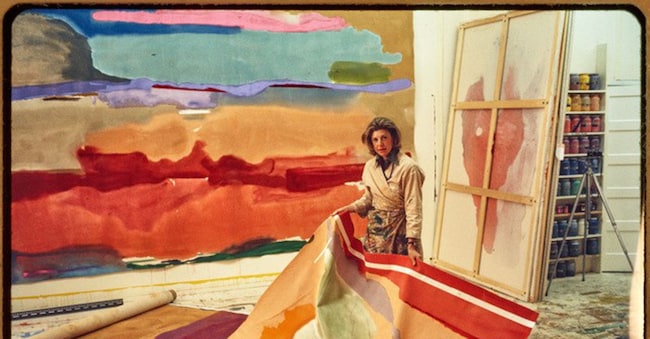
Over the past few years, European museum institutions have started programming more and more women artists, turning what was once an attempt to fill a gap into an established curatorial line. From major historical retrospectives to thematic exhibitions, the exhibition landscape now reflects a widespread and structural female presence.
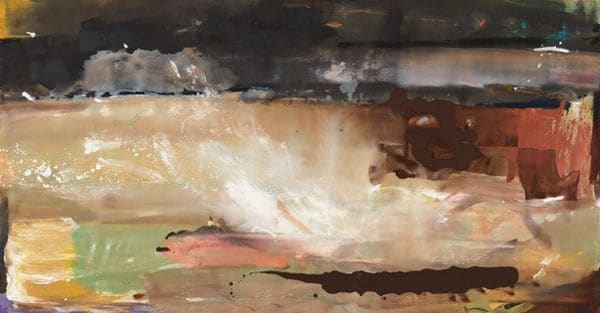
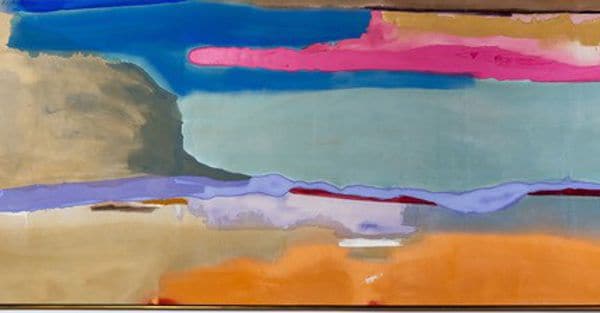
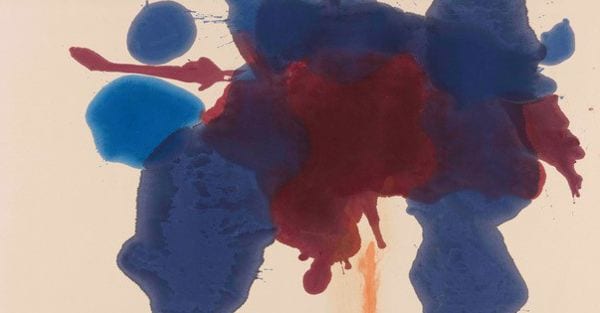
It is in this context that the exhibition dedicated to Helen Frankenthaler (1928-2011) at the Kunstmuseum Basel (18 April to 23 August 2026), an exhibition in which Frankenthaler's pictorial language emerges, based on the famous technique of soak-stain, a painting that renounces the dense gestuality of the more orthodox Abstract Expressionism to open up to a more fluid and luminous dimension, in which form and colour coincide.
With more than 50 works, 37 of which are on loan from the Helen Frankenthaler Foundation, spanning six decades, the exhibition offers a broad overview of the work of one of the most eminent figures of American abstraction ever to have been realised in Europe to date, as well as his first institutional solo exhibition in Switzerland. A central aspect of the exhibition project is the confrontation with historical art, a source of inspiration throughout his career. For the first time, Frankenthaler's paintings are placed in dialogue with works ranging from the 15th to the 20th century, in a juxtaposition that enriches the understanding of his abstract painting. Here are some examples: next to a painting of water lilies by Claude Monet, 'La passerelle sur le basin aut nymphéas', 1919, which is part of the Kunstmuseum's collection, hangs the work 'Claude's Message', 1976, a reinterpretation of Frankenthaler's abstract expressionism, as well as the reinterpretation of 'Fish (Still Life)', 1864 by Edouard Manet (from the Art Institute of Chicago) in the work dedicated to the artist 'For E.M.", 1981.
The impetus for the realisation of the exhibition also relies on a donation from the Helen Frankenthaler Foundation in 2024, as the museum's director Elena Filipovic explained. "The work 'Riverhead' (1963) arrived in Basel, filling a gap in the collection of American art, and at the same time, it was the initial spark to realise the exhibition."
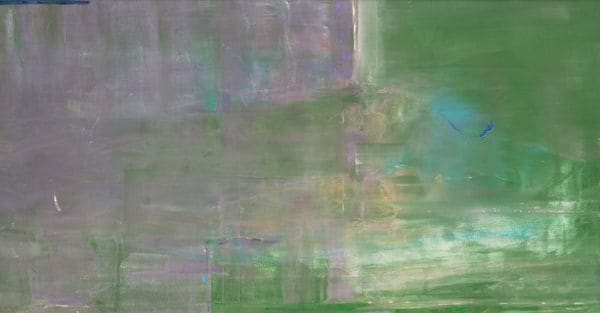
Helen Frankenthaler Foundation
The Helen Frankenthaler Foundation is a non-profit organisation dedicated to the promotion of the visual arts and the enhancement of the artist's legacy, which became fully operational in 2013 and is now the main custodian of her legacy. It manages a significant collection of works, promoting their dissemination through loans to international museums, and supports the art system with programmes for environmental sustainability, research, conservation and scientific publications, including the catalogue raisonné. These activities are complemented by residency programmes, support for young artists and philanthropic interventions, particularly in favour of cultural institutions in times of crisis.