Europe

Hello, is this Europe?

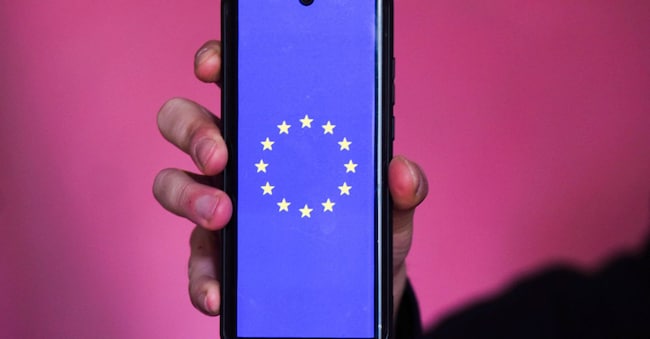
It is not what Henry Kissinger would have wanted, but it is a freephone number across the European Union that citizens can call “for any questions about the EU” and from which they receive answers in the Union’s 24 official languages, as well as in Russian and Ukrainian. From the start of 2025 until last June, the service received over 51,000 calls, of which around 3,200 were from Italia

 Alamy Stock Photo

4' min read

Translated by AI
Versione italiana

4' min read

Translated by AI
Versione italiana

“Who should I ring if I want to speak to Europe?” is a quote attributed to Henry Kissinger, who complained that he had no single point of contact representing the continent. The US diplomat had to speak to too many political leaders and, instead, in the event of an emergency, would have preferred to have just one number to ring.

It is not certain that Kissinger actually said that; he himself says he does not remember it.

Loading...

What is certain, however, is that – even if its purpose differs from that envisaged by the famous Henry – a telephone number for speaking to Europe does exist today, and it is 800 67 89 10 11.

This is a freephone number across the European Union that citizens can call “with any questions about the EU” and through which they receive answers in the Union’s 24 official languages, as well as in Russian and Ukrainian. From the start of 2025 to last June, the service received over 51,000 calls, of which around 3,200 were from Italia.

My dear old phone

“The European Commission communicates and engages with citizens through a wide range of channels: our representations in the Member States, the Europe Direct centres, official websites and social media platforms, as well as the Europe Direct contact centre,” explains Commission spokesperson Arianna Podestà.

The telephone number is one of the services provided by the Europe Direct contact centre. “It’s the EU’s helpline,” continues Podestà, explaining that it also provides answers via email or chat. Most enquiries now clearly come through these digital channels, but there are still people who, due to their advanced age or limited digital skills, prefer to make a phone call.

Looking again at the period from January 2025 to June 2026, 68 per cent of the approximately 169,000 enquiries were received by Europe Direct via email, with only 2 per cent coming via chat, whilst telephone enquiries remain a significant 30 per cent of the total.

Vampires and poems

After all, the telephone offers the chance to explain things more clearly, as well as a sense of connection and warmth. The service’s staff recount that one member of the public, call after call, had grown so attached to one of them that at one point he even dedicated a poem to him.

Sometimes, however, those answering on behalf of the EU receive bizarre or outlandish enquiries that make you smile, such as the operator who was asked who to contact to report a vampire attack. It is unclear whether the call came from Transylvania, the region of Romania associated with the legend of Dracula…

In fact, most of the enquiries received by Europe Direct are of a much more serious nature. Over the last eighteen months, the main topic has been the EU institutions (16.0 per cent), followed by education and culture policy (10.7 per cent) and employment and social policy (10.2 per cent).

Loading...

Italians seeking opportunities

Italian enquiries, on the other hand, reflect different priorities. In one in five cases, our fellow citizens turn to the EU to seek information on employment and social policy. This is followed by an interest in the Union’s institutions and its educational and cultural policies.

“The enquiries we received from Italian citizens were mostly of a practical nature,” continues the EU Commission spokesperson, Podestà. “For example,” she continues, “students needed help drawing up their Europass CVs in preparation for job applications; young professionals were seeking information on career opportunities within the EU institutions; whilst others were checking their eligibility for DiscoverEU, Erasmus+ and other EU programmes relating to education and youth mobility.”

“We have also received enquiries from researchers seeking information on EU-funded projects, and from businesses requiring support with digital tools, market access and EU regulations,” he adds.

Other issues, such as migration and consumer rights, have attracted less interest, accounting for around 4 per cent and 5 per cent of total requests respectively, with figures in both cases below average. Overall, Italia is the country from which the second-highest number of requests originated. Only Germany submitted more, whilst requests from Spain, France and Belgium follow those from Italia.

Practical test

In conclusion, I decide to try out the service for myself. I ring the number and speak in Italian to a friendly operator: I ask her if she can help me find out which and how many EU funds have been allocated to my home town, in the province of Milan, in recent years.

She guided me through the process, explaining in broad terms how the mechanism works that channels European funding from Brussels to the regions. She asked me if I was interested in any specific funds and then concluded the call – which lasted just under ten minutes – by saying she would send me an email with further details within two working days.

Right on time, the message arrives, providing some of the information I asked for and telling me who to contact to get the rest. All in all, I’ve passed the practical test.

Human contact

The email also advises that, should a telephone call not suffice, you may contact the Europe Direct offices, which are located in every country of the European Union. “Most citizens,” explains Podestà, “are looking for quick digital answers to their questions. However, we know that some of them still prefer to obtain information in person.”

In Italia, there are 46 Europe Direct centres and, as the Commission spokesperson goes on to say, “they work with local partners such as universities, libraries and local councils”. “As well as providing citizens with direct access to information on EU policies, priorities and official sources, they also engage with local communities, for example by organising round-table discussions with citizens, activities in schools, debates and events,” she concludes.

Copyright reserved ©
Loading...

Brand connect

Loading...

Newsletter

Notizie e approfondimenti sugli avvenimenti politici, economici e finanziari.

Iscriviti