
Henze, Debussy and Wagner resound from lush foliage

Year III: Ramifications. Reflecting on Verdi’s oeuvre – which cannot be confined to a single interpretation – the Festival has set itself the aim of broadening its horizons and charting new paths. Verdi’s universal themes enable us to chart a course that reveals how some of these have become a source of inspiration, a point of reference and a benchmark for other composers.
The common theme, which has been chosen for the Festival’s programme for the past three editions, is thus revisited, placing it within a historical context and expanding its meanings and connections through concerts and other events that not only enrich the programme but also reveal many different perspectives and ways of interpreting the works. These are, in fact, the branches which, springing from a single root, extend towards a multitude of interpretations, exploring new paths; and they become an integral part of the Festival’s innovation.
In 2024, for example, when the Festival’s theme was ‘Power and Politics’, the relationship between Verdi and Nono, Schoenberg, Shostakovich, Monteverdi, primarily through thematic affinities, even those separated by great chronological distances: power, politics, violence, freedom, and the individual’s relationship with power. In 2025, ‘Ramificazioni’ evolved, becoming a venue for the production of new music and new musical theatre. This year’s theme is ‘Distant Worlds’, reflecting on cultural diversity in contemporary society and the importance of relationships between peoples and individuals. *Aida*, *Alzira* and *Nabucco* – the operas on the programme – raise the question of the Other, the exotic and ‘distant worlds’; from this foundation, the Festival weaves a tapestry that spans from Wagner to Ronchetti, via Debussy, Dvořák, Stockhausen and Henze.
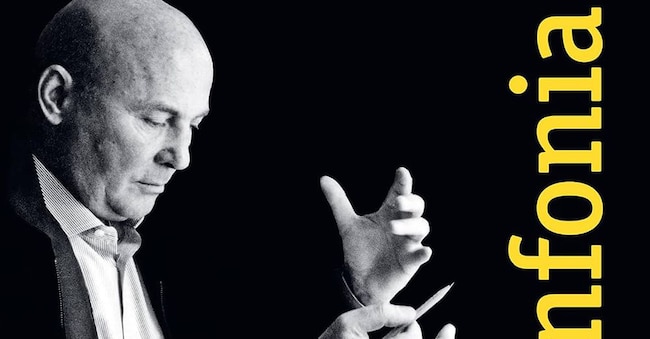
On 4 October at the Paganini Auditorium, designed by Renzo Piano, the Toscanini Orchestra, conducted by Ingo Metzmacher, will perform the prelude to Wagner’s *Parsifal*, Henze’s *Appassionatamente plus*, Debussy’s *Prélude à l’après-midi d’un faune* and *La Mer*. In Wagner’s work, the relationship with Verdi is both historical and aesthetic: the late Verdi was familiar with Wagner’s influence, yet engaged with it in a fascinating dialectic; furthermore, whilst *Parsifal* is Christian in its imagery, it is nevertheless permeated by Schopenhauer’s philosophy and Wagner’s interest in Buddhist thought – hence ‘distant worlds’. This is a realm to which Henze, who acknowledged his debt to Verdi the dramatist, leads us through Mishima’s Japan; Debussy shares this same fascination, opening up to the East as encountered at the 1889 Exposition: listening to the gamelan leaves its mark on *La Mer* and the *Quartet*, to which is added the allure of *Japonisme*. It is this latter piece that we shall be hearing on 7 October at the Regio with the Magnani Quartet, paired with Dvořák’s ‘American’ Quartet. The Bohemian composer was well acquainted with Verdi’s music, having played his operas in an orchestra; in this work, he looks above all to the New World, to its rhythmic and melodic suggestions – a ‘distant world’, indeed.
On 15 October, in the magnificent 17th-century wooden Farnese Theatre, designed by Giovan Battista Aleotti, the premiere of the Italian and Arabic versions of *Zenobia Regina* by Lucia Ronchetti (1963) will take place. This chamber opera features an actress, a vocalist, a mezzo-soprano, a female vocal ensemble, a string sextet and percussion; it draws inspiration from Albinoni’s opera of the same name and the figure of Zenobia of Palmyra, but engages in an ideal dialogue with *Aida*, *Nabucco* and *Alzira* on the representation of the Other, reinterpreted through the lens of the recent Syrian migration to Germany.

