
Here are the highest-paid CEOs on the Milan Stock Exchange
The gap between CEOs and the rest of the board is widening

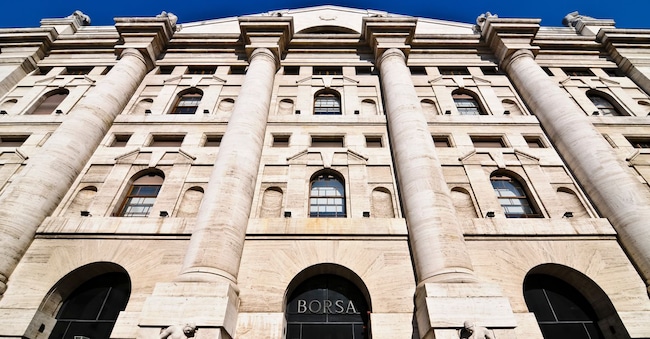
The analysis of executive remuneration presented in the ‘Study on the Remuneration of Boards of Italian FTSE MIB Companies: Year 2026’, carried out by Cutillo & Partners as part of the research activities promoted by the Executive Compensation and Corporate Governance Observatory at Luiss Business School (LBS), paints a complex picture characterised by multi-million-euro figures and highly sensitive governance dynamics. In particular, the picture regarding company executives reveals a complex situation, characterised by significant figures, sectoral concentrations and governance dynamics, the data for which is provided by the authors of the study in the notes accompanying it.
Based on specific data from the leading companies in the market, the ranking of the 10 highest-paid CEOs in 2025 reveals total remuneration running into several million euros. In first place is Carlo Messina (Intesa Sanpaolo) with a total value, comprising the sum of total remuneration and the fair value of equity, of €12,620,900. He is followed by Andrea Orcel (Unicredit) with €11,474,280 and Philippe Donnet (Generali) with €10,119,714. This ranking reflects market trends: the highest-paid CEOs are largely from the financial and energy sectors (such as Claudio Descalzi of Eni and Flavio Cattaneo of Enel, on €8.3 million and €7.9 million respectively), sectors which have recorded extremely significant earnings and stock market performance in recent years. And almost all of the top 10 positions listed here are linked to positive performance. Broadening the view to the entire sample of 34 Italian companies on the FTSE MIB analysed in the Cutillo & Partners study, a significant structural issue emerges: the stark disparity between the remuneration of the CEO and that of Non-Executive Directors (NEDs). Whereas the target median total remuneration for the CEO is over €3.5 million, a NED receives a median actual total remuneration of just €116,250. Expressed as a percentage, the ratio between the total remuneration of the NED and that of the CEO stands at an average of just 2.5%. In practical terms, the CEO earns around 40 times more than his fellow board members.
Criteria for determining
The second major systemic issue concerns the difficult correlation between remuneration and the company’s actual performance (the so-called ‘pay-for-performance’ principle). The study notes that it is complex to define this link in a clear-cut manner: for example, despite generally positive performance, the short-term cash bonuses (STI) paid to company executives in 2025 paradoxically decreased compared to the previous year (from €816,000 to €762,000 on a median basis). This is because the measurement of bonuses depends not only on profitability indicators such as ROE (which does show a certain correlation with payments), but also on company size, sector, type of shareholder and the timing of bonus payments. To seek a closer alignment with value creation, companies – according to the study – are increasingly shifting the weight of remuneration towards long-term incentives (LTIs), which now account for 37% of the median remuneration package and amount to around €1.4 million, distributed mainly through performance-linked shares (performance shares).
The Advisors
Then there is the issue of advisers, who often provide other services to companies as well. There is a risk of a conflict of interest if these services are commissioned by the very entities on whose remuneration the advisers will give an opinion. On this point, Guido Cutillo explains: ‘The independence of advisers on these matters is a very sensitive issue that is receiving increasing attention from the market as well. Clearly, relying on companies that sell hundreds of thousands or even millions of euros’ worth of other products or services for this service exposes issuers to significant legal and reputational risks. This issue probably deserves far greater attention from independent board members and Remuneration Committees.” ESG (Environmental, Social, Governance) criteria are now firmly established in this long-standing context, present in 100% of the companies analysed and accounting for up to 20% of incentive schemes. However, it is precisely regarding sustainability-related parameters that a debate is reported to be emerging (see the interview on this page).
The other key figures
Turning instead to other key figures in corporate governance, the study provides an interesting overview of the remuneration of chairmen of the board of directors and the board of statutory auditors. For chairpersons, analysed this year regardless of whether their role is executive or non-executive, the median fixed remuneration stands at €453,750, a moderate increase compared to the previous year. The remuneration of these figures remains predominantly fixed, with the variable component limited solely to cases where there are significant executive powers. There is also a clear sectoral divide: in the financial market, due to more complex and heavily regulated governance, the median remuneration of chairpersons is 40% higher than in non-financial companies.

