
Here is the digital notebook that helps you manage sources with artificial intelligence
It is called NotebookLM, is an experimental tool for journalists and writers and was created by Google Labs

2' min read
2' min read
When I heard about the NotebookLM project in the summer of last year, I thought for a moment that it was all over. That my job as a journalist and researcher had reached a turning point, and not necessarily a positive one. At the time, the tool designed by a team of experts at Google Labs was presented as an attempt to reimagine note-taking software, designing it from scratch and starting from a language model (hence the name LM).
The first automatic thought at the time was that of a sort of article generator: a mediocre but quick-witted journalist who knows everything by hearsay and always says whatever is most likely to be expected of him. What was presented last week, however, is something more interesting. After 12 months of work, Google has released a tool with a clearer intention, which is to help users make the most of their critical thinking to generate unedited content, using customised artificial intelligence based on reliable information.
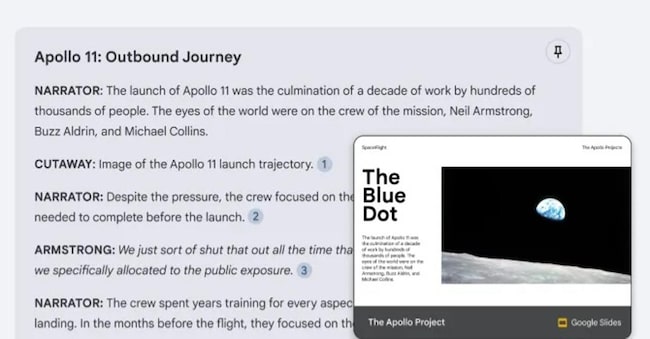
What he has 'learnt' to do is to read the material at hand, make new links between information to generate content from the uploaded notes and memos and from complementary information sources such as Google Slides, websites, Google Docs, text and PDF files (including interview transcripts and company documents). So it reads more and from more sources. Then the second novelty is that it identifies among the selected sources the most relevant content and consequently facilitates the possibility of verifying an answer provided by the AI or going deeper into the original text.
We are therefore talking about source-based artificial intelligence, which means that the AI uses the information uploaded by the user to answer his or her questions. The promise and the bet is to reduce hallucinations and misinterpretations by linking the answer given directly to the source used, and thus adding context. Early evidence tells us that the phenomenon is more limited but by no means gone. It is always a good idea to double-check what you are telling us.


