Games

Here is Marathon, Bungie's return is already a bet

Ten hours of gameplay are not enough to judge Bungie's new shooter. Marathon abandons the narrative formula of the 1990s and becomes a competitive extraction shooter


by Luca Tremolada

4' min read

Translated by AI
Versione italiana

4' min read

Translated by AI
Versione italiana

This is not a review. It's ten hard-earned hours of gameplay that weren't even enough to get a moving picture of what Marathon is today, what is widely anticipated as the grand return of one of Bungie's historic PlayStation series, which debuted in early March.
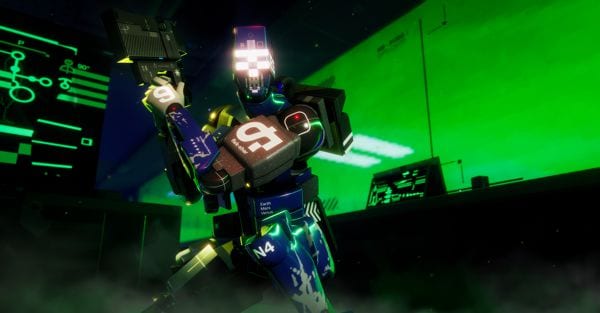
This is not a review because, as the developers themselves have asked, the game is not yet up and running: the servers have been acting up on opening days. But also because in 2026, after the failures of Concord and Highguard, it is complicated to evaluate live services lucidly. We are talking about a category of video games that live for years thanks to continuous updates, seasons, and microtransactions, but which over time seems to be gaining less and less popularity, especially among the younger generation. Recall that Sony acquired Bungie in 2022 for around $3.6 billion precisely because it wanted the Seattle studio's expertise in live-service games at all costs.

Loading...

At the same time, the writer was an early fan of Destiny, Bungie's last great success, whose legacy Marathon picks up. Given all these premises, which are meant to be an expression of a basic fragility in evaluating the game, Marathon has not yet convinced me but has intrigued me like few video games in recent years.
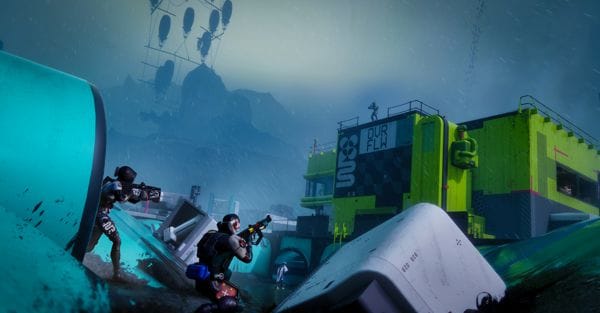
It is no longer the old narrative shooter of the 1990s to which I was so attached: it has become a multiplayer shooter, i.e. a competitive game in which small teams enter a map, retrieve resources and try to get out alive while other players do the same. A niche genre, but highly coveted today because it can support 'game as a service' business models.

What we have understood so far.

In the game you play a Runner, a kind of cybernetic mercenary who explores an abandoned colony on the planet Tau Ceti IV. Each Runner has different abilities. Some are faster, others are tougher or specialise in ranged combat. The choice of Runner greatly changes the way the game is played, because Marathon does not reward the one who shoots the most but the one who handles information, position and escape better.
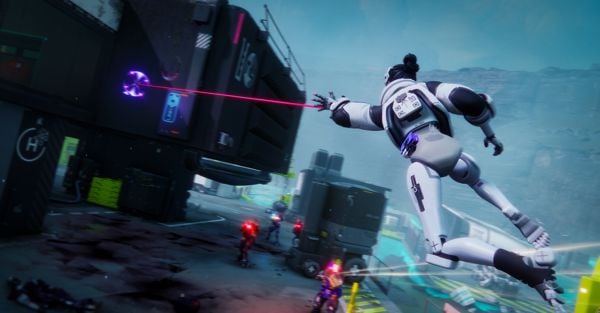
The game starts with entering the map with other teams of players. You do not know where the others are and this uncertainty is part of the game. You have to search for equipment, complete small objectives and decide when to extract yourself, i.e. reach an exit zone. Here comes the first unwritten rule: greed kills. The more loot you collect, the more you become a target and the more you risk losing everything.

Three pieces of advice.

The first is that information is worth more than weapons. Hearing footsteps, understanding where gunfire is coming from or reading the map is often more important than having the best equipment. Experienced players move slowly and listen a lot.

The second is that escape is part of the strategy. In the first matches many new players always look for combat. In Marathon, running away is often the best choice. Surviving with little loot is still progress.

The third concerns equipment management. There is a kind of economy in the game: what you take out you can reuse in subsequent games. This means that each expedition is also a gamble. Entering with rare weapons increases your chances of winning but makes losing much more painful. The most profitable matches are often those in which you decide to extract yourself earlier than you would like. The temptation to do 'one last build' is the cause of most deaths.

Loading...

So how is Marathon?

The first striking element is the technical quality. Bungie still knows how to build a shooter. The gunplay - the way weapons and movements react to the player - remains among the best in the industry, a direct legacy of the experience accumulated with Halo and Destiny.

The first missions were frustrating. So were the ones that followed. We are talking about tense and unpredictable games, with an almost paranoid atmosphere, where any decision can mean losing all the loot collected.

The problem is everything around it. Marathon can be brutal for new players: the game immediately introduces very complex mechanics, almost as if a user were catapulted directly into Destiny's most difficult missions. Onboarding, i.e. the initial learning phase, is considered one of the most fragile points of the experience.

Then there is the bigger issue: context. In recent years many such titles have been shut down after a few weeks because they were unable to build a stable player base. The result is that even a strong project, backed by Sony and developed by a studio with Bungie's experience, still feels like a gamble today.

The economic potential of persistent games is enormous, but the market is saturated and unpredictable. What is needed is a community of committed gamers who play persistent games. Able to help the inexperienced. To accumulate experience to discover the secrets of the game.

The overall judgement, at least in early reviews, is therefore suspended. Marathon is a solid shooter, elegant in design and capable of producing moments of great competitive tension. But it is also a game built around a difficult business model, requiring years of updates and a very loyal community to make it work.

After all, Marathon is almost an economic experiment as well as a game. Bungie tries to build a persistent world where every game has consequences. It is not a shooter where you go in, shoot and start again. It is more like a scientific expedition on a hostile planet.

It is no longer the old narrative shooter of the 1990s to which I was so attached: it has become a multiplayer extraction shooter, i.e. a competitive game in which small teams enter a map, retrieve resources and try to get out alive while other players do the same. A niche genre, but highly coveted today because it can support 'game as a service' business models.

tense and unpredictable matches, with an almost paranoid atmosphere, where every decision can mean losing all the loot collected.

Copyright reserved ©
  • Luca Tremolada

    Luca TremoladaGiornalista

    Luogo: Milano via Monte Rosa 91

    Lingue parlate: Inglese, Francese

    Argomenti: Tecnologia, scienza, finanza, startup, dati

    Premi: Premio Gabriele Lanfredini sull’informazione; Premio giornalistico State Street, categoria "Innovation"; DStars 2019, categoria journalism

Loading...

Brand connect

Loading...

Newsletter

Notizie e approfondimenti sugli avvenimenti politici, economici e finanziari.

Iscriviti