
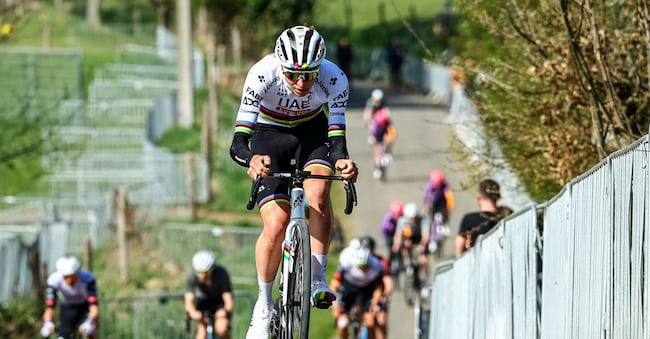
Here is the Tour of Flanders, the University of Cycling. The duel between Pogacar and Van Der Poel returns

5' min read
5' min read
Walls, mud and cobblestones: this is the Tour of Flanders. Which for the uninitiated is the University of Cycling, a race with 19 walls that look like cathedrals. And with a stadium atmosphere that rivals the Maracanà in Brazil. Grandstands with champagne and asparagus that cost an arm and a leg. There is even talk of 500 euros for a place on the Kvaremont, the penultimate ramp before the extremely tough Patemberg, 13 kilometres from the finish.
In total there are 269 kilometres, but the real merry-go-round begins when the walls come in, one hundred and forty kilometres from the end. For spectators it is the 'Ronde' of pleasure, for those who pedal a centrifuge that leaves no escape.
There is no cheating on the walls, only meritocracy applies. The only variable are accidents and punctures. Whoever wins, however, almost never wins by chance. There is always a reason, even if sometimes an outsider comes out on top. "Watching it on TV,' says Vincenzo Nibali, 'I always wondered what it meant to be here. When I did it I understood: how to end up inside a washing machine for six hours'.
A national festival, with beer, music and sausages, started in 1913 by an idea of a journalist (sometimes we have good ideas) and attended by about one million people, almost a tenth of the whole of Belgium.
A Woodstock of cycling that since 2012 has been orphaned of its symbol, the Grammont wall, sacrificed in the name of spectacle on the altar of a new circuit. There are still many nostalgics who talk about how magnificent Flanders was with that rock-climbing monument that split the race. But time and business grind everything down. Even the heroes of the cobblestones have to put on a good face for marketing and TV. But Flanders, say the faithful, is still Flanders. Not even the Second World War stopped it.


