
Heritage, a living resource that gives value to all
Changes has already activated courses and a design summer school between researchers and companies
by Ilaria Manzini *
 Aggiungi Il Sole 24 Ore
ai preferiti su Google
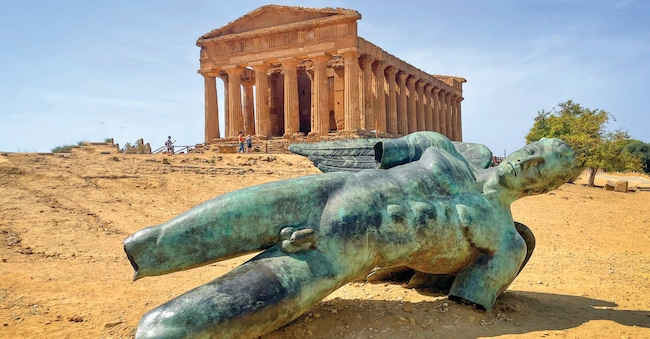
What comes to mind when we think of Italy's cultural heritage? Perhaps the first image that comes to mind is the familiar and reassuring one of squares, museums, monuments, parks that tell stories from the past and intertwine with our emotions and memories. But today that panorama asks us for something more: not only to be protected, but to be brought into play as a living resource, capable of generating value, opportunities, community.
It is with this vision that the Changes Foundation - an acronym for Cultural Heritage Active Innovation for Next-Gen Sustainable Society - was born and operates. Our task is not simply to know and preserve, but to open up and enable: to make research, technology and business dialogue; to multiply the relationships between those who study, those who work in the sector and citizens; to propose innovative roles to heritage for the present time.
The Foundation is the operational heart of a nationwide partnership (there are twenty-five partners including universities, research organisations, companies) operating within the framework of the NRRP as a strategic hub for Italy's cultural heritage. It networks nine thematic spokes - from historical landscapes to virtual technologies for museums, from cultural resources for sustainable tourism to the resilience and protection of cultural heritage in the face of natural and man-made hazards - each designed to generate applicable knowledge and concrete services.
It is not a mere technological infrastructure: Changes is a laboratory of models, experiments, prototypes with a national scope. We want what works in one context to be adopted (and adapted) elsewhere: from the collections of large museums to widespread heritage sites, from large cities to small villages. On this horizon, the very concept of 'valorisation' changes: it is not just cultural marketing, but an inclusive process that starts from communities and activates local skills.
The models that inspire our work follow three fundamental guidelines. Firstly, research, business, institutions and civil society working together in a stable, not occasional way. We do not want top-down interventions, but cooperative platforms built on structural relationships. Secondly, the data (archival, 3D, diagnostic) that we develop must be fully accessible, interoperable and reusable, in compliance with international standards. The last guideline concerns social and territorial sustainability: in the spirit of the Faro Convention, which links cultural heritage, human rights and social and democratic development, Changes aims to reduce the gap between those who have access to heritage and those who remain on the margins.

