
Aosta Valley's heroic wine is stronger than Trump's tariffs
There is growing market interest in a high quality product made from typical grape varieties. The high altitude factor: unique characteristics from vineyards up to 1,300 metres above sea level

4' min read
4' min read
Raise your hand if you think of Valle d'Aosta when you are asked to associate wine with an Italian region. Of course, it cannot be the first mentioned, given the quantitative and qualitative competition from giants such as Piedmont or Tuscany, but from the point of view of viticulture the Valle d'Aosta is a land of heroes, in the true sense of the word, like few others.
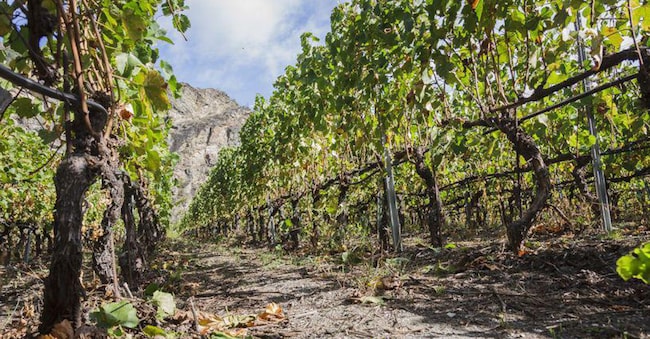
"Ours is an extreme, mountainous viticulture, carried out almost always under very difficult conditions," explains André Gerbore, vice-president of the regional Consortium of Wines, an organisation that brings together 48 members between private companies and cooperatives and represents 97% of the region's production. "Here there are areas that need 1,500 hours of work per hectare, while in Piedmont the average is 180. Moreover, in Piedmont those 180 hours are carried out on a tractor, while here practically everything is done on less'.
Perhaps not everyone knows that wine growing in Valle d'Aosta boasts ancient origins. 'The types of cultivation,' Gerbore recalls, 'are influenced by Roman and Etruscan influences: bush-trained cultivation later transformed into rows dates back to the Romans; pergola-trained cultivation to the Etruscans. The activity has benefited from its geographic position, which has always been on the trade routes between Italy and the rest of Europe, but has experienced alternating fortunes: "In 1880 there were about 3,800 hectares of vines, but today we are down to just 390 hectares," says the vice-president of the wine consortium, who is also president of the Cave des onze communes, 600 thousand bottles of production per year. As in other regions, three factors were essentially responsible for the collapse: the impact of phylloxera, which decimated the crops; the arrival by rail of cheaper wines from other areas with higher production; and the rise of industry, which guaranteed safer wages and employment.
For the last few decades, however, there has been a reversal in the trend, with a return to full-time winegrowing by the younger generation as well. 'Today, production is around 2 million bottles per year, but within a few years we will rise to 2.7 million,' predicts André Gerbore. This is also thanks to the new plants, for which the new call for tenders is closing these very days: the Department of Agriculture and Natural Resources, with Departmental Decree No. 147317 of 31 March, extended the deadline for applications for new authorisations to next Wednesday, 30 April. "The market," says the Councillor for Agriculture Marco Carrel, "is looking with ever-increasing interest at Valdostan viticulture, and in recent months the Councillor's Office has been in discussion with the Wine Consortium and the players in the sector on the issues for the development and prospects of viticulture.
Certainly, the 'strong climate of uncertainty and disorientation generated by the U.S. administration's volatile trade policies are creating impasses and some problems for our sector,' points out Alessia Gontier, president of Coldiretti Valle d'Aosta. However, 'the approach of most US importers remains positive, and it should be emphasised that our type of product is in the medium-high quality bracket and therefore suffers less than others from the effects of an ongoing trade war,' Gontier points out. Valdostan wine has a price range of between 10 euro and 100 euro per bottle, with about 80 per cent of production within 30 euro.


