
The hidden costs of going back to school: up to €1,200 a year on private tuition and extracurricular activities
An in-depth analysis of the sector, covering services and options, and the costs placed on household budgets. A comprehensive survey examining the old system and the emergence of AI

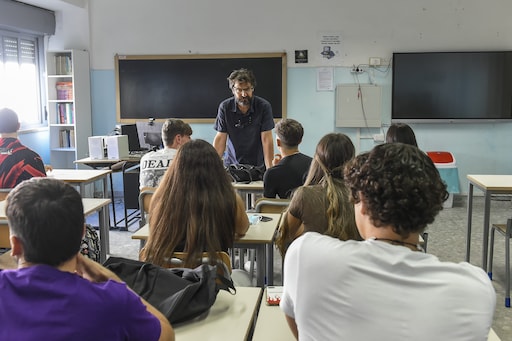
Every year, millions of Italian families ask themselves the same question: how much does a private tutor cost? The answer depends on many factors: the city you live in, the subject to be studied, whether you prefer face-to-face or online lessons, and the tutor’s experience. What is certain is that the market for private tuition in Italia is growing steadily, fuelled by an increasingly diverse demand from students ranging from primary school right through to university.
Private tuition details
According to data from Letuelezioni’s ‘Lezioni Private 2026’ Price Observatory, which Adnkronos/Labitalia has been able to examine – based on over 94,000 active adverts across Italia – one hour of private tuition per week has a median price of 54 euros per month, amounting to almost 500 euros over the school year. If a family also adds an extracurricular activity, such as music or dance, the cost rises to 134 euros a month, over 1,200 euros over the course of the year. Extracurricular activities cost more than academic tuition alone: sport and music cost up to 70 per cent more than basic tuition.
The gap between cities
And the gap between cities is not the same everywhere: for school-based tuition, it does not exceed 25 per cent between the most expensive and the cheapest city (from 12 euros to 15 euros per hour), but for extracurricular tuition it reaches as high as 75 per cent (from 12 euros to 21 euros per hour). Rome, Milan and, surprisingly, Ravenna are the most expensive cities for academic tuition alone, all at 15 euros an hour.
Online and face-to-face
In Italia, unlike in other European countries, both online and home tuition lessons cost more on average than face-to-face lessons. Convenience has a perceived value that students and families are willing to pay for; online lessons are no cheaper than face-to-face ones. For 14 of the 30 subjects analysed, the online price exceeds that of face-to-face lessons. The most striking example is Italiano for foreigners: 15 euros per hour online compared with 12 euros per hour face-to-face (+3 euros per hour). Mathematics, English and French follow with a price difference of +€2 per hour. As in all education markets, the student’s level is one of the main drivers of price. The more advanced the course, the greater the specialisation required of the teacher and, consequently, the higher the rate.
The material affects the cost
The subject is one of the factors that most influences the price. Subjects that are technically more demanding, where there is a shortage of specialist teachers, or where demand is high, tend to command higher fees.

Brand connect


Newsletter Scuola+
La newsletter premium dedicata al mondo della scuola con approfondimenti normativi, analisi e guide operative
Abbonati