
High living costs and weather dampen tourism
In the Savona area working on the creation of a portal where guests can find experiences to buy, from excursions to food and wine and sports

4' min read
4' min read
'It was a summer with an August in line with that of 2024'. This is the first balance for the hospitality industry drawn by Aldo Werdin, president of Federalberghi Liguria, talking about a season conditioned by the weather. "From June to the end of August, the Levante area (from Camogli to Moneglia ed.) recorded a drop in admissions of between 2 and 3% and it is the first time there has been a minus sign in the last 15 years excluding the Covid period," the president continues. For the other provinces, the trend is stable compared to last year'. As for September and October, the low season months, a slight increase in admissions is expected, indicatively between 2 and 3%, in La Spezia and Genoa and the surrounding areas. In this case there is the Boat Show effect, taking place from 18 to 23 September, which should lead to a full house in the area. In Imperia, the attendance barometer for the coming weeks is stable, a bit like in Savona.
The mix of presences sees a definite drop in Italians, who, according to Werdin's data, drop to a 20% share from 27% in 2024. There was also a slight drop of between 2 and 3% in US guests, while between San Remo and the Levante there were Russian customers again, perhaps with dual passports or living between London and the Arab Emirates. On the whole, arrivals from the European area are stable, with clients from Holland, Belgium, Germany and Switzerland holding their ground. "Year after year arrivals continue to increase from Hungary, Romania, Poland and Bulgaria, guests who generally prefer the Riviera di Levante," Werdin emphasises.
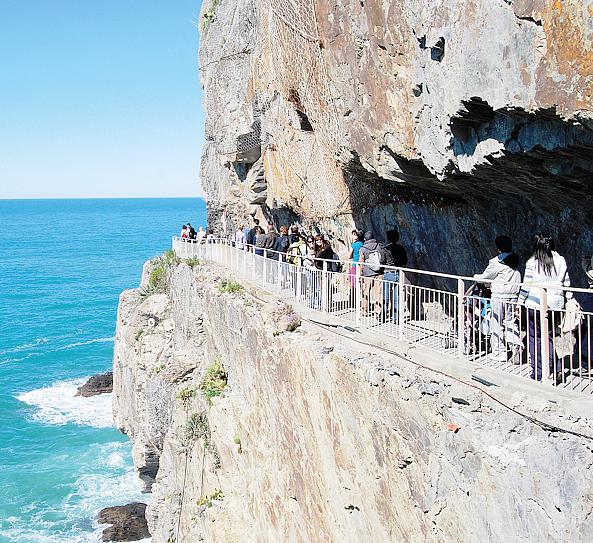
Entrepreneurs in the sector are feeling the competition from non-hotel hospitality and are leaving behind a bad July in which inclement weather literally 'burnt' four weekends. The drop in admissions has not only wiped out the good results achieved in June, but is also part of a difficult economic cycle, marked by a drop in consumption and with the length of stay, on average, becoming shorter. In Ferragosto, for example, the famous and scenic 'Via dell'amore' in the Cinque Terre, with paid access and compulsory booking where two adults and two children over 11 years of age spend around 170 euro for the all-inclusive package, had very few visitors and was deserted at times. This year the number of visitors to the Via is lower than in 2012.
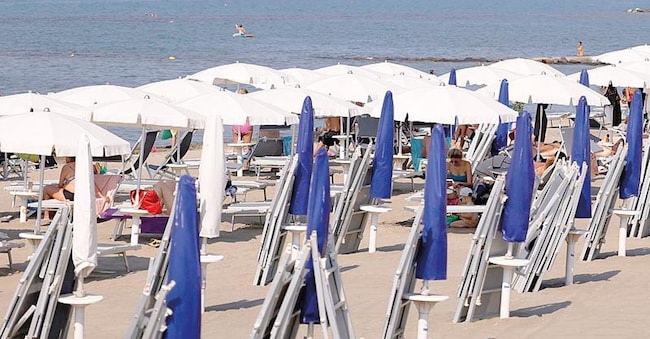
Ferragosto in Liguria was almost sold out. A survey by Codacons highlights the average price of the holiday for a family of two adults with two children in a three-star hotel: in Lerici, near La Spezia, they spent around 2,130 euro while in Santa Margherita Ligure it was 3,600 euro. To this must be added the cost of the bathing establishment, at least 30 euro per day for two sunbeds and a beach umbrella.
"It certainly wasn't the best summer, but we are coming from two post-Covid years in which incredible numbers were achieved, and then you have to distinguish company by company," said Sandro Tarella, president of Federalberghi Tigullio, adding, "Italian customers were missing and foreign ones took over. August did not manage to repeat the same month as 2024 because in the last week of the month there was a downturn due to bad weather. There is confidence in September and October and favourable weather. "For this month there is a fair number of bookings and if the weather helps us, what we forgot for a few years will come: last-minute bookings. It is the return of bookings that arrive 7-10 days earlier, with customers looking at the forecast and then deciding. The average length of stay is reduced to around three nights, perhaps with two or three repeated stays over the course of the season. A holiday style that for the first time actually forced hoteliers to cancel the 'minimum number of nights per stay'.

