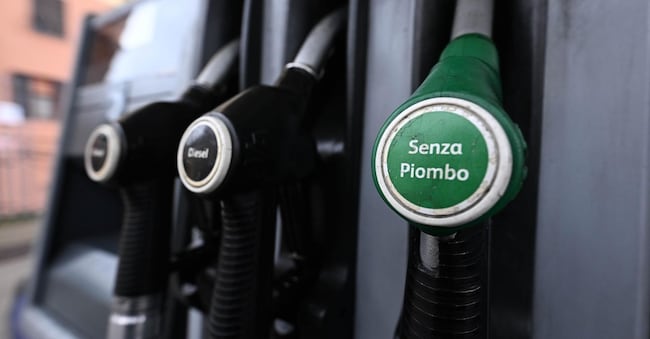
From 2009 onwards, however, prices stopped fluctuating erratically and began to follow a precise pattern: an increase every Thursday, followed by cuts of exactly 2 cents per litre each day for the rest of the week. The companies’ margins, which stood at around 5 cents per litre before 2010, doubled within a few months. All this without a single secret meeting, phone call or email: BP, the leading operator with 22 per cent of petrol stations, took on the role of price leader: every Wednesday it raised prices at around fifteen of its stations, one day ahead of the others. The others check the government website and follow suit on Thursdays. Mandatory transparency, designed to protect consumers, has created the perfect tool for coordinating prices without speaking to one another.
A second way in which transparency policy can have unexpected consequences appears to be the opposite of the first, but is equally instructive. In Melbourne, five major chains (BP, Caltex, Woolworths, Coles and 7-Eleven) were subscribers to a private platform, which shared the prices of all petrol stations every 15–30 minutes amongst its subscribers. The Australian competition authority launched an investigation, convinced that this sharing of pricing information facilitated collusion, and in 2016 succeeded in getting Coles, one of the companies involved, to leave the platform. The expected outcome: greater competition. Actual outcome, documented by Byrne et al. (2025): margins increased by 50 per cent, for both Coles and its rivals.
Deprived of access to real-time data, Coles had ceased to react instantly to its competitors’ moves. This enforced lack of information had, paradoxically, turned into a strategic advantage: by becoming slower and less predictable, Coles had unwittingly assumed the role of price leader. Its rivals, knowing that Coles would not react immediately to any price cuts on their part, had less incentive to engage in a price war. The tacit collusion grew stronger, rather than weaker. The authors estimate an increase in aggregate profits for oil companies of 33 million Australian dollars a year – an unexpected consequence of the measure that was actually intended to increase competition.
Taken together, the two studies reveal something profound about the functioning of oligopolistic markets – that is, markets in which a few large operators monitor one another, as is the case in the fuel retail sector, but also in telecommunications, banking and large-scale retail. The structure of the available information is a strategic variable that firms know how to exploit. Too much public transparency can become a channel for tacit coordination. Too little, distributed asymmetrically, can create situations that nonetheless weaken competition.
There is no simple solution for the regulator. Should prices be made more transparent? Should data sharing between companies be banned? The correct answer cannot be found without an empirical analysis of the data – precisely the sort of painstaking work, involving millions of observations and years of historical data, that characterises academic research.