
Orange hydrogen: highly competitive, but with environmental and technological concerns
The Earth is being transformed into a permanent reactor. Immediate impact: fuel for commercial flights

Key points
Orange is the new white. In the rainbow of the energy transition, where ‘green’ hydrogen (from electrolysis) is struggling to take off due to the sky-high costs of the plants, and ‘white’ hydrogen (the naturally occurring geological variety) is sparking a new gold rush, a third colour is also emerging. The new frontier is ‘orange’ hydrogen: an engineered process that aims to produce this clean energy carrier directly in the bowels of the planet, transforming the Earth itself into a permanent, renewable reactor.
Triggering a chemical reaction underground
The idea is to artificially replicate serpentinisation – that is, the chemical reaction that occurs when water seeps into the subsoil and comes into contact with iron-rich rocks, producing hydrogen and rust. In nature, this process takes millennia, but some are aiming to speed it up artificially through the controlled injection of water and inexpensive catalysts. This is the case with Florian Osselin, the French scientist who coined the term ‘orange hydrogen’ in a study published in 2022 in *Nature* and who founded the start-up Vema Hydrogen in Orléans.
Producing hydrogen for less than a dollar per kilo
“The Earth constantly produces hydrogen,” explains Osselin. “But the reactions near the surface are too slow to generate significant volumes.” The engineered approach speeds them up: by injecting non-potable water (brackish or wastewater) together with a proprietary catalyst, the reaction is stimulated in real time, ensuring predictable and continuous extraction flows. As Osselin himself puts it: ‘If white hydrogen is like mining for gold, we’re practising alchemy.’ The economic goal is staggering: to produce hydrogen for less than a dollar per kilo, outperforming fossil fuels.
The Canadian plant
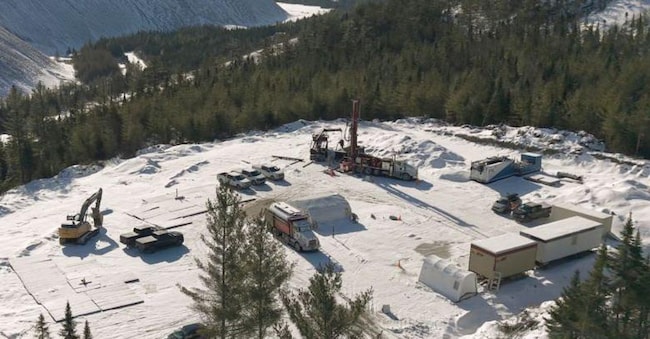
The transition from theory to practice is taking place in a location of great symbolic significance: Thetford Mines, in Quebec, an area once known for asbestos mining and now transformed into a laboratory for the ecological transition. Here, braving bitterly cold winter temperatures, Vema’s technicians have drilled the first two pilot wells to test ‘orange hydrogen’, reaching a depth of around 300 metres into the iron-rich rock formation. The core samples extracted in 2026 confirmed the predictions of the chemical models. “The samples are exactly what we expected and are extremely promising in terms of hydrogen yields,” said Pierre Levin, Vema’s chief executive, enthusiastically.
The company is gathering data to validate the process on a commercial scale, aiming to commence its first steady sales in 2028, with an initial production rate of around 10 tonnes per day. Future plans are already focused on the US West Coast (Oregon, Washington, California), areas characterised by ideal geological conditions, situated close to major urban centres.

