
Hines invests 2.5 billion in Europe in innovative and proximity data centres
The asset class is supporting infrastructure for the evolution of artificial intelligence. The group intends to invest in land for conversion and disused factories

3' min read
3' min read
An open debate, an outcome yet to be discovered. The irruption of artificial intelligence at all levels of our daily and working lives has so far been about the technological implications, what is certain is that the sheer volume of data requires an increasingly sophisticated real estate infrastructure.
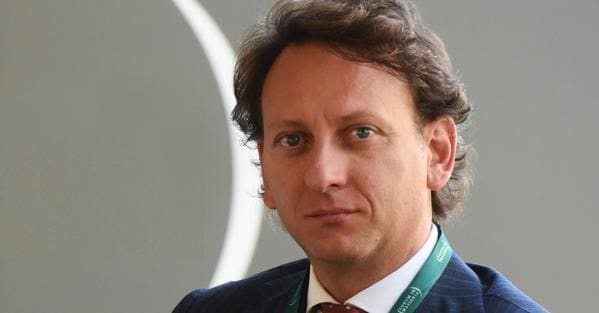
The race to make increasingly energy-intensive data centres sustainable sees American developer Hines ready to enter the field. 'What we are witnessing is a true industrial revolution,' says Mario Abbadessa, senior managing director & country head Hines Italy, 'which opens up new scenarios. Also for the real estate world. On the one hand, we have experienced a major rise in interest rates, never so sudden in the last 50 years, which has forced the real estate market to change business and refocus on new asset classes. Not only that. On the other hand, the unstoppable advance of artificial intelligence is an epoch-making change and we have to work within this trend'.
Hines has therefore chosen to consider data centres as an asset class of the future. Abbadessa takes a European perspective, having assumed responsibility for this project on the Old Continent on behalf of Hines. "The goal is EUR 2.5 billion of investment in Europe in five different data centres by 2026. We are currently working, in partnership with Compass, to build the data centre in Noviglio, an investment of EUR 500 million capex included,' he says. In the Milan area we foresee other investments of over EUR 500 million, again in the data centre segment. More generally, Hines's asset allocation in data centres envisages one third of the capital to be allocated to Milan, one third to Paris, and one third to Germany, in this case however distributed over several cities.
'So far, all discussions have been and are about the technical and social part related to artificial intelligence,' Abbadessa emphasises. The real estate infrastructure, on the other hand, is just as important. We aim to focus on the sector with our own style, with an appropriate equalisation of land consumption, with the study of water treatment per individual data centre and, in order to meet the challenge of overloading the electricity grid, with the introduction of accumulators to make up for shortages and dips, which are the future of the infrastructure'.
Investments are being concentrated where there is a greater consumption of data, around large urban centres, a trend that is not only Italian. Which runs the risk, according to Abbadessa, of creating disparities in supply and thus in usage over time.
Brand connect


Newsletter RealEstate+
La newsletter premium dedicata al mondo del mercato immobiliare con inchieste esclusive, notizie, analisi ed approfondimenti
Abbonati