Investments

Hines ready to invest 1.5 billion in Italia

The US giant focuses on living, logistics and retail. More selective divestments

by Paola Dezza

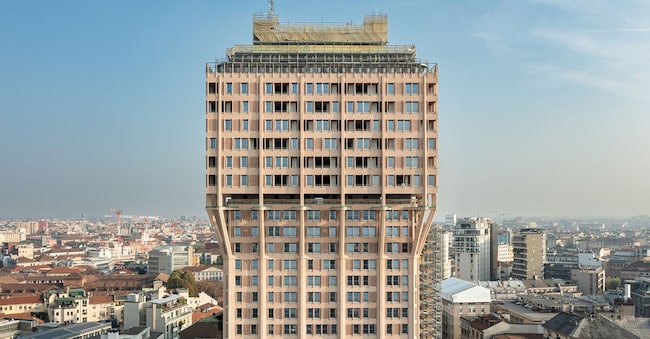
Torre Velasca, Milano. Imagoeconomica

4' min read

Translated by AI
Versione italiana

4' min read

Translated by AI
Versione italiana

It is from the change of pace of Southern European countries, now at the top of the list of investors, that Raoul Ravara's first interview as Country head in Italia of Hines begins.

"For the first time, Southern Europe is at the top of the list of destinations for investing," he told Il Sole 24 Ore. Italia and Spain in primis, and within these two countries the asset class favoured by all investors is that of living, in all its declinations'. An anti-cyclical sector that has always withstood crises. "Housing for everyone is a necessity, for families, for students, for the elderly," Ravara emphasises, "and in times of crisis, when the impact is strong on offices or on other asset classes as it was for the Lehman crisis, the housing sector resists and is perceived as less risky.

Loading...

Today we are experiencing such an economic situation that the preferred destination for foreign investors is Europe, which is perceived by many as a safer destination than other parts of the world suffering from conflicts and wars.

Speaking of the strategy in Italia, Ravara recalls that Hines has around EUR 8 billion of investments in our country and is preparing to make further acquisitions for EUR 1.5 billion over the next two years. At the European level it is the most important country along with Germany and the UK. 'From a strategic point of view, we have never been so convinced about Italy,' he reiterates. 'Foreign investors want to invest in Europe, primarily in Southern Europe and therefore in Italia. Living is the first pillar of investment at a global level'. If we look at the volume of the Italia market, we can see the importance of residential. If this segment grows as an asset class for institutional investors, Italia could become more interesting. But for Hines, retail is also gaining appeal; of future investments, 30% could be in retail.

"As a matter of size, as Hines we are already a litmus test," he says. "The investment pipeline, for the first time, is 50 per cent on Europe, one third on the US and one third on Asia-Pacific. Before the situation was completely different, there was a predilection of Americans to invest in the US; now they are the first to want to diversify territorially because of the perception of an imminent economic crisis'.

The Hines Group increased its ability to raise capital from institutional investors by 130% in two years.

"The amount raised is distributed across the three lines - core, core plus and value-add - and this is another important signal, because it indicates a capacity for deployment across the risk-return spectrum. If there were only core capital, one might think of a simple defensive reallocation. But no: we invest from development to urban regeneration, through core plus to pure core,' he explains.

Although the perception of Italia is improving, Spain is considered more attractive. "Spain is growing more economically, but is less stable politically. Italia, on the other hand, is perceived as stable, albeit with lower growth and is a smaller market with little product,' he says.

What are the investment opportunities? 'Among the main asset classes, apart from living, we are very interested in retail, especially 'out of town' retail: outlets, retail parks, shopping centres,' he says. And this is new. "They have lower management costs and today perform above pre-Covid levels," he continues, "Logistics continues to be very popular. Last year we did four large operations for about EUR 400 million and 450,000 square metres. It is the only asset class that has not declined post-Covid'. What about hotels? Hines only looks at the sector if opportunities present themselves.

Another sector that is growing strongly is self storage, but the product is lacking in Italia. Data centres, on the other hand, are a great opportunity: the focus is on Milan and the surrounding area, but also on Piedmont and Veneto as new frontiers.

Hines invests through three pan-European funds, plus other sources of capital and joint ventures. 'We can also do one-off transactions with third-party investors,' explains Ravara.

Acquisitions and divestments. 'In 2024, we slowed down some divestments because the market was not ready,' he emphasises. 'For example, we evaluated the sale of an asset on Via della Spiga, but the timing was not right.

In Milan today, the group is carrying out several urban regeneration and development projects, a soul that remains alive in the near future. Among the projects is the Trotto, in the San Siro area, with more than 700 housing units, part of which will be in convention and part in senior living. There will also be public services, park, school and infrastructure. The project has been slowed down by the general situation in the Milan municipality due to the investigation, which has consequently slowed down the construction sites.

Another important project is Unione Zero in Milanosesto, Sesto San Giovanni, already at an advanced stage, with student housing, offices and the Intesa Sanpaolo headquarters.

'In Milan we also have a project in Lambrate (450 flats in all) and another complex near Bocconi,' he says. 'In Rome we are interested, but it is more difficult to find product.

Globally, Hines is reorganising itself into three macro-clusters to improve integration and cross-border investment capabilities, e.g. in living and data centres.

And offices? "Selectively we are looking at Milan and Rome," he continues, "The capital is a more difficult and more complex market that investors are looking at, but not as an alternative to Milan. The idea that international capital would move to Rome as a result of the Milan investigation has not really been followed up. According to the experts, the capital may in fact represent a second important market in Italia, but Milan is still the main gateway to Italy for many market players.

Copyright reserved ©
  • Paola DezzaCaporedattrice del Lunedì e responsabile del settore real estate per tutto il gruppo

    Lingue parlate: inglese, francese

    Argomenti: mercato immobiliare, architettura, finanza immobiliare, lifestyle, turismo, hotel e ospitalità

    Premi: “Key player of the italian real estate market” di Scenari Immobiliari

Loading...

Brand connect

Loading...

Newsletter RealEstate+

La newsletter premium dedicata al mondo del mercato immobiliare con inchieste esclusive, notizie, analisi ed approfondimenti

Abbonati