
History and industry in the Montenerodomo summer school

3' min read
3' min read
"There was a time when the South and the inland areas were at the forefront of the battle for the modernity of southern Italy, at the forefront of thinking and proposals for the development and progress of the entire national community. That time can come again, it also depends on each one of us'. With these words, Lucio D'Orazio concludes the Prologue to his recent book dedicated to the work of the Abruzzese jurist Giuseppe de Thomasis: Giuseppe de Thomasis nell'esperienza giuridica e politica del suo tempo (1767-1830), (Jovene, 2025), words that seem to reflect the mission of the Montenerodomo Summer School, now in its 4th edition.
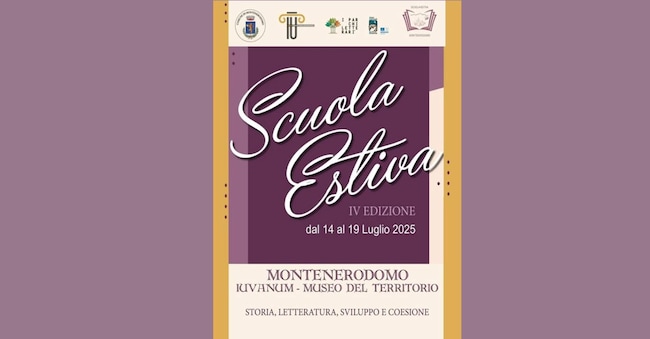
The Summer School, which will be held from 14 to 19 July at the auditorium of the Archaeological Park of Iovanum in Montenerodomo, a village on the southern slopes of the Maiella massif, in the province of Chieti, is a virtuous example of how collaboration between public and private entities can give rise to an experience of profound civic value.
From the collaboration between the municipality of Montenerodomo, the 'Benedetto Croce and Abruzzo' Literary Park and the Giuseppe de Thomasis Study Centre, the Montenerodomo Summer School for the development of the inland areas of Southern Italy was born in 2022, at the impetus of, among others, the well-known linguist and President Emeritus of the Accademia della Crusca, Francesco Sabatini. The Federico II University of Naples, the University of Molise, the University of Teramo, the University of L'Aquila and the Gabriele D'Annunzio University of Chieti-Pescara are taking part in the initiative.
For a week, around twenty students from the above-mentioned universities, together with university lecturers, heads of institutions and representatives of civil society, will discuss some of the issues of greatest interest for the development of inland areas. First of all, the identity of the territory, an amalgam composed of the stories of the women and men who have marked the life of this portion of the world. From this point of view, particularly significant is the remembrance that is given every year to the partisans who gave life to the heroic Maiella Brigade, the partisan formation awarded the gold medal for military valour to the flag that contributed to the liberation from the Nazi-Fascist regime of Abruzzo, Marche, Emilia-Romagna and that went as far as Veneto.
The moments of identity, resistance and memory will introduce the one dedicated to the development of the territory, during which the School participants will visit the Sevel (Stellantis) plants, to discuss the prospects of industrial development, together with the workers, union representatives and institutions. Also in the context of territorial development are the visit to Pescocostanzo, where the students will dialogue with representatives of civil society and politics, as well as meetings dedicated to literature, archaeology and the arts that distinguish the history and vocation of these lands.

