
Hitachi Rail launches the first battery-powered intercity train. Trenitalia has ordered six of them
Manufactured in Naples and Postojna, the train runs on both electrified lines and in battery mode, with a range of 100 kilometres on non-electrified lines

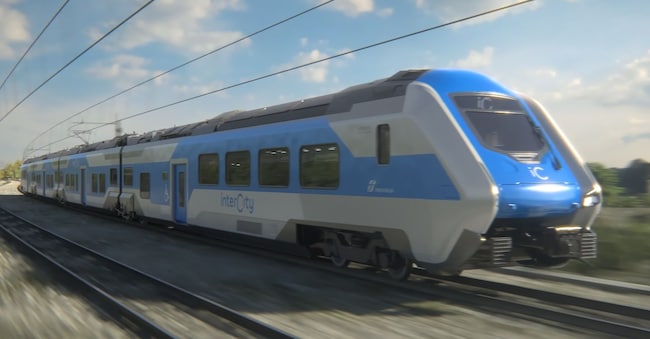
At the Innotrans trade fair in Berlin, the world’s leading railway industry exhibition, Hitachi Rail is presenting the new Intercity Bemu (Battery Electric Multiple Unit), the first fully battery-powered train intended for passenger service in Italia. Manufactured at the Pistoia and Naples sites, the new train can operate on both electrified and non-electrified lines, representing one of the most advanced examples of the Japanese-owned group’s engineering and industrial expertise. To date, six Intercity Bemu trains have already been ordered by Trenitalia (FS Group) as part of the framework agreement signed with Hitachi Rail for the supply of Blues regional trains. The fleet includes a full maintenance service for 15 years.
A sustainable train
Equipped with on-board batteries, the Intercity Bemu can operate either on electric power or in autonomous mode. This makes it particularly suitable for use on partially electrified routes, where it can effectively replace diesel trains. The system also allows energy to be recovered during deceleration and braking, improving the vehicle’s overall efficiency.
The presence of batteries also ensures greater flexibility when manoeuvring, for example in storage areas without a power supply, or in specific situations such as boarding ferries with passengers on board. The Intercity Bemu is also capable of handling emergency situations, ensuring operational continuity even in the event of prolonged power cuts from the mains supply.
Thanks to batteries with a capacity of over 600 kWh, the train can travel at speeds of up to 100 km/h on non-electrified lines. The presence of two pantographs allows the batteries to be recharged quickly during stops: it takes around 30 minutes to fully recharge them.
They can reach a top speed of 160 km/h and offer 200 seats. The interiors are designed to ensure brightness, accessibility and full usability of the spaces, thanks to the large glazed areas, the extra-long windows and the positioning of the main traction components on the roof. The Intercity Bemu’s sustainable credentials are reinforced by the use of materials with high levels of recyclability and renewability, as well as raw materials sourced from recycling.


