The Phenomenon / Pulse

Holidays, tourism by caravan or camping is growing in EU countries

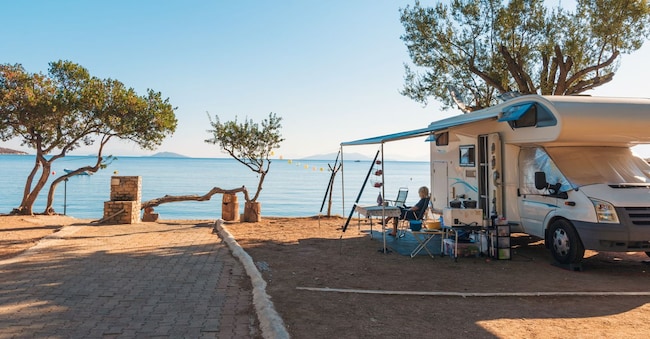
Motorhome and camping tourism is growing throughout the EU, with 413 million nights in 2025 and a faster increase than other accommodation. France, Spain and Italia lead the ranking

by Davide Madeddu (Il Sole 24 Ore), Sasha Aumüller (Der Standard, Austria), Ana Somavilla (El Confidencial, Spain), Ieva Kniukštienė (Delphi, Lithuania) and Mike Konstantopoulos (EfSyn, Greece)

 (AdobeStock)

5' min read

Translated by AI
Versione italiana

5' min read

Translated by AI
Versione italiana

On the one hand the sense of adventure, on the other the sense of freedom. RV and camping holidays are popular. And, as Eurostat points out, this is demonstrated by the numbers of nights spent in campsites, recreational vehicle (RV) parks and caravan parks in the EU in 2025, which reached 413 million.

"While camping and caravanning accounted for only 13.4% of all tourist accommodation nights in 2025, their popularity has steadily increased over the last ten years," writes Eurostat. "Compared to 2015, nights spent in these outdoor areas increased by 28.5%, while nights spent in hotels, holiday or other short-stay accommodation increased by 23.4%.

Loading...

In 2025, 67.0 % (277 million nights) of all nights spent in these accommodations were concentrated in the summer months, between June and August. Growth began in March and then declined in September and bottomed out in December.

The gold palm goes to France, where 154 million nights were spent in campsites and caravan parks, accounting for 37.2 per cent of the nights spent in such accommodation in the entire EU. Significant numbers were also recorded in Spain (49.8 million). Italia with 49.1 million is in third place, followed by Germany with 45.0 million. The number of overnight stays in the remaining 10 EU countries varied between 26.8 million in the Netherlands and 7.1 million in Portugal.

The Italia case

"The data are also reflected among our members, as the requests to hire and purchase motorhomes have increased in recent years," emphasises Ester Bordino, president of Assocamp, the reference association of retailers, maintenance providers and hirers of recreational vehicles (motorhomes and caravans) as well as retailers of outdoor tourism equipment. Those who choose this way of travelling seek more autonomy and greater contact with nature and the authenticity of places.

For the president of the association, which has more than 200 affiliates throughout Italy and represents more than 90% of Italy's dealers, "the motorhome is a vehicle that is particularly appreciated because it allows you to have your own personal space, which can also be adapted to the presence of a four-legged friend or a more fragile family member, such as a person with a disability".

The initiatives

Precisely for this reason, the association has organised a series of excursions following the routes of the villages. Particularly interesting routes, intended precisely for campers. In this context, itineraries for centenarians have also been proposed. One in the places where Dario Fo was born, another in Collodi, the author of the Pinocchio tale.

'The motorhome, in this context, becomes the ideal means of responding to fears and discovering small villages and new tourist routes in complete autonomy,' she adds. The community of on-the-road travellers routinely shares information online via apps, specialised portals and forums. It becomes easy to organise itineraries and compare notes with other travellers precisely to dispel doubts about accessibility, routes, attractions and rest areas". And let's not forget that it is precisely the motor home that "allows the freedom to de-seasonalise the itinerary, directing it towards thematic routes to discover the traditions and flavours of our territories, even the lesser-known ones, where you can look for delicacies in local shops and workshops".

To the advantage of those who choose campsites are the costs. Last year, as underlined by Federconsumatori, the association that deals with the protection of consumer rights, the increases did not exceed 2 per cent and the costs were much lower than those of a hotel stay.

Austria

Growth is particularly evident in Austria, where camping is among the most dynamic tourism segments. Over the past ten years, overnight stays have risen from 5.45 million in 2015 to 8.8 million in 2025, marking the fifth consecutive record year. According to estimates, the segment generates more than half a billion euros and supports between 8,000 and 9,000 jobs, with around two-thirds of the expenditure remaining in local economies between catering, trade and tourist attractions.

Carinthia is the main destination, thanks mainly to lakes and summer activities, followed by Tyrol, where winter camping is also growing strongly, and Salzburg. However, the high demand puts pressure on the infrastructure: in the peak months many facilities are full and there is an increase in the number of stopovers outside the authorised areas, especially near popular destinations such as Hallstatt.

From a regulatory point of view, the country maintains strict rules on free camping, with even high penalties. At the same time, the government has launched the 'Camping Strategy Austria 2030', which aims to qualify the offer, develop glamping and promote sustainable and deseasonalised tourism.

Spain

The sector is also booming in Spain. The number of motorhomes has almost tripled in ten years, from just over 48 thousand to around 137 thousand vehicles, with the market split between rental and ownership. Between the end of December and the beginning of January alone, more than 10 thousand bookings were recorded, while by 2026 the total expenditure generated by the sector could exceed EUR 25 million.

The most popular destinations are the Valencian Community and the Costa Blanca, which record high occupancy rates of pitches. A significant proportion of tourists come from abroad, particularly from Germany.

However, the growth brings with it some critical issues. Legislation is not uniform: at a national level motorhomes are equated with cars, but the rules on parking and overnight stays vary from municipality to municipality, creating confusion among travellers. In many tourist areas there are problems of overcrowding, improper occupation of public spaces and lack of adequate infrastructure, leading to tensions with residents and environmental impacts related to waste management.

Greece

Camping tourism in Greece is growing, but remains marginal compared to the hotel sector, which accounts for over 94% of all overnight stays. Campsites still register an increase of 4.4%, the highest among the different types of accommodation, but account for less than 1% of the total.

The regulatory framework also contributes to curbing development. In 2025 a law introduced severe restrictions on free camping and the parking of camper vans outside authorised facilities, with fines starting at 300 euro. The measure has aroused criticism among operators and tourists, who are concerned about the impact on the country's attractiveness.

Subsequently the government intervened, clarifying the rules: it is allowed to park vehicles without installing external structures, thus distinguishing between simple parking and camping. The aim is to protect the environment, safety and cultural heritage, without excessively penalising itinerant tourism, which every year sees the arrival of thousands of foreign campers, especially in the north of the country.

Lithuania

Camping-related tourism in Lithuania is growing along with the general recovery of the sector after the pandemic. In 2023 there were approximately 237 thousand overnight stays in campsites, a significant increase compared to previous years.

The phenomenon mainly affects natural areas - coasts, lakes and forests - while the main tourist flows remain concentrated in cities such as Vilnius and Kaunas.

One of the main limitations is supply: there are just over 4,200 camping places available and they are insufficient during the high season. This imbalance between demand and accommodation capacity highlights the need for infrastructure investments.

At the same time, the authorities maintain a cautious approach, with strict environmental rules: free camping and stopovers near watercourses or in forest areas are prohibited. The strategy is based on a balance between tourism development and the protection of ecosystems, with constant monitoring of the economic and environmental impact of the sector.

*This article is part of the European collaborative journalism project "Pulse"

Copyright reserved ©
Loading...

Brand connect

Loading...

Newsletter

Notizie e approfondimenti sugli avvenimenti politici, economici e finanziari.

Iscriviti