
Hollywood stars against Warner and Paramount merger
A thousand stars, from Ben Stiller to Jane Fonda, against the deal that will lead Warner Bros Discovery to be acquired by the company led by David Ellison

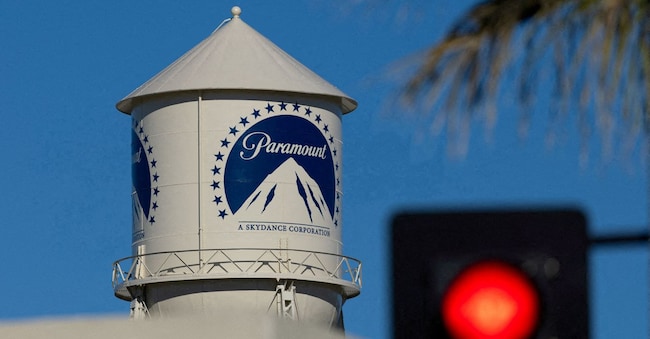
A cross-party bloc that, in an open letter, takes a stand against what is perceived as a major threat to an 'already hard-pressed' US media sector.
The heart of Hollywood has moved against the $111 billion deal that is expected to bring Warner Bros Discovery into the arms of Paramount Skydance. Among actors, directors, screenwriters and producers there are more than a thousand signatures. From Glenn Close to Ben Stiller, from Jane Fonda to Joaquin Phoenix, passing through Denis Villeneuve, Yorgos Lanthimos, Kristen Stewart and JJ Abrams. All lined up against an operation that, in the intentions of David Ellison, Ceo of Paramount Skydance, should create a global content champion. Instead, for a growing part of Hollywood, it risks turning into yet another sledgehammer blow on a sector already slimmed down by redundancies, struggling streaming and increasingly selective budgets.
The open letter published on the website 'Block the Merger' does not mince words. Behind the rebellion of the stars is the fear that consolidation will become synonymous with cuts, duplication, centralisation of decisions, and desertification of mid-range projects.
From an industrial point of view, the deal comes after a long negotiation phase that saw Paramount prevail over Netflix in the race for Warner Bros Discovery. The stated aim is to create an integrated group capable of competing on a global scale by bringing together complementary assets: studios, streaming platforms, television networks and cable channels.
This is where Paramount Skydance's response comes in. The company, in response to the Hollywood stars' open letter, describes the deal as being able to 'uniquely combine complementary strengths to create a company that can unleash more projects, support bold ideas, support talent at all stages of their careers, and bring stories to a truly global audience'. A position, this one, that insists on the need for solid, capitalised operators at a time of profound market transformation. It has to be said that Ellison has nonetheless promised to keep Paramount and Warner as separate studios and to reach 30 films per year for the theatres. Hollywood, however, no longer seems willing to take his word for it and is rather looking at the employment and production node. Paramount has, after all, already recognised the presence of operational overlaps that could result in cuts.


