
Housing bonus: checks on building work also involve Google Maps
The Italian Revenue Agency, together with the Guardia di Finanza, is monitoring the progress of the works in line with key deadlines for tax relief schemes such as the superbonus, using the application

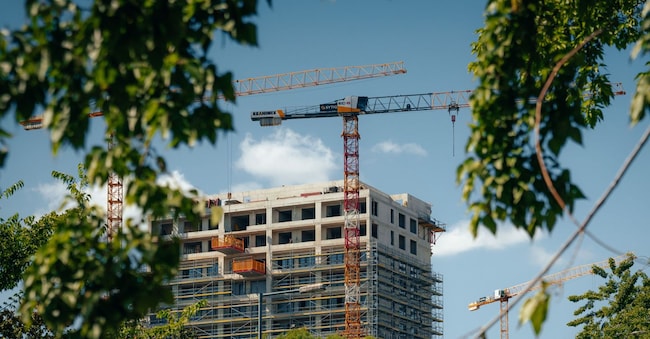
Historical photographs, retrieved from Google’s digital archives, to check the progress of the works over the years. And to challenge taxpayers on the grounds that, in some cases, the legal requirements for accessing the tax relief have not been fully met. This represents the latest front in the checks that the tax authorities are implementing to curb not only fraud relating to home renovation grants, but also all those irregularities – both minor and major – which have, over time, enabled some taxpayers to claim more than they were entitled to.
A targeted investigation is required given the scale of the ‘home bonus’ scheme. According to the latest report from the Court of Auditors, the annual amount of tax credits paid out by the Treasury for work carried out during the period when these incentives are most generous amounts to around 44 billion euros. For this reason, the directive – issued by the Ministry of the Economy and implemented through on-the-ground inspections – is to use all available tools (ranging from the most physical and traditional to the most advanced and digital) to recover sums paid out unduly.
In this regard, it is worth noting that, over the years, there have been a number of provisions linking tax benefits to a specific stage of completion of the works. To give just a few examples, for detached houses, it was possible to claim a 110% tax deduction on renovation work even in 2023, provided that at least 30% of the works had been completed by 30 September 2022. Then, there was the provision introduced to curb dormant CILAS organisations under Decree 39/2024: the government activated a clause to curb transfers, stipulating that building sites where, as at 30 March 2024, no expenditure – documented by an invoice – had been incurred for work already carried out could no longer access alternatives to tax deductions. Furthermore, there is the case of the façade bonus, set at 90% in 2020 and 2021 and at 60% in 2022.
With regard to this tax relief, reference can be made to an audit carried out by the Trieste Revenue Agency, which was brought to the attention of the local Confedilizia by a number of property owners who are receiving assistance from its chair, Anna Fast Molinari, and lawyer Stefano Sibelja. The provincial Revenue Office explains that, in order to qualify for the 90 per cent relief, it was necessary not only to have the building site ready from a bureaucratic and operational point of view, but also to have physically commenced the works (demolition, scraping, cleaning, painting) by 31 December 2021. This highlights the importance of the physical state of the building site, particularly with regard to tax implications.
The documents from the Dre in Trieste set out the working methods for this phase: the analysis goes far beyond simply accessing the documents. Through a series of checks carried out by the Gdf, it was established that all the works under scrutiny had been carried out in accordance with the regulations. The analysis then focused on the work carried out between 2021 and 2022, in order to establish an exact chronology of the construction site and determine the correct application of the preferential tax rate.


