Residential

Home demand, from rebound to stable and selective phase

Analyses by Idealista and Patrigest reveal a market that remains dynamic, especially in cities, but which seems to have exhausted its propulsive thrust to make way for greater maturity. Rising prices over the years, a lack of quality offerings and reduced household liquidity weigh on the choices
by Laura Cavestri

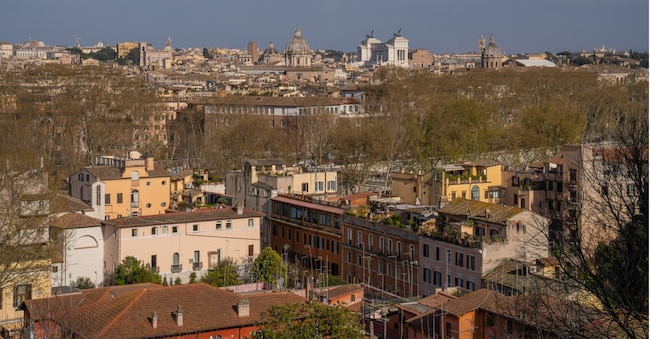
Veduta di Roma

6' min read

Translated by AI
Versione italiana

6' min read

Translated by AI
Versione italiana

The Italian residential market remains in an expansionary phase, but is showing the first signs of a slowdown and maturity of the cycle. Purchase intentions fall slightly, though remaining at solid levels, while moderate price corrections begin, especially in the areas that had recorded the strongest growth. Two analyses, released in the last two days and elaborated by Patrigest (Gabetti Group) and Idealista, come to this conclusion.

Idealista

After the exceptional levels recorded in 2024, the buying and selling market in 2025 - explain the analysts of the property portal - is showing signs of cooling down. In fact, the national indicator developed by Idealista, which measures the pressure of users on sales ads, shows a slight contraction, although it remains at values well above the pre-pandemic period.The historical trend confirms sustained growth between 2020 and 2024, with a moderate decline in 2025.

Loading...

In the ranking of the most sought-after capitals for sale in 2025, Rome is confirmed in first place with a relative demand index of 3.5. It is followed by Cagliari with 3.1, then Naples, Sassari, Trieste and Lecce, cities that show particularly lively markets, with a value of 2.5.

The ranking is completed by Bologna (2.4), Belluno (2.3), Turin, Palermo, Bari, Pavia and Ferrara, all with a relative demand index of 2.2. The strong presence of centres in the Centre-South and urban areas in the North-East highlights an increasingly diversified demand, influenced by quality of life, new mobility models and greater affordability. Although it remains one of the most dynamic markets in the country in terms of volume of listings, Milan does not enter the top 10 and is further behind with an index of 2.1.

Looking beyond the top ten, there are 40 towns that exceed the national average of 1.2, including Como and Catania (1.9), Venice (1.8), Monza and Genoa (1.6) and Florence (1.5). At the opposite end of the scale are Enna (0.3) and Massa, Campobasso and Caltanissetta, all with a value of 0.4, making them the least popular markets for buying a home.

Although showing a decline in 2025, the national indicator remains decidedly high, confirming a market that has consolidated a broader base of interest than in the pre-pandemic period. The stabilisation phase reflects a more prudent economic environment, with cost-conscious households and a gradual rebalancing of supply and demand.

"In 2025," emphasised Vincenzo De Tommaso, head of Idealista's Research Office, "we have observed a normalisation of purchase demand after the exceptional peaks of 2024. Adding to the physiological slowdown is the growing weight of the financial environment: rising rates and higher average amounts are driving up the cost of mortgages, while wages remain essentially static. These conditions are especially affecting large urban markets, where higher prices are rapidly making the ratio of instalments to income less sustainable. It is in these cities that the greatest difficulties in access to purchase emerge, while some medium-sized towns and several capitals in the Centre South and North East are showing relatively better performance. 2026 could therefore be a year of further demand selection, with choices increasingly driven by the real ability of households to sustain financing in the long term".

Patrigest

According to Patrigest, in the first nine months of 2025, the positive trend started in 2024 is confirmed, marking a steady growth in the residential market, with a change of +9.2% in relation to the same period in 2024, fuelled by the credit-supported purchase component.

Looking at cities, the top ten urban markets show a growth of +6.5%, confirming the positive trend recorded in the first two quarters (+11.2% compared to Q1 2024 and +8.1% compared to Q2 2024).

In Italy, after the peak recorded in 2025 (+3%), prices are expected to normalise in 2026 (+1%), while still maintaining a positive sign. The forecasts for the Italian real estate market in 2026 confirm its structural recovery trajectory, projecting towards 785,770 transactions (+3% compared to the 2025 closing forecasts), with greater activity attributable to non-papal cities. This figure would confirm a return to the volumes of 2022 (785,382), marking the definitive overcoming of the contraction phase experienced in the two-year period 2023-2024.

On the other hand, as far as the forecasts for the top 10 Italian cities are concerned, after the price increase in 2025 (+1.4% compared to 2024), the price growth dynamics are expected to normalise in 2026 (+0.7%), while still maintaining a positive sign.

After the highs of 2021-2022, intentions to buy a house fell sharply in 2023-2024 due to rising rates. In 2025, however, a clear trend reversal emerges: from 2.2% in Q1, it rises to 2.8% in Q2, to a peak of 3.8% in Q3, and then closes the year at 3.2% in Q4. The data confirms a newfound optimism among households and a gradual release of potential demand, also favoured by the greater stability in the cost of credit.

The comparison between demand preferences and the properties actually available on the market confirms a strong imbalance: demand focuses mainly on three-room apartments (38%), while supply is heavily skewed towards four-room apartments (36%). The figure underlines a structural mismatch between what buyers are looking for and what is actually put on the market

According to the analysis carried out on Wikicasa data, demand in Italy shows a swinging dynamic in the average asking price per square metre in the residential market between 2019 and 2025, stabilising in 2025 at an average value of EUR 1,743 per square metre.

Analysing the square footage, between 2019 and 2025 there is a progressive downward trend until 2023. However, from 2024 to 2025 there is a reversal of the trend: the average square footage rises to 105 sqm in 2024 and 109 sqm in 2025.

Mutui

In the first three quarters of 2025, purchases with a mortgage grew strongly (+32.8%, +20.0% and +15.9% compared to previous quarters), in contrast to the substantial stability recorded by purchases without financing (between -1.5% and +3.2%). Mortgage-backed purchases accounted for 46.3% of the total, confirming that the majority of exchanges (53.7%) still take place without credit support.

According to mortgage applications for home purchase surveyed by Monety - Gabetti Group's credit company - in 2025 the average ticket was 141,830 euro, with an upward trend compared to the same periods in previous years of about 9 thousand euro per year.

The distribution of mortgage applications by amount classes shows a change from previous years. The weight of loans under EUR 100,000 declines, down to 28.5 per cent from 34.4 per cent in 2024, while the EUR 100,001-150,000 bracket grows, rising to 38.1 per cent.

Applications for larger amounts are also increasing: the EUR 150,001-200,000 class is rising from 17.4% to 19.8%, while those over EUR 200,000 will reach 13.6% in 2025. The trend reflects a reduction in household liquidity and the rise in average real estate prices, which pushes towards larger loans.

Against this backdrop, bank interest rates charged for house purchases have also remained essentially stable over the past year, consolidating in the first nine months of 2025. Bankitalia data for harmonised interest rates see a slight increase from 3.27% (October 2024) to 3.30% (October 2025).

Locazioni

Mostly young people, singles and couples without children or with young children prefer renting, confirming that there is a generational issue combined with both the difficulty of access to home purchase and the need for flexibility.

In 2024, the rental property market showed strong dynamism, with the capitals at +2.3% and a national growth rate of +13.5% compared to 2023, driven mainly by the profitability of the transient segment, while maintaining a prevalence of the long-term (41%).

A more balanced phase emerges in the first nine months of 2025, with growth of +1.7% year-on-year. The market remains led by long-term (40%), followed by transient (29%) and agreed (25%), while student contracts remain marginal (6%).

Looking at the ten largest cities, the increase in new leases registered in 2024 is +2% compared to 2023 and +8.2% compared to 2018. The share of new contracts on portions of dwellings is significant, accounting for 32% of all new contracts.

After the strong growth recorded between 2023 and 2024, rents in the 10 largest cities show signs of slowing down in 2025. After moderate variations in the first quarters, the third quarter marks an initial drop (-1.8%), followed by a slight recovery in the fourth quarter (+0.2%), indicating a settling phase in the market.

"The picture that emerges - concluded Luca Dondi, managing director of Patrigest (Gabetti Group) - is that of a residential market that, after a phase of strong rebound, is entering a more balanced and selective phase. Growth continues, but it will be increasingly driven by the quality of the offer, affordability and the ability of the territories to respond to an evolving demand. In this context, it becomes strategic to read local differences and accompany households, investors and operators with timely analyses and adequate tools, to support a more sustainable and structural market development in the medium term',

Copyright reserved ©
Loading...

Brand connect

Loading...

Newsletter RealEstate+

La newsletter premium dedicata al mondo del mercato immobiliare con inchieste esclusive, notizie, analisi ed approfondimenti

Abbonati