
Home, technology and sustainability matter more than location. But price remains an obstacle
The latest Savills report, 'Italy New Build Survey 2025', captures a buyer willing to move to new areas of the city in order to find a property that meets his expectations in terms of comfort, efficiency, safety and liveability
by Real Estate Editor
 Aggiungi Il Sole 24 Ore
ai preferiti su Google
3' min read
3' min read
In today's residential market, people choose a house not only for its location, but for the kind of life it makes possible. Cities remain the favourite among buyers, but interest in second homes in more leisure locations is growing. The priorities are construction quality, sustainability, the presence of outdoor spaces and technological equipment that improves wellbeing, but price remains an obstacle: for 64% of the youngest buyers, the main problem is the imbalance between cost and quality of the property. This is what emerges from the second edition of the Savills report "Italy New Build Survey 2025", which analysed a sample of 200 potential buyers of new homes in Italy.
Home comfort and services
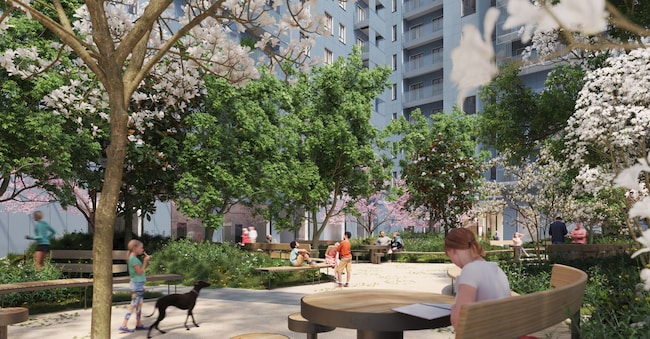
.In recent years, the home has become a tool to improve the quality of life: people are looking for comfort, connectivity, community and integrated services. People are willing to give up a central location or a few square metres in order to obtain a home in a green, well-serviced and energy-efficient environment. The concept of 'living ecosystem' dominates, where the value of the property is the lifestyle it makes possible through open spaces, sustainability, smart technology and quality services.
90% of buyers under the age of 65 indicate the city as their preferred destination. However, for the 46-65 age group, the appeal of leisure locations is confirmed, with a growing interest in second homes in seaside, mountain, lake and country areas. Greenery and environmental sustainability are top of the list of purchase motivations (25 per cent), followed by construction quality and services (23 per cent) and the possibility of avoiding renovation work (21 per cent).
Across Italy, buyers are increasingly demanding private outdoor spaces (essential for 67% of under-35s and over 60% of over-65s), safety, smart technologies, and support services such as concierge, electric charging stations and fitness areas. The equipment considered indispensable varies by age, but private parking is by far the most requested by each group. The trade-offs that prospective buyers are willing to make also change with age: while the under-35s are willing to sacrifice space but do not give up technology, sustainability and well-serviced neighbourhoods, the 36-45 year-olds emphasise energy savings, services and transport connections, but feel economic uncertainty as the main obstacle to purchase. The 46-65 year olds tend to look for different sized spaces, with an emphasis on neighbourhood quality and amenities, while the over 65s show preferences for smaller but functional, family-friendly environments with wellness automation and guaranteed parking.
It is therefore clear that the typical buyer of 2025 is willing to move to new parts of the city in order to find a property that meets his expectations in terms of comfort, efficiency, safety and liveability.
Brand connect


Newsletter RealEstate+
La newsletter premium dedicata al mondo del mercato immobiliare con inchieste esclusive, notizie, analisi ed approfondimenti
Abbonati