
Homeland and family: who is Roberto Vannacci, the general suspended candidate by the League after the best-selling book
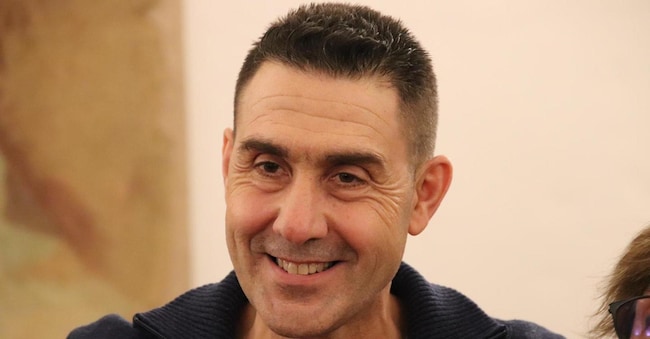
Toscano, 56 years old, 37 years in uniform with the amaranth beret of the paratroopers, to his credit missions in high-risk theatres such as Somalia, Afghanistan and Iraq, became an attractive political figure last August, with the publication of his self-published book, 'Il mondo al contrario', a literary case with over 200,000 copies

3' min read
Key points
3' min read
'I will be an independent candidate who maintains his own identity and who will fight, with courage, to affirm his values of homeland, traditions, family, sovereignty and identity, which I share abundantly with the League'. With these self-describing words, General Roberto Vannacci dissolved his reservation. And he confirmed the announcement made by deputy prime minister Matteo Salvini that he will run for a seat in Strasbourg with the Carroccio.
Controversial figure
.The general, suspended from duty since 28 February, is a controversial figure. For Defence he has shown "a lack of a sense of responsibility" and compromised "the prestige and reputation of the Administration to which he belongs". According to Matteo Salvini, however, he is the good name to use in the European elections in June.
The contested passages in the book, from homosexuals to black people
Vannacci, a 56-year-old Tuscan, 37 years old in uniform with the amaranth beret of the paratroopers, to his credit missions in high-risk theatres such as Somalia, Afghanistan and Iraq, became an attractive political figure last August with the publication of his self-published book, "Il mondo al contrario", a literary case of over 200,000 copies on the wave of controversy for some controversial passages: "Dear homosexuals, you are not normal, get over it!", gay pride is dominated by "filth, extravagance, blasphemy and turpitude". Or, 'if I plunge the pencil in my breast pocket into the jugular of the mug that attacks me - killing him - why should I risk being convicted of culpable excess of self-defence since the poor guy was only trying to steal my wristwatch? And again, his recollection of his curiosity in 1975 in Paris about black people: 'In the metro, I would pretend to lose my balance and accidentally place my hand on top of theirs, to see if their skin was to the touch harder or less wrinkled than ours.
The disciplinary investigation
.Concepts that triggered hostility from the centre-left, but also attracted the attention of the Defence Minister, Guido Crosetto, who summoned the general to challenge his 'personal rantings' that 'discredit the Army, Defence and the Constitution'. A disciplinary investigation was then launched, which ended last February with his suspension in service for 11 months. As a soldier he can run for office after applying for leave, but at the moment he is suspended, so he can avoid it. If he is elected he will have to ask for leave.
Court proceedings
.For Vannacci - who is very active on social networks, with a picture of Corto Maltese on his Facebook profile, lying down and looking at the sky - there are also legal troubles: he must answer charges of embezzlement and fraud, in relation to expenses incurred during his time as Italian military attaché in Moscow, between 2021 and 2022. The Rome Public Prosecutor's Office has also entered him in the register of those under investigation for the charge of incitement to racial hatred, all 'setbacks' that have not prevented the officer from working on his second literary work, 'Courage Wins', which came out in March and was promoted with a long tour that touched several regions. The latest controversy, during one of his last promotional outings, was about 25 April: 'I don't take to the streets, I go to the seaside with my daughters. I don't declare myself anti-fascist because these things happened eighty years ago'.

