The painting

Training at home for 3,160 non-EU workers

Already 12 programmes for vocational and language courses in eight countries approved. Construction and shipbuilding in the lead. Inputs to be simplified

FRANCHINI YACHTS CANTIERE YACHT INDUSTRIA CANTIERISTICA LAVORI OPERAI IMMIGRATI EXTRACOMUNITARI LAVORI USURANTI

3' min read

3' min read

There are already 3,160 non-EU workers involved in the vocational and civic-linguistic training programmes initiated in their countries of origin, who will be able to arrive in Italy with additional permits compared to the annual quotas provided for by the flows decrees, based on the new Article 23 of the Consolidated Act on Immigration, introduced by the Cutro Decree (Decree-Law 20/2023).

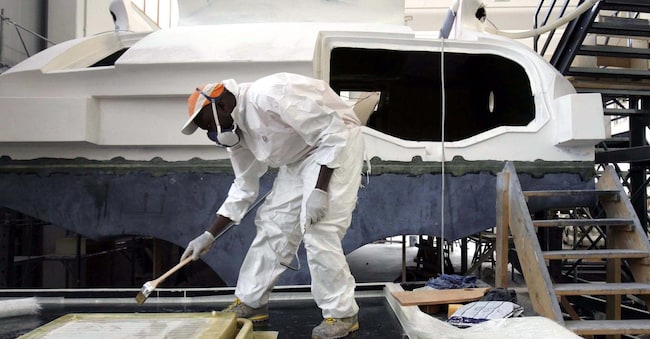
Construction and shipbuilding are among the most present sectors (see the infographic on the page), but there is no shortage of ICT, textiles and jewellery.

Loading...

The first contingent of 1,160 workers will be trained under the 12 programmes already approved by the inter-ministerial commission coordinated by the Ministry of Labour, for eight countries (Tunisia, Albania, Bangladesh, Egypt, Ghana, Jordan, Philippines, Uganda).

Another group of 2,000 workers will also be trained in Tunisia on the basis of the agreement signed at the beginning of July by Ance (the national association of building constructors) and Elis (a non-profit training organisation), as part of the Mattei Plan. The programme (which will soon be submitted to the interministerial commission) is aimed at young people who already have a background in construction, is coordinated by the International Organisation for Migration, and enjoys EU funding (unlike the other 12 programmes, which are financed by the applicants). The courses will last three months.

By July the 40 Tunisian workers trained under one of the first projects approved by the interministerial commission, also presented by Ance, should start arriving in Italy. "The scope of the rules that allow qualified workers, or workers trained in their countries of origin, to arrive in Italy outside of the flow decrees should be further developed," says Ance director general Massimiliano Musmeci. "A simplified entry route should be envisaged,' he adds, 'since there are all the elements, from the names of the workers to the destination, to shorten the time as much as possible.

I PROGRAMMI APPROVATI

Loading...

In Tunisia, Ance is also launching a project involving highly qualified personnel, such as engineers or architects, to be found through the intermediation of a government agency that already carries out this activity for other countries. The number of workers involved will depend on the demand from Italian companies.

But companies' need for labour is not only in construction. Shipbuilding and oil and gas extraction are the areas touched by the three projects carried out by the employment agency Orienta Spa-benefit company, in the Philippines and Egypt, which will involve 720 workers. "Last year we brought in about 240 workers with the flows decree,' explains Federico Biazzo, training manager and member of the Board of Directors of Orienta Spa Benefit Company, 'but after the Cutro decree was passed, we moved to training programmes to bypass the click day system. We support medium-sized and large companies that are unable to find staff'. Training has already started for about one hundred workers. "These are people who already have work experience," Biazzo continues, "but who will be further specialised. Our goal is to create permanent working relationships'. Other projects in the pipeline will also involve South America.

Aimed instead at training one hundred workers in Bangladesh in the textile and welding sectors is the 'Bangla Dream' programme, proposed with other partners by Format Impresa sociale Srl, active in Battipaglia (Salerno) in the vocational training and social services sectors. 'The training of the first 50 workers started on 8 March,' explains Antonio Iermano, the project coordinator, 'and we have already applied for the clearances for the first five. By July we will send the applications for another 45'.

The target companies operate mainly in the fashion industry, and for 20 per cent, in mechanics: 'The workers,' Iermano continues, 'will be hired with an open-ended employment contract and will have accommodation.

The problem of bureaucratic procedures for entry remains. 'The only difficulty,' Iermano concludes, 'is a certain slowness in issuing the nulla osta from the prefectures, which can become a problem if the company, after having financed the training course, urgently needs to employ the worker'.

Copyright reserved ©
Loading...

Brand connect

Loading...

Newsletter

Notizie e approfondimenti sugli avvenimenti politici, economici e finanziari.

Iscriviti