
Honda CB750 Hornet: how it changes with the E-Clutch
For 2026, the Hornet is getting the innovative E-Clutch, an electronically controlled clutch system that means you can forget about the clutch lever

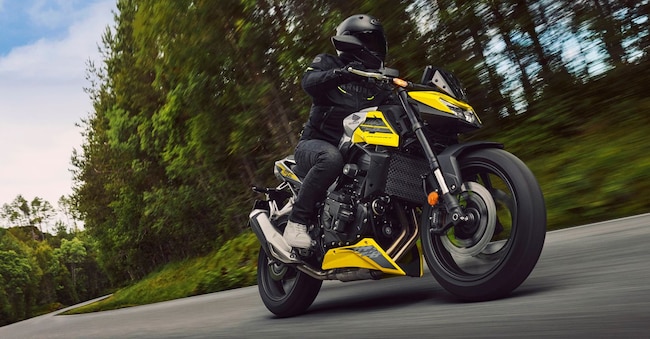
Two years after its launch on (LINK: https://www.ilsole24ore.com/art/honda-e-clutch-how-does-the-new-electronically-controlled-clutch-work-and-how-does-it-change-the-way-you-ride-a-motorbike-AFiiULXC) naked CB650R and the sports bike CBR650R, Honda has decided that, by 2026, it will also fit the E-Clutch electronic clutch system to the CB750 Hornet and the Transalp, both of which are powered by a 755 cc short-stroke twin-cylinder engine. The Japanese manufacturer is so convinced of the merits of its system that both models are available in Italia exclusively with the E-Clutch. To understand the reason behind this conviction, we decided to test ride the Hornet (€8,190), the Japanese manufacturer’s most famous naked bike, first launched in 1996 and produced until 2013, before returning to production in 2023.
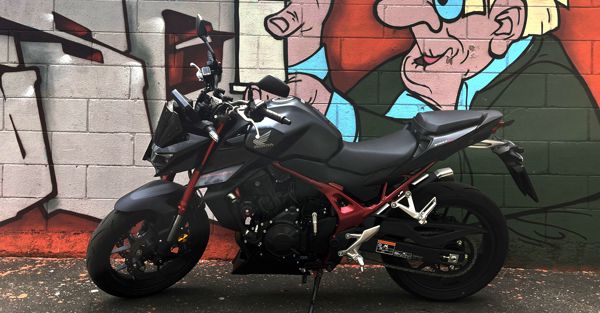
A peppy twin-cylinder engine
Compared to the CB650R, which is fitted with an in-line four-cylinder engine, the Hornet is powered by a 755 cc Euro 5+ in-line twin, which delivers the same maximum power – 95 cv – but higher maximum torque: 75 Nm at 7,250 rpm compared to the four-cylinder’s 63 Nm at 9,500 rpm. The Throttle-by-Wire system allows you to select the riding mode best suited to the situation, choosing from three standard modes (Sport, Standard, Rain) plus two customisable modes that adjust all the electronic parameters: engine power delivery, engine braking level and traction control with integrated anti-wheelie control.
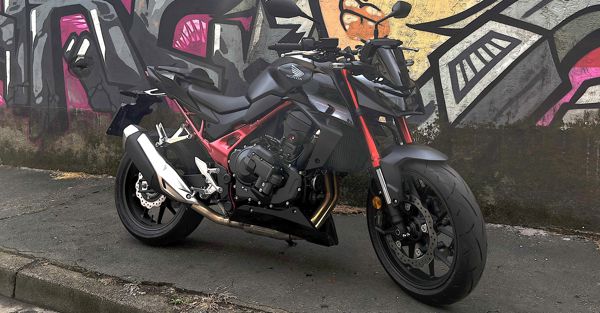
Suitable chassis
The backbone of the Hornet is its latest-generation diamond-frame steel chassis, which weighs just 16.6 kg, meaning that the bike’s kerb weight – with a full 15.2-litre fuel tank and E-Clutch – is 196 kg. The Showa upside-down fork with separate functions (spring on one side and hydraulic damper on the other) and 41 mm stanchions is paired with a rear shock absorber featuring a Pro-Link progressive linkage and a box-section steel swingarm; it offers seven levels of spring preload adjustment, allowing the set-up to be adjusted according to the rider’s build and the load on board. The suspension settings are geared towards sportiness: the hydraulic damping has been optimised at both the front and rear to increase grip and traction, thereby maximising the contact patch between the tyre and the road surface. The result is that, with the new standard set-up, it is now possible to adopt an even sportier riding style. Braking on the Hornet is handled by two 296 mm front discs with four-piston radial-mount Nissin calipers and a 240 mm rear disc.
How the E-Clutch works
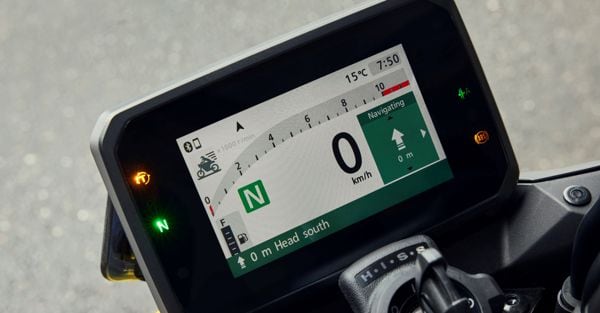
This is an automatic clutch that allows you to set off, change gear and stop whilst the engine is running and a gear is engaged, without using the left-hand cable-operated lever (which is still present on the handlebars and can be used at any time). To set off, once you’ve selected a gear using the gear-shift pedal, simply open the throttle – a little or a lot, depending on how quickly you want to accelerate – and the E-Clutch releases the clutch perfectly, completely eliminating the risk of accidentally stalling the engine. The same applies whilst riding: the rider simply needs to operate the gearshift pedal to achieve ultra-fast upshifts and downshifts, even faster than a Quickshifter. The same applies when coming to a stop: you downshift and come to a halt; the E-Clutch takes care of ‘engaging’ the clutch, preventing any chance of the engine stalling. The E-Clutch also adjusts the throttle opening according to the selected Riding Mode and detects any locking or hopping of the rear wheel during rapid downshifts, intervening by partially engaging and releasing the clutch to stabilise the bike’s handling. You can even adjust the resistance on the gear lever (three levels), depending on the force you wish to apply when changing up or down through the gears. Finally, the system also alerts the rider to downshift – via a symbol on the instrument panel – if it detects that the current gear is too high for the speed.
On the road
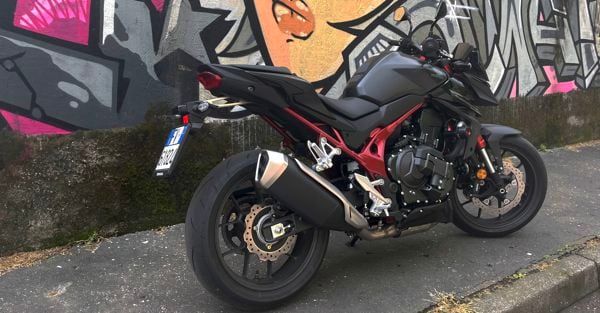
With a seat height of 795 mm, all riders can firmly plant at least one foot on the ground; the upright riding position, with the footpegs set slightly further back, offers a natural riding posture. The wide, perfectly contoured handlebars also ensure a secure grip and excellent control. The instrument cluster is housed within a 5-inch colour TFT screen, which also incorporates the Honda RoadSync system for connecting a smartphone via Bluetooth. Right from the very first few metres, the Hornet confirms the agility that has always set it apart: it manoeuvres with extreme ease in tight spaces. What is most striking, however, is the power delivery: full-bodied at low revs, lively in the mid-range and surprisingly lively right up to the top end of the rev range. The crankshaft with 270-degree camshaft timing delivers a pleasant sound and a very engaging throttle response, making every exit from a bend thrilling. The Ride-by-Wire throttle system further enhances the precision of the engine’s response.

