
Honda Cmx1100 Rebel, what the Japanese cruiser looks and feels like
In the panorama of large-capacity cruisers, the Honda Cmx1100 Rebel combines classic spirit and contemporary technology well

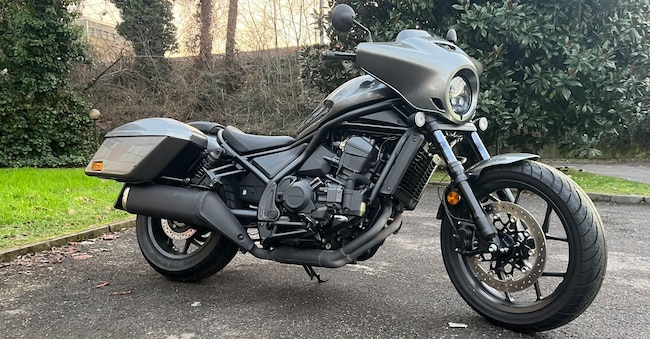
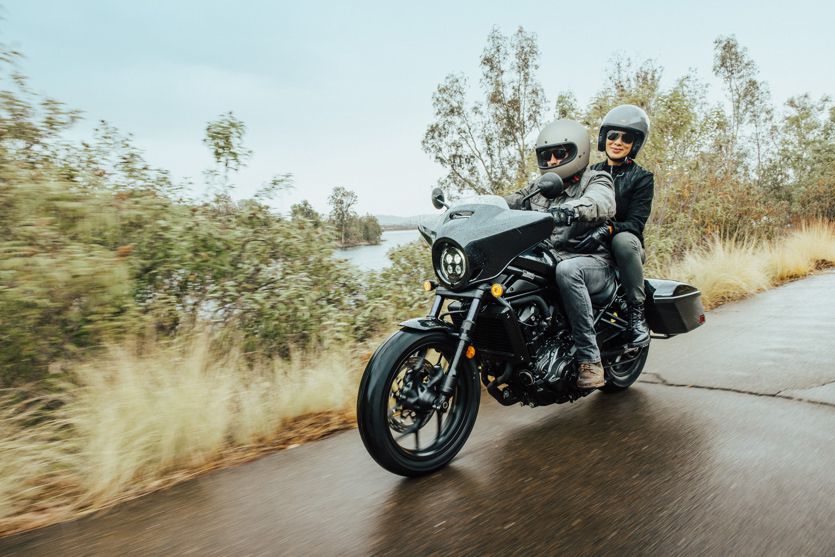
The world of custom two-wheelers knows no crisis or, at least, manages to ride through it and come out unscathed: it is a common thread that unites a little of every era from the days of 'Easy Rider' or 'On the Waterfront' to today. There are many reasons for this and this is not the place to analyse them, apart from one: the desire to 'go the distance'. In the saddle of a custom (or cruiser, as we now call the less extreme, more touring-oriented custom bikes), the search for the best time on the course or the perfect bend takes second place to the pleasure of riding for hours. This is the thought that came to my mind most often during the test ride of the Cmx1100 Rebel in the Touring version, with semi-furling and hard side cases.
Honda Cmx1100 Rebel, what it looks like
Joining the 500 cc engine version, the Cmx1100 Rebel added a lot of spice to the model. The shapes are still the same: low seat height (700 mm from the ground), diamond steel frame, elongated stance, small fuel tank (13.6 litres), 18" front wheel and 16" rear wheel, and wide tyres at the rear give it personality even when stationary. But the engine is the 1,084 cc parallel-twin derived from the Africa Twin's powerplant, here revised to deliver a vigorous thrust in the low and mid-range, just where you need it on a cruiser; with 88 hp of power and 98 Nm of torque at 4,750 rpm, the engine offers a quick response as soon as you open the throttle with a full, deep sound.
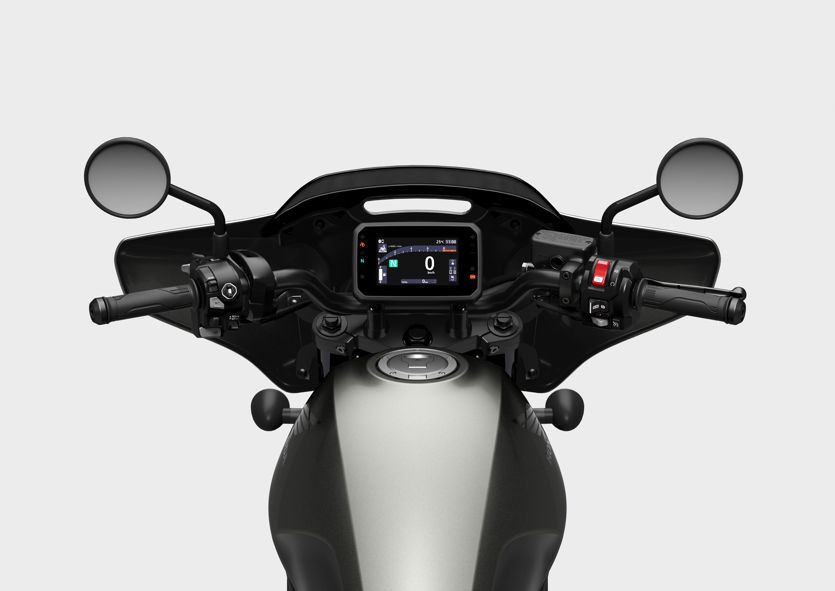
The more observant will have noticed that the clutch lever and gearbox pedal are missing: the larger Rebel is, in fact, only available with the 6-speed Dct dual-clutch gearbox, which has now reached full maturity: gear changes are smooth and immediate, but there is also intelligent handling at low speeds and when manoeuvring (it doesn't shift up in the middle of a corner as it did at the start). There are three riding modes (Standard, Sport and Rain) that modify the delivery, traction control and throttle response.

