
Honda Sh, 40 years of the scooter that revolutionised urban mobility
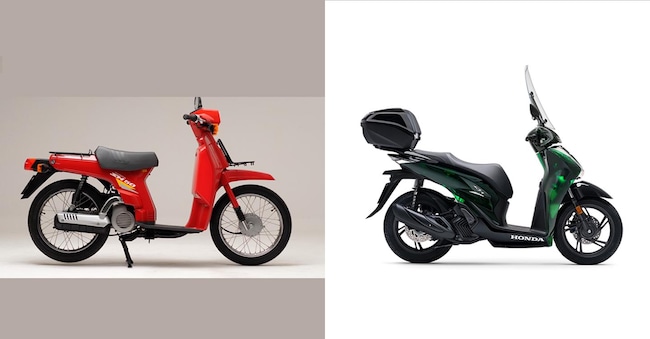
From the first Sh50 in 1984 to the present day, Honda's high-wheel scooter, which has dominated the sales charts for years, has become an icon in our cities
3' min read
3' min read
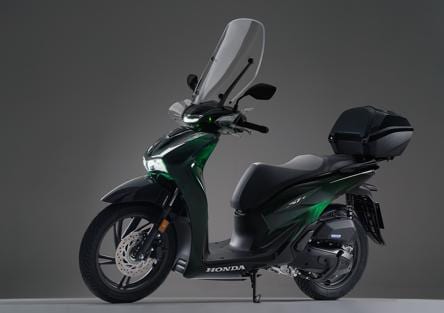
To understand the success of a model like the Honda Sh, now available in three displacements (125, 150 and 350 cc), one need only look at the sales figures for the first nine months of this year. The first three places are occupied - by now a habit - by the three Sh in ascending order of engine capacity, but there is more: the first 30 scooter models in the ranking were sold 115,184 units; of these 28,798 were Sh, exactly 25%; in other words, one out of every four scooters sold is a Sh. 2024 marks an important milestone for the Japanese scooter, the 40th birthday, four decades in which Honda's two-wheeler has become a cornerstone of two-wheeled mobility in our cities.
Sh and Italy: a deep bond
When the two-stroke Honda Sh 50 made its debut in 1984, it entered a rapidly growing European market for two-wheelers. What characterised the Sh were the 16-inch-diameter spoked wheels that offered greater stability and ease of riding than conventional scooters, making it ideal for rough and busy urban roads. The flat footboard and luggage racks also made it possible to load bags and various items.
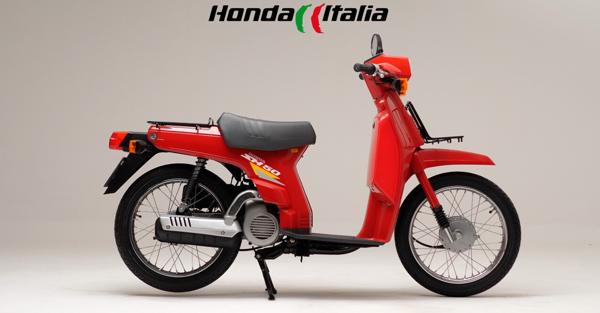
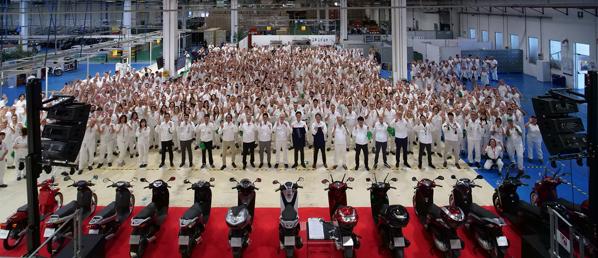
The first model quickly won over the public with its easy handling, light weight (it weighed 68.3 kg dry) and low fuel consumption: it became a popular choice among young people and commuters looking for an economical and practical means of transport. With the second generation (1996-2001) came the Sh 100 to meet the demands of those who wanted a scooter with more power without sacrificing handling. In 1996, production of the Sh was entrusted to Honda Italia, a subsidiary of the Japanese colossus founded in 1971: since then, Sh models for Europe, initially built in Honda's Aalst plant in Belgium and then in Barcelona, have been produced in the Atessa factory (Chieti), Honda's only two-wheeler manufacturing site in Europe, which employs over a thousand people and produces eight models (for the current fiscal year, from April 2024 to March 2025, 141,000 units are planned, of which about one third will be Sh).
The 2000s
The real quantum leap came in 2001, when Honda introduced the third generation with the Sh 125 and Sh 150 models with four-stroke engines. These models became immediately popular because they opened the door to extra-urban roads, including motorways, while retaining handling and ease of use, as well as economy (almost 30 km/l). Electronic fuel injection arrived in 2005, while the following year saw the debut of the Sh300 (later replaced by the 350 version), the 'big one' of the family that allowed it to tackle the motorway without any worries. Over the years Honda has continued to update the Sh range, introducing technologies that benefit safety and the environment (and your wallet): the Cbs combined braking system and then Abs (2012), Start & Stop (2013) to reduce fuel consumption during short stops, more powerful LED lighting, the keyless system (2017). In March 2015, Honda announced that more than one million Sh scooters had been sold in Europe, in all engine capacities; in early 2017, it was the Atessa factory that surpassed the one million Sh scooters rolling off its production lines and destined for all European markets.
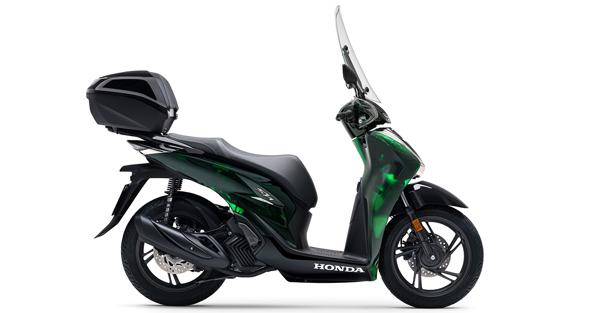
Today, 1.2 million Sh shirts are sold by Honda in Europe: a figure destined to grow further for a Japanese model that has made 'made in Italy' its hallmark.

