
Hormuz crisis, how Italia awaits a truce between the US and Iran
The possible agreement for a lasting truce with the reopening of Hormuz could bring closer the timeframe for an international peace mission in the Strait, which would be led by Rome

Key points
- The need to detect and detonate mines
- By the end of the month, the two destroyers in Djibouti
- Mission prerequisites
- Montecucculi's escort and logistical support of the Atlas
- The role of the frigate Rizzo
- Over 400 Italian military personnel on board
- A score of countries have made themselves available for action
- The choice to go to sea
The possible agreement for a lasting truce with the reopening of Hormuz could bring closer the timeframe for an international peace mission in the Strait, which would also see Italia as the leader. As Foreign Minister Antonio Tajani has reiterated in recent hours, Italia "could contribute to mine-clearing operations and the safety of commercial shipping" once the conflict involving the US, Israel and Iran has ended.
The number one at the Farnesina explained that Rome is 'ready to make available the experience gained in European naval missions', including the Aspides mission, aimed at 'guaranteeing maritime transport' in the Red Sea and currently led by Italia and Greece.
The need to detect and detonate mines
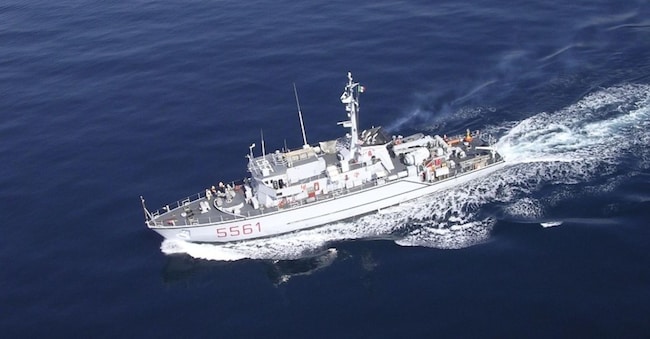
And now the main objective is to defuse Tehran's sea traps, scattered in that arm of the sea in the Gulf: an obstacle for oil tankers, which has become crucial for the world economy. Two minesweepers of the Italian Navy are already in the Red Sea, cautiously approaching, departed last 15 May from the port of Augusta, and are currently stopped at the port of Safaga, in Egypt.
By the end of the month the two destroyers in Djibouti
The two units, the 'Crotone' and the 'Rimini', could leave in the next few hours for Djibouti: a destination they will reach by the end of May, where there is already a national contingent on the Horn of Africa, in a place equipped with a military airport and necessary infrastructure.
Mission prerequisites
Instead, for the demining mission in Hormuz to begin - which will only take place in safety - three conditions will be necessary: a truce, then the cessation of hostilities in the same area, an international mandate, and finally parliamentary authorisation.

