Energy and Environment

The heat is coming, from Enea 14 tips to optimise the use of air conditioners

Temperatures rise and the use of air conditioning systems increases

by Davide Madeddu

3' min read

3' min read

Temperatures are rising and the use of air conditioning systems is increasing. For this reason, ENEA has produced a guide with fourteen tips to optimise the use of air conditioners and contain consumption during the hot months, when the systems in homes remain on for about 6 hours and 17 minutes a day.

Maintenance

.

First tip from the experts: regular maintenance. "Like any other household appliance, the air conditioner requires cleaning and maintenance to function properly," it says. "In addition, it is important to check the tightness of the gas circuit. If the air conditioner is not maintained correctly, it tends to work under stress, consuming up to 30% more electricity than factory settings'. Cleaning the air filters is also a precaution.

Loading...

Energy class and technology

The second and third points of the guide concern the energy class, which is a key requirement to lower consumption and reduce the cost in the bill. For example, a model in class A++ will consume up to 40% less electricity than one in class B. And then technology, we recommend the inverter control system.

The incentives

.

For purchases made by 31 December 2024, the 'air conditioner bonus' allows you to benefit from a 50% or 65% tax deduction, depending on the intervention carried out and the type of equipment purchased:

Mounting

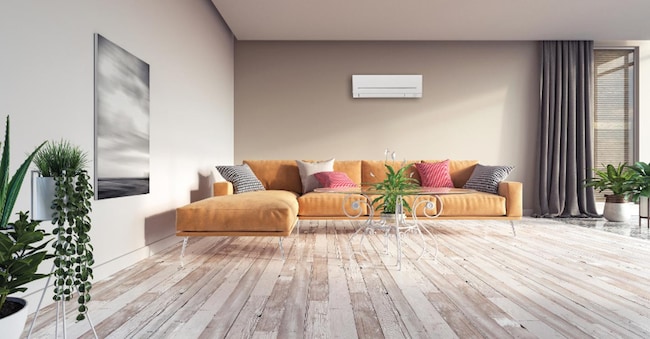
No less important are the suggestions regarding the position to choose for the installation: 'it is important to place the air conditioner in the upper part of the wall: cold air tends to go down and will mix more easily with hot air, which tends to go up. You should avoid placing the air conditioner behind sofas or curtains: the barrier effect blocks the diffusion of fresh air".

Shutters closed during warm hours

.

Another tip concerns shutters: it is better to close them when you are not at home in order to contain the entry of heat through the window frames.

Closed shutters

.

One of the tricks to follow is to close the shutters. When you are not at home, very oftenClosing the shutters, lowering the blinds or shielding the window frames with curtains in the middle hours of summer days reduces the amount of sunlight entering the house and, consequently, the energy required by the air-conditioners.

Never too cold

.

Don't cool down the room too much and watch out for humidityOften, activating the 'dehumidification' function can be enough to ward off oppressive heat.

One luminaire per room

.

It is considered unnecessary to install a more powerful air-conditioner perhaps in the corridor, in the hope that it will cool the whole house.

Watch out for doors and windows

One of the tips to follow is not to leave doors or windows open because 'the air conditioner cools and dehumidifies the room in which it is installed by transferring heat and humidity to the outside' and therefore if new warm air enters the room, the device has to do extra work to cool and dehumidify.

Watch the circuit pipes

.

A precaution that must be taken during installation to avoid leakage is to thermally insulate the pipes running outside the house.

Uses programmable thermostats

.

Another trick is to set the thermostat to a comfortable temperature using cooling programmes to optimise energy consumption when you are not at home or at night. The 'night' or 'sleep' function adjusts the room temperature at night in response to changes in body temperature.

Reducing appliances that heat

.

The use of appliances that contribute to increasing the temperature inside the home such as computers, televisions or even lights should also be limited.

Heat pump and renewable plant

Experts also recommend evaluating the combination of a heat pump with a photovoltaic system 'capable of covering the electricity consumption required to run the machine'.

Check before you start

.

Rather than DIY, it is recommended to ask a technician to carry out an energy diagnosis of the building and the state of thermal insulation of walls and windows and the efficiency of air conditioning systems. "The diagnosis will suggest the interventions to be carried out, evaluating their cost-benefit ratio. In addition to cutting summer air-conditioning costs by up to 40 per cent, the interventions are even more cost-effective if tax deductions are used for the energy requalification of buildings'.

Copyright reserved ©

Brand connect

Loading...

Newsletter

Notizie e approfondimenti sugli avvenimenti politici, economici e finanziari.

Iscriviti