
Warehouses, hotels and retail: in Europe, sale & leaseback to 16 billion by 2024
The figure takes into account the increase in volumes from 2022 to 2024, which grew and then declined due to falling rates and a return to bank lending. The system involves the sale of space to a third party company that leases it back to the seller. Foreign investors increasingly interested in SME manufacturing, hotels and shopping centres

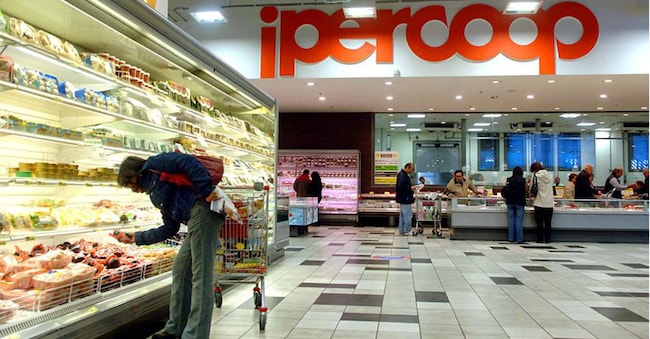
Selling to a leasing company your hotel, one or more shopping centres, logistics warehouses or production hubs and then, from that same company, leasing them back without moving furniture or machinery as if nothing had happened is called sale & leaseback. A financial operation that is widespread in the USA and much less so in Europe, where it has grown in these years of high rates and closed taps of banks and traditional credit. But now that rates are back to acceptable levels, mortgages have recovered and, despite economic uncertainties, are not expected to rise, does it still make sense to resort to it?
According to data cited by Colliers' Q4 Capital market Outlook, the volume of sale & leaseback in Europe reached EUR 4.6 billion in Q4 2024, down 8% from the same period in 2023 and 64% from the peak levels recorded in 2019. Between 2020 and 2024, an estimated investment volume of around EUR 16 billion is expected. In January, Germany's Grr Garbe Retail made its first acquisition in Italia, taking over seven hypermarkets and 15 supermarkets from Coop Alleanza 3.0 for EUR 222m.
"Companies are looking to unlock available liquidity from their real estate assets at a time when access to traditional financing is expensive and selective," explains Christopher Mertlitz, managing director head of European investments at W.P. Carey. Italia and much of Europe rely on niche manufacturing excellence, which is often not fully understood even by banks, which are also squeezed by liquidity constraints. They are references in their production segment but often undercapitalised. With the sale & leaseback the company obtains immediate liquidity from the sale of the asset, retains its use, even if it no longer owns it, and in some cases, can buy it back at the end of the lease term and can take advantage of financial flexibility that allows it to better manage company liquidity, freeing up capital for new activities or investments. Italian and European companies are often sitting on very valuable real estate and do not even realise it. In Italia there is a sea of opportunities'.
For Mertlitz, the resulting effects on the budget are no less obvious. "For companies it is a cost cut. Not only can debt be reduced by replacing traditional financing with leasing, but illiquid assets are converted into liquidity, capital is freed up that can be allocated to higher-return investments, such as R&D , strategic acquisitions or operational expansion, ESg improvements in compliance with EU regulations, with a higher return on equity. In addition, monetising fixed assets at market value improves liquidity parameters, solvency ratios, financial ratios and business performance, such as EBITDA, and can reduce the weighted average cost of capital. And administrative burdens are reduced if the management of the asset can be delegated to the leasing company, allowing the company to concentrate on its core business. The leasing fee is usually fixed and transparent, so the company can plan its costs better'.
How do tariffs and international trade restrictions impact on this business? 'The US seems to want to bring production back to its own country,' Mertlitz further explains. 'From a European perspective, the only thing that is certain is uncertainty. But as investors we have a long-term vision, which looks beyond the ups and downs of the moment. Europe is somewhat more export-oriented, but the direction seems to be to shorten supply chains, making them more resilient. Gradually we are already seeing an impact. And in the long term it might even be positive for our business.

