
Hotels: acquisitions totalling 370 million in the first half of the year (two-thirds of which were conversions)
Confindustria Alberghi: ‘Legislation is needed to encourage mergers’

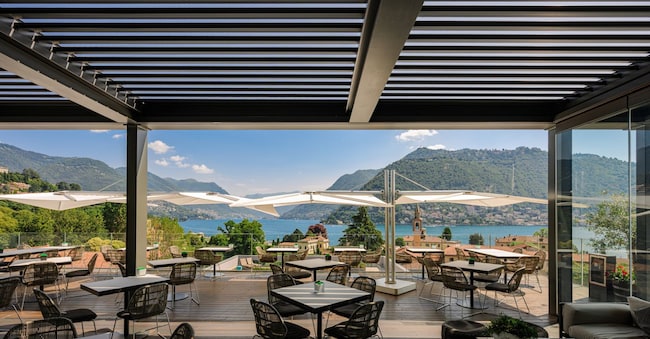
In the first half of the year, acquisitions totalled 370 million euros, of which 200 million were linked to property redevelopment projects, and nearly 80 per cent of institutional investors, private equity firms and family offices are set to increase their exposure to Italian hotels over the next 12–24 months.
These are the figures that emerge from JLL Italia’s latest report on “Italian Hotel Investment Outlook and Strategy Survey”, leading Confindustria Alberghi to express great satisfaction at the fact that interest is no longer confined to major cities but is extending to new destinations, from Lake Como to Sicily, with capital flowing in from Asia, the Middle East and South America.
“These figures confirm just how much our country is currently the focus of global investors’ attention,” says Elisabetta Fabri, president of Confindustria Alberghi, “and this is an excellent sign for the entire Italian tourism sector. But it is precisely this growing interest that must prompt us to clarify one point: Italia ranks first in Europe for the number of hotels, yet it remains one of the markets with the lowest percentage of chain hotel penetration, with a predominance of independent and family-run establishments. This is a rich part of our identity that must be preserved, not hindered, to avoid the risk that the fragmentation of the sector, combined with increasingly complex generational transitions, will drive many family businesses to sell out to capital with no connection to the local area, rather than growing and merging whilst remaining Italian.”
For this reason, Confindustria Alberghi is once again calling for the introduction of a measure to tackle the fragmentation of business size within the sector: a regulation which, by revaluing fixed assets – both tangible and intangible, including goodwill – would enable hotel and spa businesses to strengthen their balance sheets, attract capital and manage generational transitions through mergers and acquisitions.
“The international leadership of the Italian hospitality sector,” concludes Fabri, “is also built by giving our businesses – which are often small and family-run – the tools to expand, modernise their assets and compete on equal terms with large international groups, without losing what makes us unique in the world. A regulation such as the one against fragmentation by size would move precisely in this direction: encouraging mergers between Italian businesses, whilst safeguarding their spirit and identity. Only in this way can we continue to attract international capital whilst remaining key players – rather than mere spectators – in the growth of our sector.”

