
Home detention for drug addicts is now law, says Nordio: 10,000 out of prison
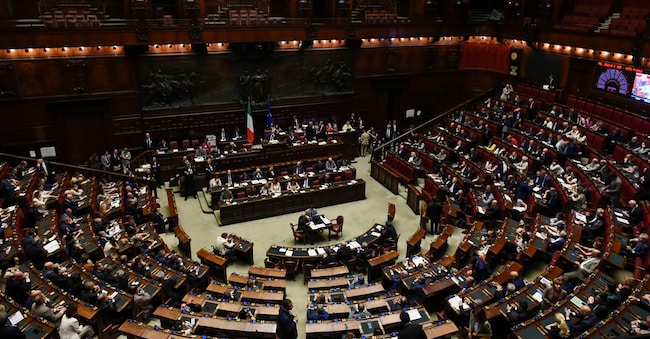
The Chamber of Deputies has given its final approval to the bill, with 153 votes in favour, 42 against and 82 abstentions. Prime Minister Giorgia Meloni expressed her satisfaction.

Key points
House arrest for drug and alcohol addicts is now law. The Chamber of Deputies, with 153 votes in favour, 42 against and 82 abstentions, has given final approval to the bill which allows drug-addicted prisoners to be placed under house arrest, providing for a differentiated approach to the enforcement of sentences, in order to better meet the treatment needs of those addicted to substances.
The eight-year maximum sentence
The law introduces ‘house arrest in specific cases’ into the Consolidated Act on Drug Legislation (Presidential Decree 309/1990). A prerequisite for eligibility is participation in a residential or semi-residential therapeutic and social rehabilitation programme. This option is available to all persons sentenced to a term of imprisonment, including any remaining portion of a sentence and where this is combined with a fine, not exceeding eight years.
The majority voted in favour, whilst the opposition parties abstained, agreeing in principle with the bill’s underlying principle but highlighting a number of concerns, with the exception of the Five Star Movement, which voted against it alongside Vannacci’s Futuro Nazionale.
Reactions
The Minister of Justice, Carlo Nordio, highlights the deflationary effect of the measure. “A landmark measure because it allows for alternative detention for at least 10,000 people, drug addicts who have committed offences and whom we have always regarded primarily as patients in need of treatment rather than criminals to be punished, even whilst they were serving their sentences”. Responding to Question Time in the Chamber of Deputies, the Minister of Justice addressed the issue of the prison plan: “The plan is proceeding according to the established schedule: in recent days we have inaugurated a model wing for the 41 bis regime in the Cagliari area, and the Commissioner for Prison Construction is pressing ahead with the construction of facilities for 10,000 prisoners. This, together with the other measure, will help to reduce the prison population.”
Prime Minister Giorgia Meloni herself has expressed her satisfaction. “The final approval of the law that strengthens the real possibility, for those convicted of offences committed under the influence of drug addiction, to undertake a rehabilitation programme under community-based house arrest —as stated in a note from Palazzo Chigi—rather than remaining in prison, when the sentence does not exceed eight years’ imprisonment’ is ‘a victory on several fronts: for those who will benefit from this opportunity, which is, on the one hand, more extensive and, on the other, more rigorous than the legislation previously in force; for the safety of everyone, because verified rehabilitation removes the driving force that pushes a section of the population to reoffend; for the prison population, which will be relieved of the burden of those who choose the community-based programme’.

