Application nodes

Housing plan, a commissioner to manage social housing

Recovery of 61,000 uninhabitable social housing units and focus on another 53,000 unused public properties. Centralised direction and resources entrusted to Invitalia, which will start with 970 million euro

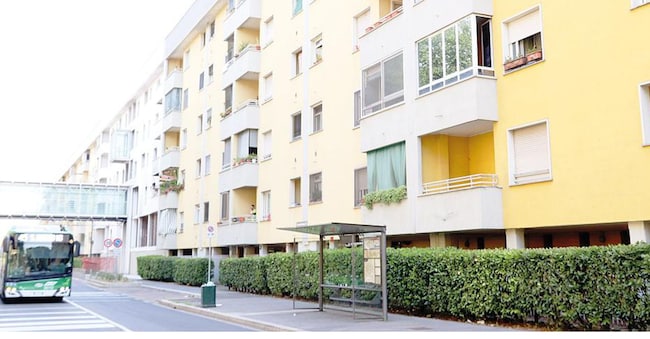
by Michela Finizio and Raffaele Lungarella

6' min read

Translated by AI
Versione italiana

6' min read

Translated by AI
Versione italiana

The jigsaw puzzle of the Housing Plan has taken shape, and the text published in the Official Gazette on 7 May brings together resources, most of which are rooted elsewhere, with the primary objective of increasing housing supply "without land consumption" - as Premier Giorgia Meloni herself specified during the press conference presenting the measure - and thus reducing the phenomenon of the housing emergency.

The first chapter of intervention, the one with the most defined contours, aims at the recovery of the61,000 public and subsidised residential housing units that are currently uninhabitable, according to the latest Federcasa-Nomisma survey. The perimeter of intervention, then, could involve up to 53 thousand unused public properties: the census is from the Ministry of the Economy, which emphasises that these accommodations "could be used for public, social and integrated housing". In practice, adding up the housing units potentially affected, the Home Plan will affect approximately 114 thousand dwellings. 

Loading...

The operation could satisfy only part of the 250,000 requests on waiting lists for social housing as of 31 December 2024 (of which 60,000 in Milan and hinterland), the latest figure released by Federcasa, which brings together 85 public housing management bodies (including Atc, Ater, Iacp, Aler, Arca and others) .

The resources in the field

The bet first of all starts with financial resources. The plan puts dormant funds, already allocated by both the current and previous governments, back into circulation and starts with 970 million euro distributed over the five years between 2026 and 2030. Of this 100 million comes from the reduction of the spending authorisation in the 2024 budget; the remaining 860 from the cancellation of the 2024 budget authorisation. Both regulations provided for the implementation of programmes with the same purposes, now grouped under the banner of the House Plan.

It is also planned to use 50 per cent of the resources allocated from the Social Climate Fund (EU regulation 2023/955) to support vulnerable households: for the period 2026-2032 the Ministry of the Environment allocates 1.47 billion euro to public housing, of which 735 million should therefore be given to the Housing Plan.

Finally, an additional 4.8 billion could be added between 2027 and 2034, with annual amounts of 500 million between 2027 and 2030 and 700 million between 2031 and 2034: these funds 'may' be transferred from the contributions assigned (with the budget law for 2020, Article 1, paragraph 42, 160/2019) to the municipalities for the realisation of urban regeneration projects, but their conferral does not seem certain. The uncertainty could derive from the fact that the possible decree of the Prime Minister, in addition to the agreement of the ministers concerned, must also obtain the agreement of the State-Cities and Local Autonomies Conference. In short, if the mayors do not give the go-ahead, it will not be possible to proceed.

Recovery Interventions

According to the government's estimates, the unit expenditure to recover the surveyed dwellings is between 20 thousand and 30 thousand euro. "The interventions put in place so far thanks to the regional funds set aside for these purposes have required an average expenditure of 20 thousand euro, but for some dwellings 7-8 thousand euro would suffice and most require small-scale interventions," explains Federcasa president Marco Buttieri.

In the past, two other housing policy programmes called 'housing plan' were approved. In 2008, the Berlusconi government approved a plan (Article 11, Decree-Law 112/2008) to 'guarantee throughout the national territory the minimum essential levels of housing needs', with an endowment of 200 million euro for immediately feasible public housing interventions. In 2014, the Renzi government promoted (Article 4, Decree 47/2014) a new programme for the recovery and maintenance of the housing of the Iacp and other public bodies, with an initial financial endowment of some sixty million euro, to which 500 million were added with the Budget Law for 2015, but diluted over ten years. Both governments divided the funding among the regions, which have been the mainstay of these heritage recovery programmes so far.

Centralised control

 "The procedures," says Buttieri, "have so far been cumbersome. The management of the funds was delegated to the Regions, each with its own calls for applications and often hasty calculations, then we were left in the balance waiting for the rankings and authorisations. Then the funds arrived only later, at the end of the redemption process. It took us up to two years to make certain interventions

With the Meloni government's Housing Plan, the direction is now centralised: resources will flow into an account managed by Invitalia and will be distributed on the basis of calls for tenders that will reward public-private partnership interventions included in plans to combat decay or urban regeneration.

An extraordinary commissioner (with a support structure under his authority) will be appointed for the implementation, who will remain in office until the end of December 2027 and will be able to operate through the system of ordinances, in derogation of any provision of law other than criminal law, subject to compliance with the provisions of the anti-mafia code, the provisions of the cultural heritage and landscape code, and the mandatory constraints deriving from EU membership.

'The list of properties to be worked on,' Federcasa comments, 'will have to be drawn up by the commissioner, but then it will be necessary to understand how the allocation of funds, which up to now have been allocated to the regions on the basis of the number of dwellings, will take place. In practice, priorities will have to be decided and who will manage the tenders. Our companies are all contracting stations and can manage them independently. It is difficult to imagine centralised tenders for interventions scattered across the country'.

These and other points will have to be clarified within the Commissioner's steering committee, of which Federcasa will be part (as provided for in the decree). Among other things, since all 'housing companies' are public bodies, properties older than 70 years will be subject to the opinionof the soprintendenze: 13.4% of Erp housing was built before 1948 and 31.8% between 1948 and 1974.

Confirming the existing need, the M7I17 mission of the Pnrr for energy efficiency in public housing has already collected 46 validated applications on the Gse portal for 347 million euro and on 30 April a further 239 projects for a further 1.75 billion had been filed. As a result, if the tenders all reached the finishing line, an additional 70 million would be needed over the initial allocation to meet demand.

The Four Pillars of the Plan

The recovery of Erp housing

Extraordinary plan for the recovery and maintenance of the public and subsidised residential building stock. The resources will flow into an account managed by Invitalia and will be distributed on the basis of calls for tenders that will have to reward public-private partnership interventions, included in plans to combat decay or urban regeneration. An extraordinary commissioner will be appointed for the implementation of the measures (he will have a support structure under his authority), who will also be able to operate as an exception through the ordinance system

Inculpable Morpidity

A revolving guarantee fund is then set up for the non-compliance of Erp assignees, with an endowment of 22 million for 2026 and 2 million for 2027, fed by a portion of the rents paid by the assignees. Access criteria and operating procedures will be defined by a Mit-Mef decree within 60 days of the decree coming into force

The alienation of assets

The right to redeem ERP housing is then introduced in favour of assignees who are not in arrears, provided that they do not own another dwelling, but even in this case the operating procedures will be defined by a subsequent interministerial decree, following agreement at the Unified Conference. Finally, it is also possible to allocate resources from the extraordinary programme to long-term rental projects with the option of gradual redemption (rent to buy) according to predefined deadlines, aimed at young people, young couples and separated parents, on properties of at least twenty-five units with a high energy efficiency and environmental sustainability requirement. The units are subject to a transcribed deed of obligation in favour of the municipality, which also defines the constraints on the transfer price in case of a subsequent sale by the original tenant

Social Housing Fund

The plan envisages the concentration, in a special financial instrument managed by Invimit Sgr (called the Housing Cohesion Fund), of the resources of European and national derivation that are currently allocated to social housing and to the housing emergency at the various levels of government. It will act through specific compartments dedicated to each region or autonomous province. The objective is to aggregate currently dispersed resources and transform them into more coordinated, measurable and organised intervention programmes

More streamlined private interventions

The third pillar of intervention of the Piano Casa envisages the involvement of the private sector: it links the procedural and town-planning simplifications to the obligation to allocate a very significant share of the private interventions - 70 per cent of the value of the investment - to rental or sale at a lowered price, with values of at least 33 per cent lower than market values. For investments exceeding one billion euro, the appointment of an Extraordinary Commissioner is envisaged, who will have to issue a single authorisation measure.

Copyright reserved ©
Loading...

Brand connect

Loading...

Newsletter

Notizie e approfondimenti sugli avvenimenti politici, economici e finanziari.

Iscriviti