Consumption

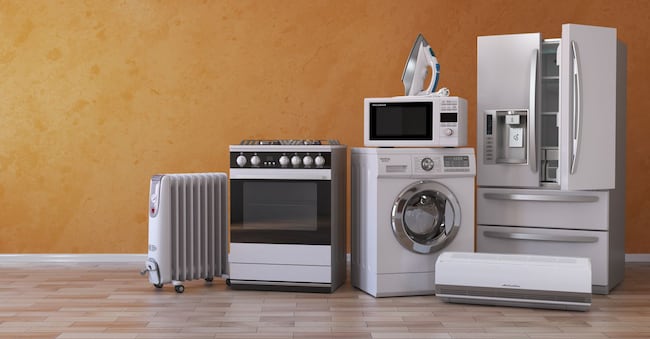
Household appliances: for Italians, durability matters more than price

 stock.adobe.com

3' min read

Translated by AI
Versione italiana

3' min read

Translated by AI
Versione italiana

Consumers prioritise durability; price comes second. 58 per cent of Italians rank durability among their top criteria when buying household appliances, ahead of energy consumption (55 per cent) and the initial cost (33 per cent). This is according to the Ipsos Doxa survey presented today in Milan on behalf of Miele, the German brand that focuses on the so-called ‘long-term economy’ of its products.

The figure comes at a positive time for the market: in the first five months of 2026, NielsenIQ recorded a 1.8 per cent increase in the value of Italian sales of large white goods and a 9.8 per cent rise in sales of small white goods. However, according to the Ipsos Doxa survey, consumer preferences are leaning towards certain types of products: 91 per cent of respondents regard a durable household appliance as an investment, and 97 per cent believe it is important that it lasts for many years.

Loading...

Cost is not the priority

“It’s not that price isn’t important,” explains Antonio Filoni, Business Development Director for AUM at Ipsos Doxa: “But other factors are becoming increasingly important.” The difference lies in the long term: spending less at the point of purchase can turn out to be a false saving if the product has a short lifespan or uses a lot of energy. When it comes to fridges and washing machines, around nine in ten respondents would be willing to pay a premium for an appliance designed to last twice as long as the average.

Younger people are driving the figures

This figure is rising particularly amongst those accustomed to replacing products frequently: amongst 18- to 34-year-olds, durability is a purchasing criterion for 64 per cent, compared with 58 per cent of the overall sample: ‘For young people, sustainability comes into play, but so does a greater focus on spending,’ explains Filoni. The two are not mutually exclusive. In fact, a 2025 Agos-Eumetra survey found that more than 80 per cent of 18–34-year-olds consider sustainability important, whilst at the same time highlighting the limitations of their purchasing power.

Durability is, in fact, a key factor for the environment: for 84 per cent of those surveyed, the most sustainable product is one that does not need to be replaced often; 67 per cent associate sustainability primarily with durability and reparability; this issue has become even more pressing since 31 July, when the new rules on the right to repair came into force in the European Union, strengthening access to repairs and spare parts.

The role of innovation

Technology is also judged by the same yardstick: 59 per cent consider innovation useful if it saves energy, 40 per cent if it extends the product’s lifespan, and 26 per cent if it reduces maintenance. Only 18 per cent believe it is important to innovate in order to introduce new functions: ‘New features are the icing on the cake, but if the cake isn’t any good, they’re pointless,’ adds Filoni.

Markus Miele, executive director and co-owner of the group, echoed this view: ‘Technology becomes meaningful when it solves a real problem or provides a tangible benefit.’ He concluded: ‘The research data backs us up. People want to live longer, and we are on the right strategic course.’

Copyright reserved ©
Loading...
Loading...

Brand connect

Loading...

Newsletter

Notizie e approfondimenti sugli avvenimenti politici, economici e finanziari.

Iscriviti