
Houses, purchases still falling in 2024 but prices rising by 2% (9% if new)
According to Rexer's Real Estate Observatory, new property values have risen by +30% in five years. Purchase intentions are growing but around 20% of sellers - according to a survey - do not intend to put their property on the market until prices have risen again

4' min read
Key points
4' min read
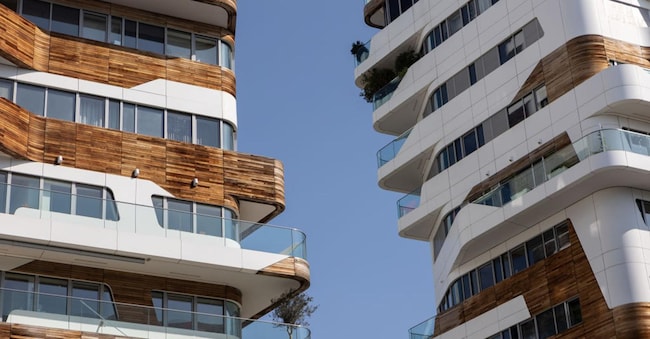
New construction is the pink diamond of real estate. Over the past five years, prices for new have risen by 30 per cent in Italy. If we add to this the fact that demand pressure (on big cities, but also on more accessible neighbouring ones) is growing and that around 20 per cent of sellers - according to a survey - do not intend to put real estate on the market until prices have reached their peak, we can understand both why buying and selling is declining (sellers and buyers not agreeing on prices) and why prices, despite everything, are not - for the time being - set to fall.
Crossing the data with a survey (of buyers and sellers) that sought to intercept perceptions and behaviour is the Osservatorio Immobiliare 2024 by Rexer - the real estate agency created through a partnership between Intesa Sanpaolo, Homepal and Bper Banca - which in Milan presented a study on the Italian real estate sector that sought to grasp the latest trends.
The market
.According to the analysis, by the end of the year, residential sales are still expected to fall by 0.5 per cent (an 'encouraging' sign after the drop of -9 per cent in 2023 compared to 2022). But with considerable differences from city to city. However, according to Deloitte Monitor processing (based on Omi data) in the first half of the year - compared to the second half of 2023 - purchases and sales grew by 5% in Bergamo and Naples, 2.3% in Florence and 1.4% in Rome, 1.1% in Genoa and slightly above zeeo in Brescia and Padua. But they fell 3.9% in Bari and Turin, 5% in Bologna, 8% in Modena, 9% in Milan and over 11% in Venice. While residential purchase prices are on the rise (+1.3% in 2023), with further increases (+2%) expected by the end of 2024 in all major Italian cities, especially in the new construction segment, with an expected growth of even +9.8% in 2024. New buildings are hard to find, their prices have risen by +30% in five years.
In 2023 (compared to 2022) prices grew by 7.3% in Bergamo, 6.8% in Modena, around 6% in Florence and Padua, 5.2% in Genoa, 4.6% in Rome, between 4.2-4.3% in Turin, Bari and Milan, around 3.5% in Bologna and Venice, 3.1% in Naples and just 1% in Brescia. Not only the large cities, but also the medium-small ones, often close to them and better connected, are seeing signs of dynamism by absorbing a part of the population that is unable or no longer wants to buy in the metropolises.
In the European context, Milan ranks as the first city in Italy in terms of cost per square metre with an average value of 5,500 euro/sqm (with peaks of 10-12 thousand euro/sqm in the city centre). In the European market, however, Milan ranks 15th, at the level of Lisbon, behind less significant markets such as Prague, Vienna and Dublin and still far behind the most important cities such as Zurich, Geneva, London and Paris.
L’indagine
In June 2024 Rexer conducted a survey among a sample of about 1,000 respondents to investigate and understand their experiences and intentions to sell and buy. 56% of the sample surveyed own a property, (in the North 66%) and as many as 30% of respondents say they intend to buy a property in the next 12 months, even if they already own a home. Consumers expect further increases in values over the next 12 months, with even higher expectations in Milan: 45% of respondents expect an increase in prices over the next 12 months, 61% expect this in Milan. Interest in selling is growing, but there is a segment of the panel that prefers not to sell (17%) while waiting for prices to rise further: of these, 36% admit they are aiming for a maximum gain and are therefore waiting to put their property up for sale.
"This has the consequence of removing a share of supply, already structurally deficient, from the market," said Andrea Lacalamita, managing director of Rexer, "favouring a further tightening of prices in conditions that are already difficult for supply and demand to meet. A risk of a potential bubble, which is not on the horizon now, but which these dynamics may foster'.
Brand connect


Newsletter RealEstate+
La newsletter premium dedicata al mondo del mercato immobiliare con inchieste esclusive, notizie, analisi ed approfondimenti
Abbonati