Market

Homes, the need to be addressed with public-private alliance

Albertini (Assoimmobiliare) defines problems and opportunities in regeneration: Housing is our daily infrastructure. Priorities transport, services and quality

3' min read

3' min read

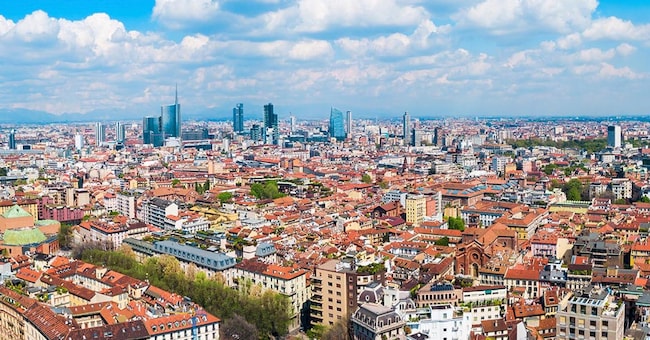
A round table on urban planning issues with councillors from major Italian cities was one of the appointments on the first day of the Scenari Immobiliari Forum in Rapallo. On the day that followed the Ance hearing on the Salva-Milano (Save Milan), a measure expected to unblock a critical situation in Lombardy's capital (see photo). Davide Albertini Petroni (president of Assoimmobiliare) immediately spoke of planning to define the need for houses in our society.

'Housing is the social infrastructure,' he says, 'and I believe that these elements must be present in the dialogue between private individuals and administrations'. Albertini points out that Italy has a low production of houses compared to other European countries, only 30,000 new homes per year, which are now in great demand. For various reasons, including sustainability.

Loading...

'In Milan we need 9,000 houses a year, we produce less than 2,600,' he says. 'This emergency must be kept in mind and tackled with a public-private relationship. The rule tackled by Berlin or Dublin with rents and capped prices has turned out to be the wrong path.

'The problem of the metropolitan dimension is a classic theme,' says Laura Lieto (Deputy Mayor, Councillor for Urban Planning, City of Naples). Every city has its own problems, with differences in density'.

Maurizio Veloccia (Councillor for Urban Planning Roma Capitale) starts from the complexity of Rome. "How does the capital govern its borders? This is the big issue we have to deal with,' he says. 'Mobility infrastructures, the metro first and foremost, are the focus we have to concentrate on. In Rome, as in Milan, the cost of bricks and mortar is repelling an important segment of the population and young people in particular, who are moving to the periphery but continue to work in more central areas.

Giancarlo Tancredi (Councillor for Urban Regeneration, Milan City Council) confirms that the situation in Milan is not dissimilar. "We need housing reform and metropolitan areas,' he explains. 'On housing we have not had a programme for a long time and we are lagging behind. It is not enough to build housing, we need infrastructure. In addition to this we need to create services, quality as well as sustainability. The focus on the big cities, which have more opportunities but which have more critical issues, has not yet been addressed in the country. We are working on the new plan on two strategies: one on the plan of the neighbourhoods, nine municipalities, for those in contact with the belt municipalities we are also involving these municipalities; we are also thinking of regenerating the interchange nodes and gateways to the city. Within the current legislative framework, it is difficult to interact with the neighbourhood municipalities. There needs to be a look from the national and regional government in creating the conditions for a system' .

'Turin is a district of Rome,' adds Paolo Mazzoleni (Turin City Councillor for Urban Planning), 'but the metropolitan city is very large. In the type of city we have, compact, with a limited centre, not being able to build effective governance is significant. The effort to succeed in involving the metropolitan area is enormous compared to the results that are achieved. It too often passes through good personal relationships between mayors and councillors because there is no instrument that regulates good practices'.

"Local government in Genoa is no exception - Mario Mascia (Councillor for Urban Planning, Genoa City Council) - and spatial planning is tolerated with difficulty, between an administration tied to competence criteria and a citizenry that always has new and advanced needs.

Copyright reserved ©
  • Paola DezzaCaporedattrice del Lunedì e responsabile del settore real estate per tutto il gruppo

    Lingue parlate: inglese, francese

    Argomenti: mercato immobiliare, architettura, finanza immobiliare, lifestyle, turismo, hotel e ospitalità

    Premi: “Key player of the italian real estate market” di Scenari Immobiliari

Loading...

Brand connect

Loading...

Newsletter RealEstate+

La newsletter premium dedicata al mondo del mercato immobiliare con inchieste esclusive, notizie, analisi ed approfondimenti

Abbonati