
Housing: by 2050, 3.7 million households will be living in homes that are too expensive or in the wrong location
Analysis from the Cresme study commissioned by Fillea CGIL and SPI CGIL: the demographic winter will not resolve the housing crisis. 13.7 million properties will become part of estates, but these will not meet demand

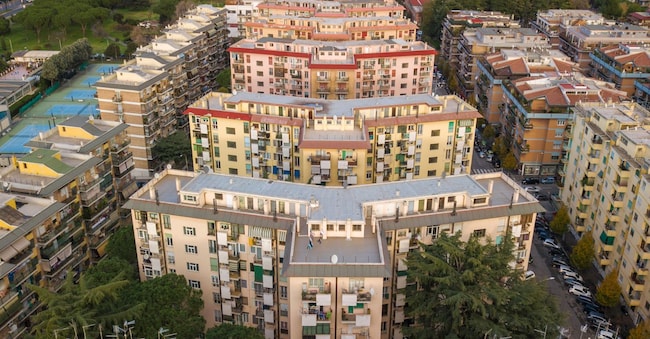
In Italia, more homes will become vacant than there will be new households, but for more than one in three, finding suitable accommodation will remain a problem. Even assuming that all vacated homes return to the market, between 2026 and 2050 as many as 3.71 million new households – 37 per cent of the total – would not find accommodation that meets their needs or fits their budget. This is one of the many imbalances highlighted in the analysis by the Cresme study, which will be presented today in Rome at the conference ‘The Home of the Future’, organised by Fillea Cgil and Spi Cgil. Of the 3.71 million households, 1.77 million would not have sufficient income to access the housing market. The remaining 1.94 million would not find suitable housing in their local areas.
The trends analysed by Cresme follow a zigzag pattern, with a sharp rise in demand up to 2037, followed by a slowdown and a series of related phenomena that make the picture more complex than one might imagine. And this is where the report debunks the first myth – that of an emergency which the ‘demographic winter’ is supposedly destined, tragically, to resolve. Nothing could be further from the truth, says Cresme: the slump in birth rates will not be matched by a fall in demand for housing. Quite the contrary.
Between 2019 and 2024, Italia lost 698,000 residents but gained 822,000 households, alongside an increase of 508,000 homes. The trend could not be clearer: households are getting smaller and, according to Cresme, will continue to do so until 2037. After that, the trend will reverse. The number of provinces expected to see an increase in the number of households will fall from 78 in the decade 2025–2035 to 25 in the period 2035–2050. Milan, Brescia, Bologna and Parma will continue to gain households even after 2035. Over the 25-year period, the province of Milan will gain 145,000 more households, Brescia almost 51,000, Bologna 40,000 and Parma 29,000. Rome, on the other hand, will gain 95,000 households up to 2035 and lose almost 37,000 over the following fifteen years. In Naples and Palermo, the decline will begin as early as the first decade and then accelerate. By 2050, the net loss will be 106,000 households in the province of Naples and 61,000 in that of Palermo.
But in the meantime, another issue comes into play: the intergenerational transfer of property. The study estimates 13.7 million inheritance cases involving property between 2026 and 2050, with the annual figure rising from 478,000 in 2024 to 609,000 in 2050. An inherited home, however, is a major unknown and cannot automatically be counted as part of the available housing stock. The stock of unoccupied homes is already substantial today. Cresme estimates there are 9.6 million dwellings, of which 3.5 million are in tourist towns, 2.3 million in inland areas and 1.5 million in regional capitals. This figure includes second homes and accommodation used by tourists, students living away from home or workers resident elsewhere. And here we debunk the second myth, namely that home ownership protects against poverty: in Italia – the study explains – 41.6 per cent of households living in absolute poverty and 59.5 per cent of those at risk of poverty live in their own homes, but do not have sufficient current resources to cover utility bills, maintenance or the removal of architectural barriers. Rent costs are also a significant burden. For the approximately 2.16 million households renting in the lowest income bracket, rent accounts for 48 per cent of their median income. According to Cresme’s estimates, with a new tenancy agreement, this burden would rise to 62 per cent. The difficulty of finding accommodation also affects employment choices. “The current model generates a heavy economic and employment cost, placing a burden on workers who are not always able to find a home and are therefore often forced to turn down job opportunities,” says Antonio Di Franco, general secretary of Fillea CGIL. The solution? “An extraordinary ten-year investment plan for public and social housing,” says Di Franco, “to which should be added local housing agreements. At the same time, the Cassa Depositi e Prestiti must step in with public guarantees to offer mortgages and loans at preferential rates to workers and pensioners who are buying, renovating or improving the energy efficiency of their first home.” Then there are those who do have a home but risk no longer being able to live there independently. The number of people living alone aged 75 or over will rise from 2.95 million in 2025 to 4.67 million by 2050. ‘The housing challenge of the future will not so much concern the construction of new buildings as the ability to adapt, regenerate and make the existing housing stock accessible, integrating it with welfare networks and local services,’ explains Lorenzo Bellicini, director of Cresme. According to Tania Scacchetti, general secretary of Spi Cgil, the focus must be on “public leadership and structural investment that make housing a pillar of the welfare system, with accessible and adequate homes, the regeneration of existing housing stock and local services”.


