
The ‘Piano Casa’ scheme gets under way: a 700 million call for proposals for social housing in September
Allocation of resources based on the 2021 census and applications, three SALs and a forfeiture clause

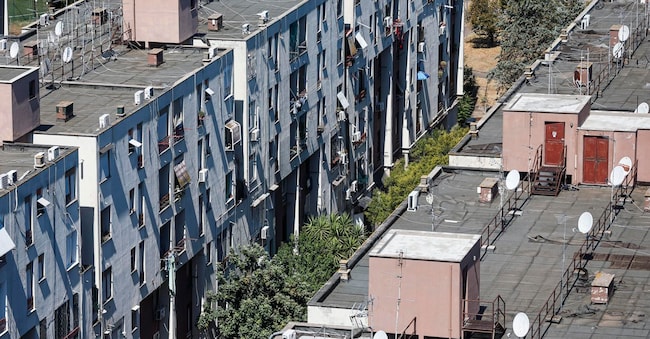
The first piece of the jigsaw that will make up the government’s Housing Plan – specifically the section on the regeneration of social housing – is beginning to take shape. Before the summer break, at the end of last month, it was tabled at a meeting of the Steering Committee at the Ministry of Infrastructure. Preparations are well under way, to the extent that Commissioner Felice Squitieri, who is orchestrating the project, was a guest at the Lega’s ‘Tavolo dei territori’ (Regional Round Table), where he ‘outlined the Plan’s key priorities’ as well as, specifically, ‘the first call for tenders worth 700 million euros’, as reported in a Lega press release signed by Stefano Locatelli, the party’s head of local authorities. The first few days of September are circled in red on the calendar: it is, in fact, upon resumption after the summer break that the publication of the 700 million call for tenders for the refurbishment of uninhabitable social housing is expected. Only at a later stage – the details of which are yet to be finalised – will the second call for proposals, worth 270 million, dedicated to social housing, be issued.
But let’s take it one step at a time. According to sources close to the matter, the allocation of resources is expected to take place in two stages. An initial allocation of 700 million will be distributed amongst the regions based on the size of their public housing stock, using data from the latest available census – dating from 2021 – which also includes accommodation managed by local authorities. Once the regional allocation has been finalised, the projects to be funded will then be identified on the basis of the properties identified at regional level.
The recipients of the funding will be housing organisations, ‘in-house’ bodies and local authorities that own or manage public housing stock. These entities will be responsible for submitting applications, specifying the list of properties to be renovated, the type of works and the timeframe for completion: a call for applications, prepared by Invitalia (the implementing body for this part of the Plan), in consultation with the MIT, will require the submission of these lists.
The framework is complex. As well as concentrating resources on housing that can be refurbished immediately, there is also the issue of regional balance. The scheme will need to balance the need to fund properties spread across the country, whilst preventing certain regions from draining all available resources: the most obvious example is Lombardy, which alone would require the entire first 700 million. The same applies to other regions, such as Veneto, Emilia-Romagna, Piedmont and Tuscany. On the other hand, care must also be taken to ensure that funds are not allocated to regions that do not have enough derelict properties to justify spending them on. The ultimate aim is to reduce the number of properties currently lying unused because they require major maintenance or refurbishment. And this is also a matter currently under discussion.
The plan would be to make payments in line with the progress of the works (Sal), with the following schedule: a 15 per cent advance payment, 25 per cent in January and 45 per cent in July – by which time work must have commenced, failing which the funds will be withdrawn. Finally, the balance will be paid once the accommodation is ready for allocation. Another important issue under consideration concerns families on the waiting list. The start of the refurbishment works will lead to the simultaneous allocation of accommodation, moving the waiting lists forward (which currently include around 300,000 families). In this way, once the regeneration is complete, it will be possible to allocate the flats immediately, thereby avoiding the secondary problem of squatting.


