
Housing, retail and hotel schemes to encourage private investment
Non-residential buildings may be constructed by way of derogation from the restrictions set out in the Plan. The text is due to be put to a vote of confidence on Monday

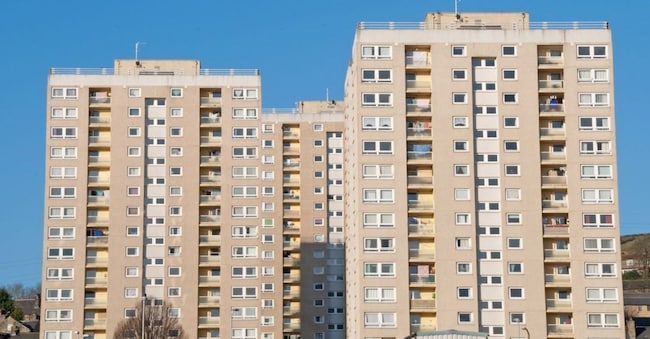
Retail premises, offices and hotels can help to make private operations carried out within the scope of the Housing Plan. The final text of the law converting Decree 66/2026, due to be put to a vote of confidence in the Chamber of Deputies on Monday 22 June following yesterday’s first reading, also contains a provision aimed at increasing the feasibility of investments under the programme to combat the housing emergency: although the requirement to allocate at least 70 per cent to subsidised housing remains, exemptions are being introduced for the non-residential sector.
The amendment, approved by the Environment Committee, was tabled by Fratelli d’Italia and the Lega, and is the subject of a motion signed by the PD’s group leader on the Environment Committee, Marco Simiani, who calls for the Plan’s incentives not to be allocated ‘to projects in which the non-residential component is predominant and the social housing function is merely ancillary’.
Social housing
The amendment passed on Thursday 18 June, therefore, amends Article 9 of the bill, which relates to subsidised housing, that is, developments funded by private investors with a proportion of homes at controlled prices and a proportion (up to a maximum of 30 per cent) of homes sold at market price. In theory, the latter are intended to make the former sustainable; in practice, however, many developers consider a 70 per cent share of subsidised housing to be difficult to achieve. The risk, in short, is that Article 9 will remain merely on paper.
Consequently, the majority is seeking to relax this restriction. Development projects will then be able to provide for ‘the establishment of a number of uses, both residential and non-residential’. In such cases, the minimum percentage requirement of 70% of social housing, which must be met to qualify for the simplifications provided by the decree, will be calculated exclusively on the residential component: that is, by comparing properties at market price with those at controlled prices. Investments ‘intended for non-residential uses’ will be excluded from this calculation, the amendment states. It will be the agreement with the local council, which forms the basis of the investment, that defines the scope of the residential component and, consequently, the figures used in the calculation.
Fees for start-ups and micro-enterprises
The mix of uses in private developments facilitated through subsidised housing is also at the heart of other amendments approved by the Environment Committee. In fact, provision is made for the possibility that ‘a proportion between 5 per cent and 15 per cent of the total usable floor area’ of new developments may be ‘allocated to start-ups, micro-enterprises, work carried out in shared spaces (co-working), local shops, urban crafts and neighbourhood services through agreements with rent controls’.


