
How does Udio, the generative Ai model for creating music, work? Our test
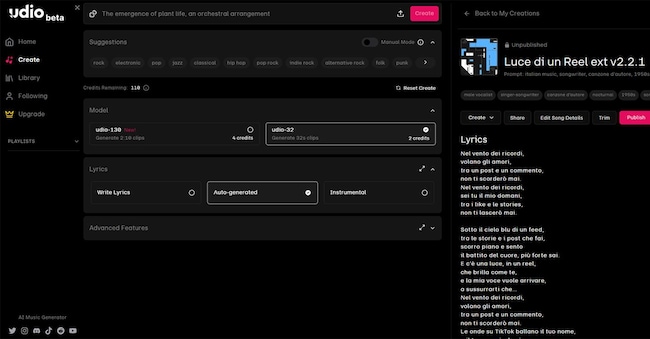
Udio is an artificial intelligence developed in December 2023. The real innovation is the ability to create songs without requiring any compositional skills
by Gabriele Amante*.
2' min read
2' min read
How does Udio work? Is it really useful? Before answering, it is important to point out that, despite concerns about the use of AI in music, this technology can facilitate the creation of songs that the human mind might not conceive independently. AI opens up new creative opportunities, expanding the boundaries of musical imagination and enriching the soundscape.
The birth of UDIO
UDIO is an artificial intelligence developed in December 2023 by four former Google DeepMind researchers, thanks to a USD 10 million funding. After a beta phase, it was launched in April 2024, immediately finding application in music composition, as demonstrated by the BBL song Drizzy by Metro Boomin, which integrates elements of songs by famous artists. The real innovation of UDIO, and of generative music AI in general, is the ability to create songs without requiring any compositional skills. Whereas in the past AI supported musicians in technical aspects, today it becomes their creative ally, allowing anyone to explore new sonic possibilities.
An experiment with UDIO
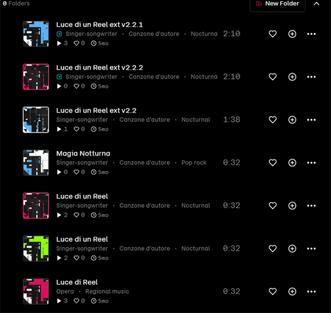
Driven by the potential of UDIO, I created a new composition inspired by Domenico Modugno, with a modern theme: courtship through social media. Using ChatGPT, I generated a text with references to Instagram, TikTok and other social media-related terms. The result is Light of a Reel, a song that fuses Modugno's style with contemporary indie influences.
The process, however, was not easy. The creation of the prompts required numerous attempts to get me closer to the desired idea. I specified for each prompt whether it was a verse or a refrain, but I encountered some difficulties: instruments sometimes lost their original timbre (for example, the initial piano became a guitar). Then there were mistakes in the pronunciation of English-speaking terms such as 'reel' or 'feed', although this did not compromise the effectiveness of the result, given the Italian tradition of adapting foreign pronunciations in pop music.
UDIO functionality and costs
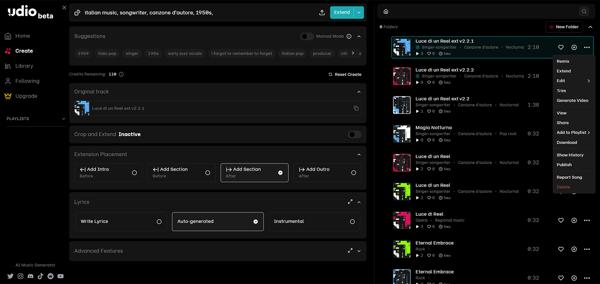
.In addition to generating tracks, UDIO offers interactive features such as viewing and editing other people's musical creations. How much does it cost? There are two forms of subscriptions on a monthly and annual basis, with costs ranging from EUR 12 per month for the standard package to EUR 36 for the pro package. Annual subscriptions are discounted to EUR 9.60 and EUR 28.80 respectively. In short, Udio democratises music creation, making it accessible even to those without technical skills or financial resources. It is a valuable resource for young novice artists, but also for experienced musicians who want to explore new ideas or rework existing tracks by uploading them to the platform and customising them via prompts. Ultimately, artificial intelligence does not threaten musical creativity, but enhances it.

