ANALYSIS

How many and which Americans will vote? The weight of appeals on the US vote

Republicans try to obstruct in every way, with appeals and legal technicalities, the popular vote where traditionally the Democrats win

by Gregory Alegi

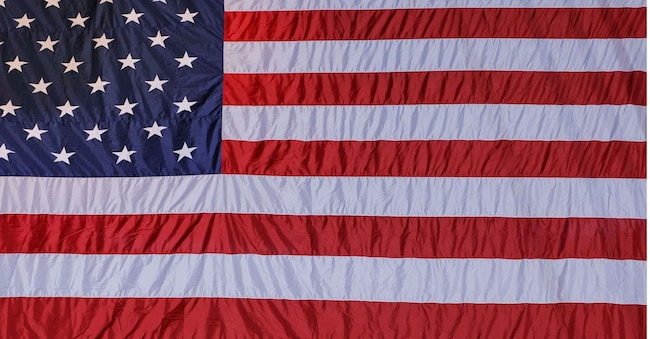
La bandiera americana

3' min read

3' min read

With only a few hours to go before the polls open, the most recurring question is "will Trump win?", perhaps in the seemingly more neutral variant "who will win?". Anyone with an American side, whether analyst or simple resident of the United States, has been pestered about it for days.

Polls, opinions, feelings: to corroborate one's own supporters or disprove those of others, anything goes.

Loading...

Less frequently asked, not to say overlooked, is the question of how many and which ones will be able to vote and how this will affect the outcome.

Who will the turnout reward? Traditionally, high turnout rewards the Democrats. The reason is intuitable: in a very vertical social model, the lower part of the pyramid contained - and contains - large swathes of voters interested in issues that can be framed, with some simplification, as 'welfare' or 'welfare state'. The bloc, built by Franklin Delano Roosevelt in 1932, was largely urban, with a strong presence of workers, minorities and first generation Americans. Over the years, the bloc fell apart. The transformation of the economy, for example, favoured white-collar workers and penalised blue-collar workers, many of whom switched to the Republicans. The social lift, then, has made conservatives of the first generation and minorities, whose support is no longer a given. That leaves the big cities, where novelty and problems go hand in hand, and which are everywhere Democratic strongholds. This is also the direction of the transversal community of rights, which can largely make up for the backwardness of the labour and new-citizen components.

What the margins for further consensus growth in these urban areas remain to be seen, and it is entirely possible that the Democrats will win the majority of urban votes. Without a very generous margin of victory in this area, however, it is equally possible that victory in the cities will not be enough to move the needle.

Unpublished Scenario. An unprecedented scenario of the 2024 election concerns the actual ability to vote. The recent Supreme Court decision, which allowed the Virginia Republican to remove 1,600 people from the electoral roll in the run-up to the vote, in violation of federal rules requiring a freeze in the 90 days immediately before the polls, is just yet another confirmation of the change in Republican strategy. No longer trying to prevail by winning half plus one of the votes, but artificially reducing the level of voting participation.

From the introduction of the requirement to prove citizenship, to the prohibition of transporting voters to polling stations, from the reduction of rural polling stations, to the burning of roadside ballot boxes into which postal votes can be stuffed, from the multiplication of list representatives at the ballot box, to the prohibition of providing water and drinks to those in line to vote: the Republican strategy is to reduce access to voting. To put it more elegantly, to reduce as much as possible the distance between the number of those eligible to vote and those who actually vote.

The strategy is fully consistent with the traditional prevalence of the Democrats in the popular vote, who in the previous five presidential elections took the most votes four times out of five, while winning only three.

Precisely for this reason, the Republicans have long since decided to manipulate the vote, first by gerrymandering, i.e. redrawing constituencies to dilute opposing groups. In a pure majoritarian system, concentrating opponents in one constituency guarantees them a seat, breaking them up into several constituencies of unlikely geography excludes them.

With the 2024 election, the focus shifted to trying to exclude them directly from voting by administrative means. The latest ploy, just rejected by the Pennsylvania Supreme Court, was to try not to count provisional postal votes sent in by those who fear they will not be able to go to the polling station on Tuesday. These are opaque procedures in which the burden of proof is reversed and often not even notification of the person concerned is required.

In theory, it is the desperate technique of a party that knows it does not have a popular majority. In practice, many voters could be prevented from voting on Tuesday. In New York or Texas, where either party has solid majorities, it would make little difference. In Pennsylvania, Georgia, North Carolina and the other swing states it could make all the difference. Or at least enough to make the polls unreliable, already challenged by (im)accurate +/- 2% margins in a race that sees the US split 48-48. In the end, it won't be who gets to vote that decides.

Professor of US History and Politics, Luiss © RIPRODUZIONE RISERVATA.

Copyright reserved ©
Loading...

Brand connect

Loading...

Newsletter

Notizie e approfondimenti sugli avvenimenti politici, economici e finanziari.

Iscriviti